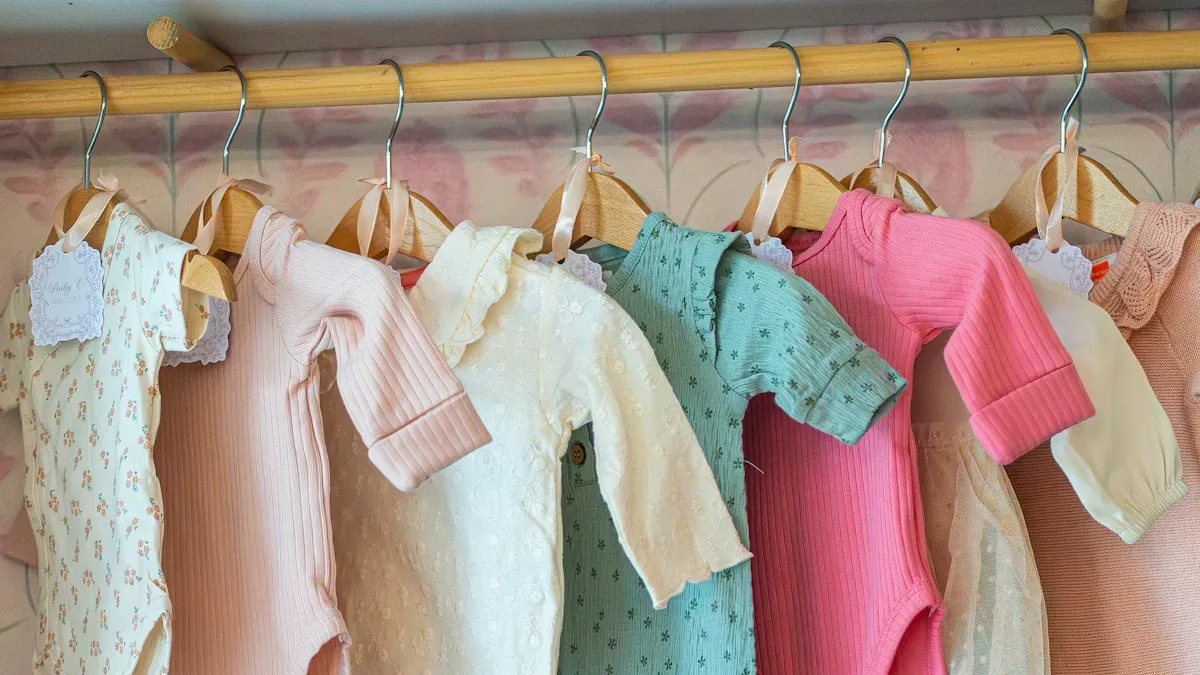
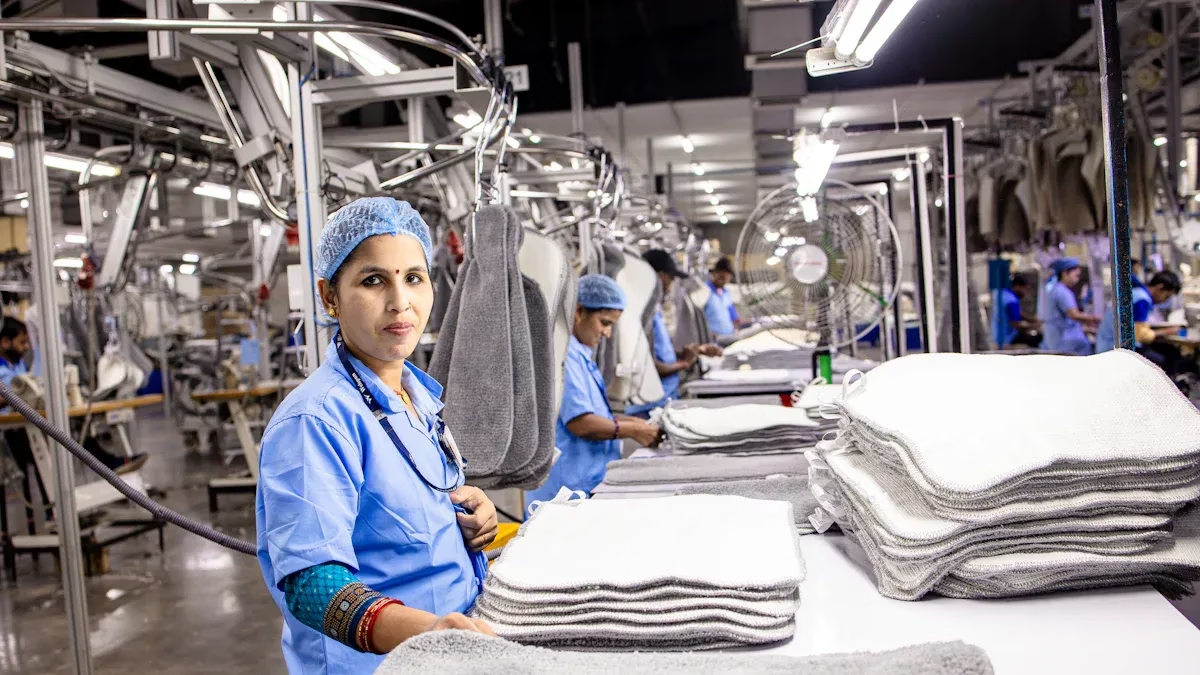
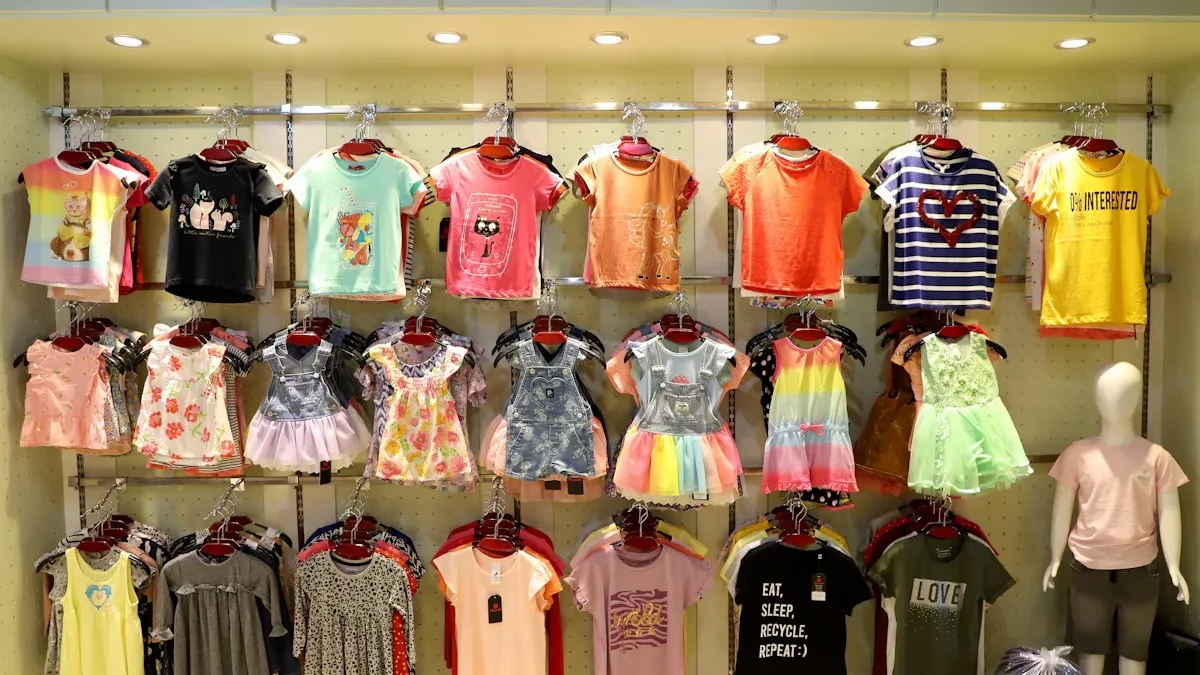
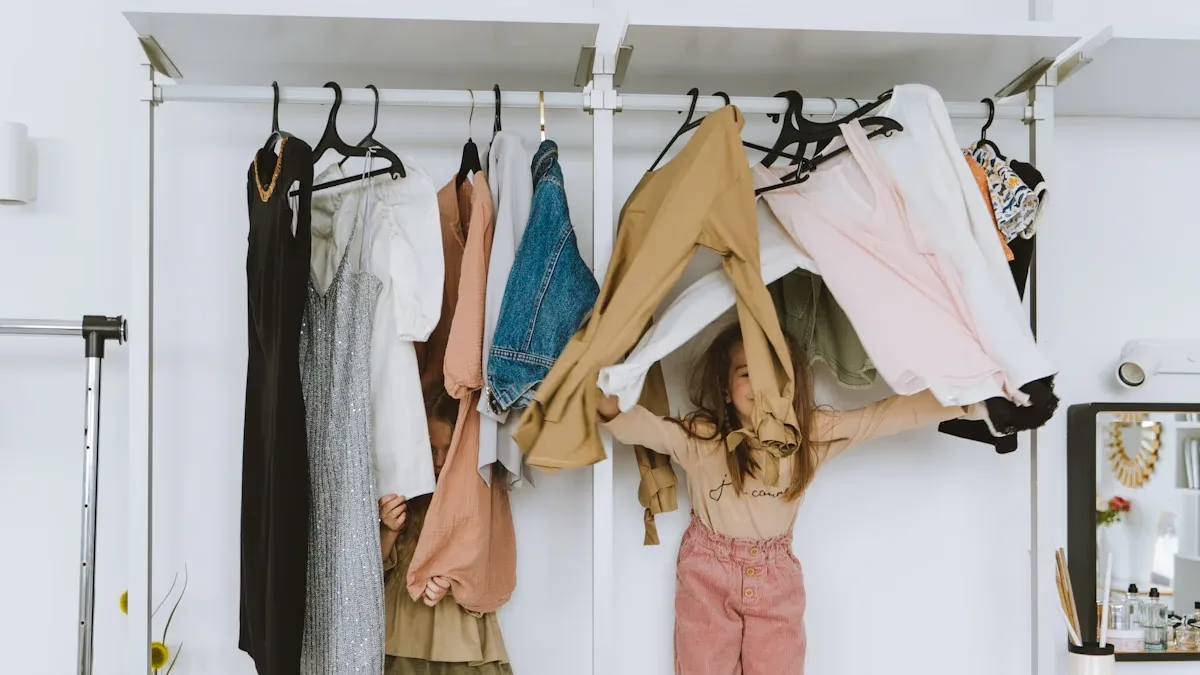
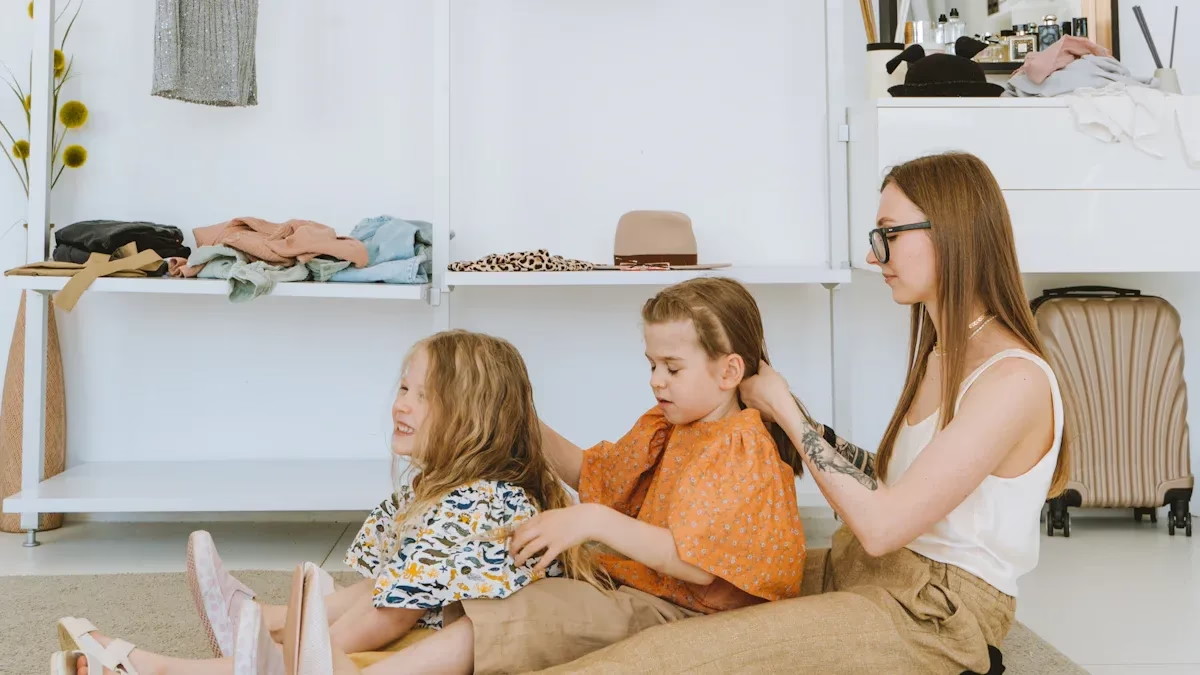
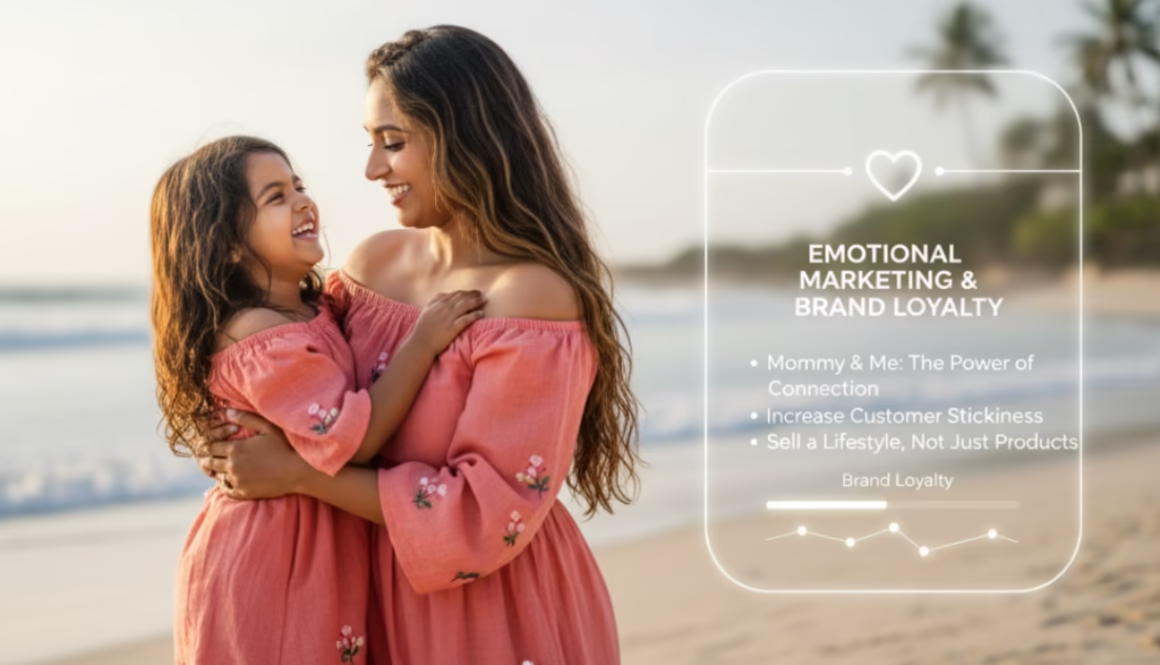
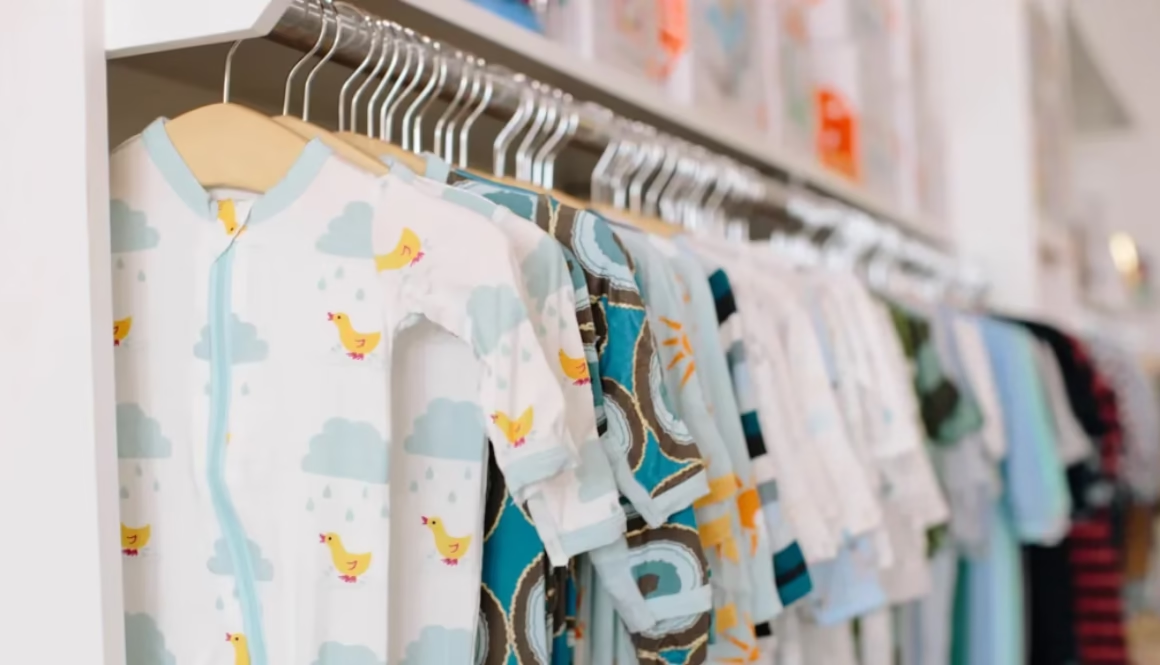
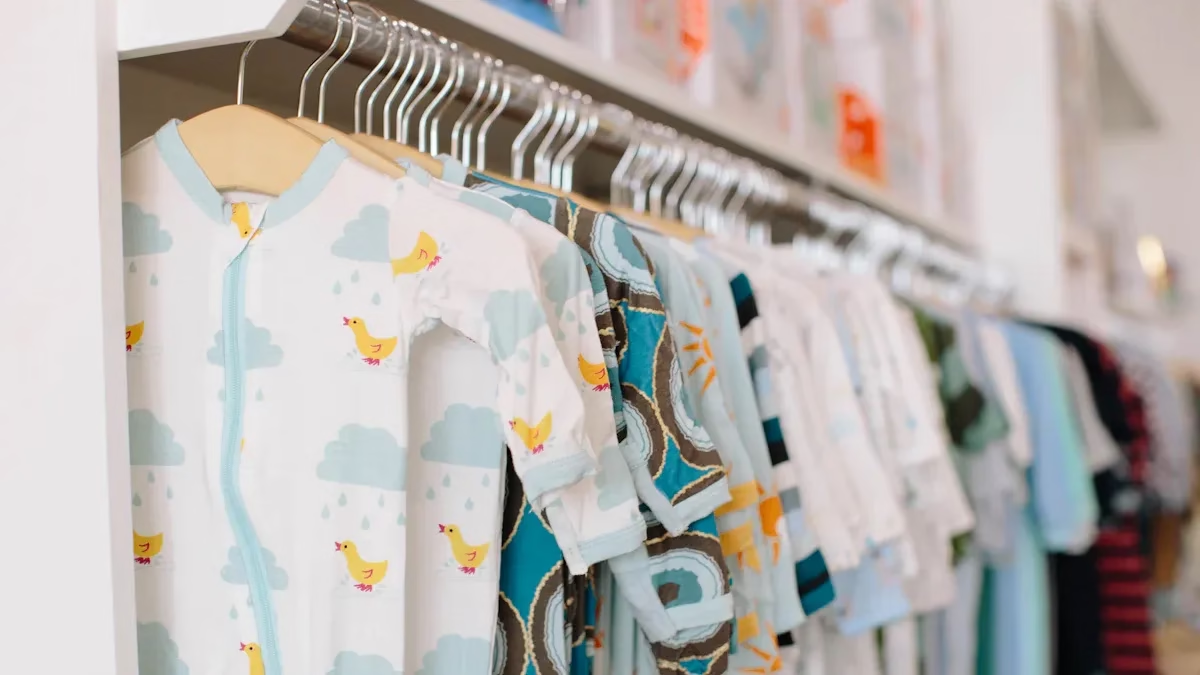
If you want to build a profitable clothing brand, you should look at the baby clothing business. This sector leads because you see rapid market growth, with the market expected to grow as much as 13.9% each year through 2032. You benefit from high profit margins—some reach up to 75%, much higher than most clothing sectors. Parents now spend more on premium, safe, and comfortable clothes for their babies. Online shopping makes it even easier for you to reach new customers and grow your business.
Principales conclusiones
The baby clothing market is growing fast. It is expected to grow by 13.9% each year until 2032. This gives new businesses a good chance to succeed.
Baby clothing can have high profit margins. These margins can go up to 75%. Parents pay more for clothes that are safe, buena calidad, and look nice.
Online shopping and dropshipping help reach more customers. You do not need a lot of money to start. You can try new products without risking much money.
Making baby clothes costs less. There are fewer returns in this market. Parents usually keep what they buy. This means businesses make more profit.
If you build a strong brand, parents will trust you. Focus on making clothes that are safe and good quality. This helps parents buy from you again and again. It can help your business do well for a long time.
Many things help this growth. Parents spend more on premium clothes for babies. Social media and celebrities make luxury baby clothes popular. E-commerce lets you sell to people everywhere. Luxury baby clothing is also a status symbol for many parents.
Consejo: To do well, sell premium and special products. Parents pay more for quality and style.
Parenting habits are changing too. Even with fewer babies, parents buy better clothes. They want eco-friendly, organic, and sustainable choices. Some companies, like OR Collective, work with eco-certified brands. They offer rental subscriptions so parents get premium clothes and waste less.
Personalization is also getting bigger. Parents want clothes that feel unique. More people buy personalized baby clothing with custom designs, names, or photos. AI helps brands make special products and connect with buyers. This trend is strong in North America, Europe, and Asia-Pacific. Personalization is not just a local thing.
Repeat purchases
Parents buy baby clothes again and again because babies grow fast. This means your business gets steady sales. Here’s how repeat buying helps profits:
Each repeat order means you spend less to find new buyers.
Even a small increase in orders saves a lot of money.
Parents come back to buy more as babies outgrow clothes. This makes your business stable and profitable. You do not need to spend as much on ads. You build trust and loyalty with your customers.
Premium pricing
You can charge more for baby clothes because parents care about quality and safety. They want the best fabrics, like organic cotton and hypoallergenic materials. Certifications like OEKO-TEX® and GOTS make parents trust your products. These let you add a price premium of 15%–40%.
Giftable and nice packaging makes items feel more valuable.
Good presentation helps you set higher prices and earn more.
Creative packaging and special designs make your products feel exclusive. This attracts parents who want something special for their kids or as gifts. Focusing on quality, safety, and style lets you set higher prices and get better profits.
Profit drivers in baby clothing business
Menores costes de producción
You can achieve higher profits in the baby clothing business because you spend less on making each item. Baby clothes use less fabric than adult clothes. For example, a baby onesie only needs about 0.5 to 0.75 yards of fabric. If you choose organic cotton, you pay between $1.50 and $4.50 per piece. Regular cotton costs even less, from $0.50 to $2.25. Labor costs also stay low. Simple items like onesies cost just $2 to $3 in labor. When you add custom touches, like embroidery or screen printing, you still keep costs manageable—usually $2 to $10 extra per item.
You pay less for materials and labor.
You can offer competitive prices and still make a profit.
Lower costs mean you can try new designs without big risks.
Shipping costs stay reasonable, too. Most online baby clothing retailers spend only 2% to 5% of their sales on shipping. Because you spend less to make and ship each item, you keep more of your earnings. This is why the baby clothing business often has higher profit margins than adult clothing.
Nota: Lower production costs let you test new products and grow your business faster.
Online shopping and dropshipping
You can grow your baby clothing business quickly by selling online. More parents shop on their phones and computers every year. E-commerce grows fast because it is easy and convenient. You reach more customers without opening a store. Brands now offer doorstep delivery, easy returns, and many payment options. These services make parents trust your shop and come back for more.
Dropshipping makes it even easier to start. You do not need to buy a lot of stock up front. You only pay for items after you sell them. This lowers your risk and lets you try new products without losing money. You can focus on marketing and customer service instead of worrying about inventory.
Online shopping helps you reach parents everywhere.
You can test new styles and trends with little risk.
Consejo: Use dropshipping to launch your brand with less money and less stress.
Low return rates
You keep more profit in the baby clothing business because parents return baby clothes less often than other types of clothing. In the US, the average return rate for apparel is 20.8%. Many people return shoes, bags, and accessories even more. But baby clothes have fewer returns. Parents care most about comfort and safety, not just style or fit. Babies grow fast, so parents often keep what they buy, even if it is a little big.
Fewer returns mean you lose less money on shipping and restocking.
You spend less time handling returns and refunds.
You keep your profit margins high.
When you combine low return rates with low production costs and easy online sales, you see why the baby clothing business stands out. You get steady sales, fewer headaches, and more money in your pocket.
Llamada: Lower returns and costs mean you can focus on growing your brand, not fixing problems.
You face tough obstacles if you enter the adult clothing market. High return rates can eat away your profits. In some cases, more than half of all adult clothing purchases get returned. You must pay for shipping, restocking, and handling, which increases your costs. Rising customer acquisition costs make it even harder. Big Tech platforms now charge almost 30% more per click than just a few years ago. You spend more to reach each customer, but you do not always see higher sales.
Many adult clothing brands rely on investor money to cover these losses. This creates risk if funding dries up.
You also deal with higher selling, general, and administrative costs. These expenses add up quickly. Consumers now want more value for their money. Many shoppers choose off-price retailers or look for deals in the resale market. You must work harder to show why your brand is worth the price.
Teen fashion volatility
Teen fashion changes fast. Trends come and go in a flash. You must keep up with what is popular on social media. If you miss a trend, you lose sales. Teens often switch brands quickly. This makes it hard to build loyalty. You spend more on marketing to stay relevant.
You risk holding unsold inventory when trends shift.
You must invest in constant research and design.
You face pressure to lower prices as teens seek bargains.
Teen fashion can bring big rewards, but the risks are high. You need to move fast and adapt every season.
Sportswear competition
Sportswear looks attractive, but you face fierce competition. Big brands like Nike and Adidas dominate the market. They have huge budgets for marketing and innovation. You must find a unique angle to stand out.
Sportswear shoppers expect high performance and style. They want comfort, durability, and the latest technology.
You must invest in research and development to meet these demands. This raises your costs. You also compete with many new brands entering the market each year. Price wars can lower your profit margins.
When you compare these sectors, you see why baby clothing offers a smoother path to profit. You avoid high returns, fast-changing trends, and intense competition. You can focus on quality, trust, and steady demand from parents who value your products.
Succeeding in baby clothing business
Product quality and safety
You earn parents’ trust by focusing on quality and safety. Parents want clothes that last and feel soft. They also want clothes that keep babies safe. You need to follow strict rules to stand out.
OEKO-TEX Certification means your fabrics do not have toxic chemicals.
BSCI Certification shows your products come from good factories.
When you make reliable and comfy clothes, parents buy again. You help families celebrate special moments with your brand. Good quality helps your business grow.
Consejo: Always show your safety certifications. Parents look for these before buying.
Branding and trust
You need a strong brand to do well in baby clothing. Parents pick brands they trust. Try these ways to build trust:
Use eco-friendly materials and smart designs. Parents like green and useful choices.
Brand Building
Share your story. Connect with parents using your brand’s mission and values.
Marketing Promotion
Work with influencers and use content marketing to reach more families.
A special brand identity helps you stand out. Emotional bonds make parents loyal to your products.
Marketing to parents
You reach more parents by using the right channels. Make a website that works well on phones. Post on Instagram and TikTok to show your new styles. Share helpful blog posts and videos. Team up with popular parents and bloggers. Send emails to keep families interested and informed.
Los padres quieren honesty and clear messages. Real messaging builds trust and keeps them coming back. You grow your business by connecting with families online.
Llamada: Use social media and email to build relationships. Parents remember brands that care.
You can see why baby clothing is the most profitable clothing business in 2026. There are many reasons why this industry is a good choice:
More babies are born in places like India and Nigeria. This means more parents buy baby clothes.
Growing Awareness of Sustainable Materials
Parents care about the planet. They want brands to use eco-friendly fabrics.
Technological Innovations in Fabric and Design
New types of fabric and smart designs make parents interested. They want the best for their babies.
Expanding E-commerce and Omnichannel Retailing
Online shopping lets you sell to more families. You do not need a store in every city.
Influence of Social Media and Celebrity Endorsements
Social media and famous people make luxury baby clothes popular.
Regulatory Shifts and Safety Standards
New rules make brands work harder to keep babies safe.
You can do well if you sell premium and organic fabrics. Use digital marketing to reach parents online. Smart fabrics and easy shopping help your brand stand out. Now is a great time to use these ideas and build a strong brand.
PREGUNTAS FRECUENTES
Why does the baby clothing business have higher profit margins?
Making baby clothes costs less for materials and labor. Parents pay more because they want safe and good quality clothes. This means you keep more money from each sale. You make more profit than in other clothing businesses.
Why do parents prefer premium baby clothing?
Parents always want the best for their babies. They pick clothes made from better fabrics and safe materials. You can give them what they want by selling certified, organic, and stylish clothes. This helps parents trust your brand and buy again.
Why is online selling so effective for baby clothing?
You can reach more parents with online stores. Shopping online is easy and quick for families. You can try out new products fast and save money on store rent. This helps your brand grow faster.
Why do baby clothing brands face fewer returns?
Parents care most about comfort and safety, not just style. Babies grow fast, so parents keep most of the clothes they buy. This means you get fewer returns, which helps you keep more profit and have less trouble.
Quieres que tus hijos tengan lo mejor. La ropa infantil de boutique aporta estilo, comodidad y seguridad. Descubre por qué a los padres les gustan estas marcas:
Boutique de ropa infantil utiliza materiales buenos y seguros. Los padres confían en las marcas que eligen tejidos ecológicos y prescinden de los productos químicos nocivos.
La personalización y las opciones ecológicas son muy populares ahora. Los padres encuentran estilos especiales que muestran la personalidad de sus hijos. También ayudan al planeta eligiendo estas prendas.
Al elegir una marca, compruebe buena calidad y buenas críticas. Las marcas con certificación GOTS cumplen normas estrictas de seguridad y ecología.
Quieres que tu hijo esté guapo y se sienta bien. En 2026, la ropa de boutique para niños trae nuevas tendencias. Estas tendencias se centran en la salud, el estilo y la ayuda al planeta.
El auge de los tejidos ecológicos y sostenibles
Ahora los padres se preocupan más por lo que toca la piel de sus hijos. Cada vez más marcas utilizan tejidos ecológicos porque no tienen productos químicos nocivos ni pesticidas. Los padres se enteran de los peligros de los tejidos normales. Quieren ropa segura y suave para sus hijos. La ropa infantil de boutique se lo ofrece. Muchas marcas utilizan materiales ecológicos certificados. Esto significa que puede confiar en lo que lleva su hijo. El mercado de la ropa ecológica para niños no deja de crecer. Las familias se preocupan más por la Tierra y tienen más dinero para gastar.
Popularidad de la camiseta de algodón personalizada para niños
La personalización es algo muy importante en la ropa de boutique para niños. Puedes conseguir una camiseta infantil de algodón con el nombre o el color favorito de tu hijo. Incluso puedes elegir un diseño divertido. Las redes sociales contribuyen al crecimiento de esta tendencia. A los padres les gusta compartir fotos de sus hijos con camisetas a juego. trajes a medida. Esta tendencia hace que tu hijo se sienta especial. Te permite presumir de su estilo. Las opciones de género neutro también son más populares. Puedes elegir lo que mejor se adapte a la personalidad de tu hijo.
Demanda de ropa de juego ecológica
Quieres ropa de juego que dure y sea buena para el planeta. Las marcas de ropa infantil fabrican ahora prendas más ecológicas. Utilizan buenos tejidos, colores vivos y materiales seguros. Los padres eligen estas prendas por su comodidad, seguridad y estilo. Cada vez más marcas ofrecen tejidos reciclables y ecológicos. Esto significa menos residuos y más confianza en lo que lleva tu hijo. Cuando compras, compruebas que ahora importan más la calidad y la forma de confeccionar la ropa.
Las colecciones de género neutro son fáciles de encontrar.
A los padres y a las tiendas les gustan los tejidos ecológicos por su seguridad y confianza.
Criterios de selección de las mejores marcas
Cuando quieres la mejor ropa infantil de boutique, buscas lo que hace especiales a las marcas. Así es como puedes encontrar las mejores opciones para 2026.
Calidad y artesanía
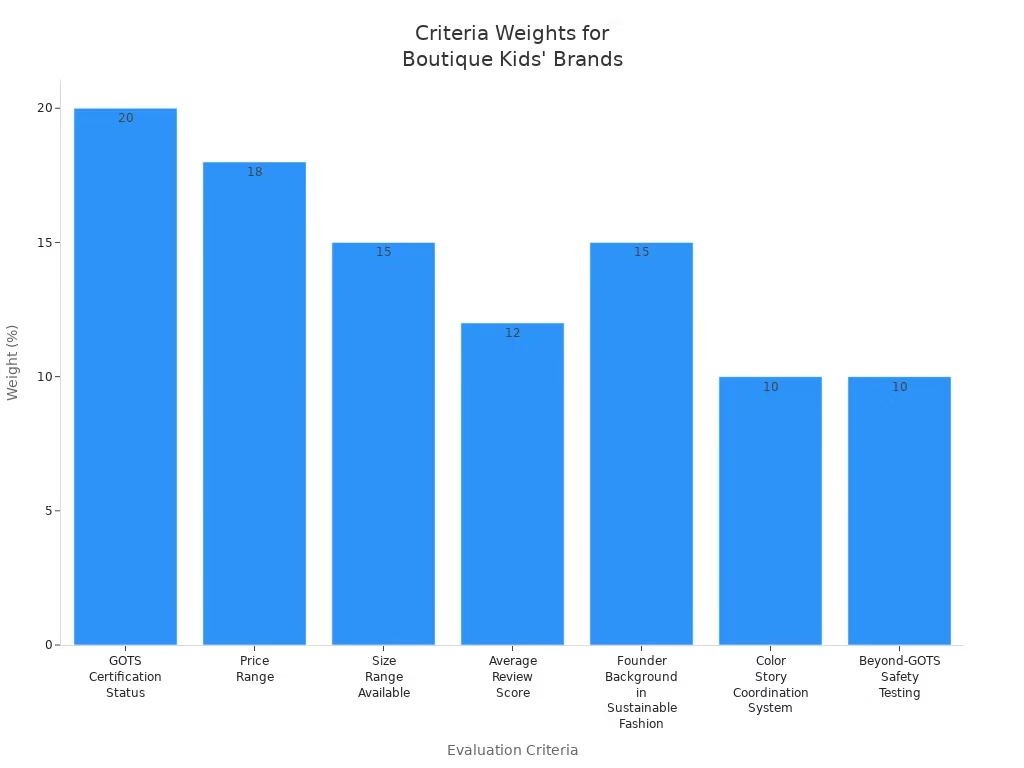
Quieres ropa que dure mucho tiempo. La calidad es muy importante para los niños activos. Comprueba las costuras y toca el tejido. Comprueba si la ropa se conserva bien después de muchos lavados. Las mejores marcas utilizan materiales resistentes y suaves. Cuidan cada detalle, como los botones y las costuras. Las mejores marcas suelen tener la certificación GOTS. Esto significa que sus prendas cumplen normas estrictas. También observas que las puntuaciones de las revisiones y las pruebas de seguridad importan mucho.
Criterios
Peso (%)
Certificación GOTS
20
Precios
18
Tamaños disponibles
15
Puntuación media
12
Fundador Antecedentes en moda sostenible
15
Sistema de coordinación Color Story
10
Más allá de las pruebas de seguridad GOTS
10
Diseño y estilo únicos
Quieres que tu hijo tenga un aspecto diferente al de los demás. Los diseños únicos hacen que cada conjunto sea especial. Las mejores marcas utilizan estampados brillantes y temas de cuentos de hadas. También usan colores divertidos. Algunas marcas tienen looks clásicos. Otras se centran en el lujo sencillo o en piezas especiales. Estas marcas mezclan diversión y estilo. Tu hijo siempre estará guapo.
Moncler Enfant: Chaquetas que se ven bien y funcionan bien
Ralph Lauren Kids: Estilo clásico americano
Petit Bateau: Básicos sencillos y elegantes
Bebe Organic: Ropa de fantasía con tejidos ecológicos
Hermanos Feltman: Estilo antiguo para días especiales
Sostenibilidad y ética
Quieres ayudar al planeta y a tu hijo. La sostenibilidad es muy importante. Busca marcas que utilicen algodón orgánico, bambú o lino. Estos tejidos son seguros y buenos para el planeta. También quieres marcas que obtengan los materiales de forma correcta. Quieres que los trabajadores reciban un trato justo. La ropa de estilo clásico ayuda a dejar de derrochar. Compras menos y usas la ropa más tiempo.
Utilizar bambú y lino que se descomponen fácilmente
Estilos clásicos que duran
Popularidad de padres e hijos
Escucha a otros padres. Lee opiniones y habla con sus amigos. Las marcas mejor valoradas por su calidad y comodidad son tus favoritas. A los niños les gusta la ropa que les gusta y les sienta bien. Las marcas son más populares cuando tanto los padres como los hijos están contentos.
Consejo: Cuando compres, busca la certificación GOTS, lee opiniones y elige marcas que se preocupen por la calidad, el estilo único y el planeta. Esto te ayudará a elegir lo mejor para tu familia.
Gato y Jack
Resumen de la marca
Puede que conozcas Cat & Jack por Target. Esta marca es muy popular entre los padres. Quieren ropa con estilo para sus hijos. Los precios no son elevados. Cat & Jack empezó con un objetivo sencillo. Querían ropa que se adaptara a todos los niños. Su ropa se ve en el colegio y en los patios de recreo. Muchos padres confían en Cat & Jack. La marca tiene algo para cada niño. Cat & Jack es especial entre las marcas de ropa infantil de boutique. Mezcla diversión, comodidad y valor.
Características destacadas
Cat & Jack ofrece mucho más que ropa bonita. Esto es lo que hace diferente a esta marca:
Característica
Descripción
Inclusividad
Tiene tallas y ropa adaptable para todos los niños.
Diseños modernos y funcionales
Tiene buen aspecto y funciona bien para el uso diario.
Tiene ropa de juego, conjuntos de fantasía y accesorios.
Compromiso con la sostenibilidad
Utiliza materiales reciclados y ecológicos para ayudar al planeta.
Puedes encontrar chubasqueros, pijamas y mucho más para tus hijos. Cat & Jack se preocupa por la Tierra. La marca utiliza tejidos reciclados y materiales ecológicos. Esto te ayuda a tomar buenas decisiones para tu familia y el planeta.
Ventajas e inconvenientes
He aquí lo bueno y lo malo:
Pros:
Muchas tallas para todos los niños
Los precios son inferiores a los de otras marcas
Estilos de moda que gustan a los niños
Opciones sostenibles para familias que se preocupan por la Tierra
Contras:
Algunas prendas se agotan rápidamente antes de que empiece el colegio
La calidad no siempre es la misma para todos los artículos
No hay tantas opciones lujosas como en otras marcas boutique
Consejo: Si quieres ropa moderna y económica para todos los niños, Cat & Jack es una gran elección.
El país de las maravillas
Resumen de la marca
Probablemente veas Wonder Nation en Walmart. Esta marca te ofrece una enorme selección de ropa para niños. Tienes colores brillantes, estampados divertidos y muchas opciones. Wonder Nation quiere que todos los niños se sientan cómodos y seguros de sí mismos. La marca hace ropa para la vida cotidiana. Puedes encontrar ropa para el colegio, para jugar o para eventos especiales. Wonder Nation mantiene los precios bajos, para que puedas vestir a tus hijos sin gastar demasiado.
Características destacadas
Wonder Nation destaca por varias razones:
Amplia gama de tamaños: Encontrarás ropa para bebés, niños pequeños y niños mayores.
Tejidos duraderos: La ropa aguanta muchos lavados y juegos bruscos.
Estilos de moda: Tus hijos podrán ir a la última sin sentirse excluidos.
Fácil de cuidar: La mayoría de los artículos van directamente a la lavadora y secadora.
Precios asequibles: Usted obtiene valor por su dinero.
Consejo: Si a tus hijos les encanta jugar al aire libre, Wonder Nation tiene vaqueros resistentes y camisetas suaves que sirven para todas las estaciones.
Ventajas e inconvenientes
Aquí tienes un breve resumen de lo que puedes conseguir con Wonder Nation:
Pros
Contras
Gran valor para las familias
Algunos modelos se agotan rápidamente
Muchas opciones para los niños
No hay tantas opciones ecológicas
Piezas fáciles de combinar
Diseños básicos, menos únicos
Ropa para cada actividad
A veces el tallaje es pequeño
Puedes contar con Wonder Nation para la ropa de niños de todos los días que se ve bien y sienta bien.
Principal
Resumen de la marca
Quieres ropa que te haga la vida más fácil. Primary te ofrece justo eso. Esta marca cree que los niños deben vestir lo que les gusta, todos los días. Verás colores vivos, estilos sencillos y sin logotipos. Primary empezó porque dos madres querían mejores prendas básicas para sus hijos. Ahora, puedes encontrar su ropa online y en muchos hogares. Los padres confían en Primary por tejidos suaves y facilidad de compra. Consigues prendas que se mezclan y combinan sin estrés.
Características destacadas
Primary destaca por centrarse en lo básico. Encontrarás colores sólidos y formas clásicas. Sin brillos ni eslóganes, solo comodidad pura. Esto es lo que tienes:
Arco iris de colores para cada estado de ánimo
Algodón supersuave que cuida la piel de los niños
Etiquetas sin etiqueta para que nada pique ni arañe
Tejidos fáciles de lavar que resisten el juego
Opciones de género neutro para todos los niños
Consejo: Puedes dejar que tus hijos elijan sus colores favoritos y creen sus propios conjuntos. Ir de compras resulta divertido y sencillo.
Ventajas e inconvenientes
Pros
Contras
Amplia gama de colores para todos los niños
Sin estampados ni caracteres extravagantes
Básicos suaves y cómodos para el día a día
Artículos de temporada o de moda limitados
Piezas fáciles de combinar
Las tallas más populares se agotan rápidamente
Estilos de género neutro
Sólo disponible en línea
Quieres ropa que dure y siente bien. Primary te ofrece eso para tus hijos, en cada temporada.
Mothercare India
Resumen de la marca
Quieres una marca que sepa lo que necesitan los padres. Mothercare India es conocida por ayudar a las familias. Sus tiendas tienen muchas cosas para bebés y niños. La marca se preocupa por la comodidad, la seguridad y el estilo. Ves ropa clásica con nuevos detalles. Mothercare India te ayuda a vestir a tus hijos a cualquier edad. Recibes ayuda y consejos cuando compras. Esto simplifica las compras.
Las devoluciones y reembolsos pueden ser difíciles
Una sólida comunidad en línea
Se preocupa por la sostenibilidad
Consejo: Si quieres una marca de confianza, Mothercare India es una buena elección. Obtendrás calidad, seguridad y estilo para tus hijos. Puedes sentirte tranquilo cuando compras aquí.
Ropa AEL
Resumen de la marca
Quieres que tus hijos tengan buen aspecto y se sientan seguros. AEL Apparel te ofrece ambas cosas. Esta marca boutique presta atención a cada detalle. Encontrarás ropa para jugar, para fiestas y mucho más. AEL Apparel escucha a los padres y lo que necesitan. Verás colores vivos y tejidos suaves en todas las tallas. La marca siempre se asegura de que la calidad sea alta. Puedes confiar en que tus hijos se sentirán bien todo el día.
Ropa infantil sostenible
Te preocupas por el planeta y por la salud de tus hijos. AEL Apparel te ayuda a conseguirlo. La marca es líder en ropa infantil sostenible. Obtienes ropa hecha con cuidado para la tierra. AEL Apparel sólo utiliza tintes no tóxicos. No tienes que preocuparte por los productos químicos nocivos para la piel de tus hijos. La empresa también utiliza un proceso que ayuda al planeta. Eso significa menos residuos y más cuidado para el futuro.
Esto es lo que hace especial a AEL Apparel:
La marca se esfuerza por fabricar ropa de forma ecológica.
Todos los tejidos utilizan tintes no tóxicos.
Cada pieza utiliza materiales ecológicos.
Tipo de prueba
Descripción
Proceso de fabricación
AEL Apparel utiliza métodos ecológicos para confeccionar ropa infantil.
Materiales utilizados
La empresa sólo utiliza tintes no tóxicos en sus tejidos por motivos de seguridad.
El envío puede tardar más que en las tiendas locales
Proceso de producción ecológico
Utiliza materiales ecológicos
Tiempos de producción rápidos
Siempre normas de alta calidad
Consejo: Si quieres ropa con estilo, segura y ecológica para tus hijos, AEL Apparel es una marca a tener en cuenta.
Bonpoint
Resumen de la marca
Quieres que tus hijos destaquen entre la multitud. Bonpoint te da esa oportunidad. Esta marca lleva años liderando el mercado de las boutiques de lujo de ropa infantil. La creatividad se refleja en cada prenda. Bonpoint mezcla el estilo moderno con el encanto clásico francés. La atención al detalle se nota enseguida. La marca utiliza materiales de alta calidad y una artesanía experta. Cuando compras en Bonpoint, obtienes prendas de tacto suave y aspecto elegante. Muchos padres eligen Bonpoint para ocasiones especiales o cuando quieren que sus hijos luzcan lo mejor posible.
Lujo y estilo francés
Bonpoint lleva el estilo parisino al armario de tus hijos. Encontrarás bordados delicados, algodón suave y siluetas atemporales. La marca adora los estampados alegres y los colores suaves. Verás vestidos, camisas y abrigos que harán que tus hijos se sientan como estrellas. Los diseñadores de Bonpoint crean colecciones que celebran la infancia. Son prendas que duran y nunca pasan de moda. Si quieres que tus hijos vistan de lujo, Bonpoint es el nombre que debes recordar. En las reuniones familiares, las fiestas de cumpleaños y las fotos de las vacaciones podrás ver los conjuntos Bonpoint.
Consejo: Si quieres que tus hijos disfruten de la comodidad y la elegancia, el estilo francés de Bonpoint hace que cada día sea especial.
Compacto cuando se pliega, pero conserva todas las características que necesitaría de un cochecito principal
El asiento está bastante reclinado por lo que no ofrece la mejor vista
Fácil de montar nada más sacarlo de la caja
Se podría mejorar añadiendo un reposapiés para los niños pequeños durante la siesta
Fácilmente maniobrable, incluso con una sola mano
Buen almacenamiento
Bandolera integrada para facilitar el transporte
Ya ves que Bonpoint ofrece estilo y comodidad para padres e hijos. Algunas características podrían mejorar, pero destacan el lujo y el confort de la marca.
Ropa SweetHoney
Resumen de la marca
Quieres que tus hijos se sientan felices y cómodos con su ropa. Ropa SweetHoney aporta un espíritu lúdico a cada conjunto. Esta marca de boutiques comenzó con el sueño de una madre de hacer ropa que despertara la alegría. En cada prenda se ven colores vivos, estampados dulces y tejidos suaves. SweetHoney Clothing se centra en hacer sonreír a los niños. Encontrará vestidos, pijamas y conjuntos a juego que destacan en las fotos y en las fiestas. La marca cuenta con fieles seguidores porque los padres confían en su calidad y adoran sus divertidos diseños.
Novedades semanales y variedad
Nunca te aburrirás de comprar en SweetHoney Clothing. La marca lanza novedades cada semana. Siempre encontrarás algo nuevo para tus hijos. Si te gusta la variedad, disfrutarás viendo sus colecciones. Verás temas de temporada, conjuntos de vacaciones y estampados de edición limitada. SweetHoney Clothing te permite vestir a tus hijos para cualquier ocasión. Puedes mezclar y combinar prendas para crear looks únicos. La marca también ofrece conjuntos para hermanos, para que tus hijos vayan a juego en las fotos de familia o en eventos especiales.
Consejo: Consulta la página web a menudo. Los nuevos modelos se agotan rápidamente, sobre todo las tallas más populares para niños.
Ventajas e inconvenientes
He aquí un rápido vistazo a lo que obtienes con SweetHoney Clothing:
Quieres que tus hijos destaquen y se sientan bien. SweetHoney Clothing te da opciones que hacen que cada día sea especial.
Rylee + Cru
Resumen de la marca
Quieres que tus hijos lleven ropa que les siente bien y les parezca fresca. Rylee + Cru te trae una marca boutique que mezcla el arte con la comodidad. Esta marca empezó con una madre a la que le encantaba dibujar y quería que sus hijos llevaran su arte. Ahora, Rylee + Cru está presente en muchos armarios. La marca se centra en tejidos suaves y cortes fáciles. Puedes vestir a tus hijos con prendas que se mueven con ellos. Rylee + Cru ofrece estilos a la última que sirven para citas de juegos, fiestas y fotos de familia.
Diseños hipster y de moda
Enseguida te das cuenta de que a Rylee + Cru le encantan los looks modernos. La marca utiliza colores suaves y estampados sencillos. En cada colección se percibe un aire hipster. Muchos padres eligen Rylee + Cru para sus hijos porque los estilos de moda destacan. Los conjuntos a juego facilitan la planificación de los conjuntos. La marca siempre aporta nuevas ideas de moda cada temporada. Encontrarás estilos modernos que mezclan formas clásicas con arte moderno. Si quieres que tus hijos tengan un aspecto único, te encantarán estos diseños de moda.
Consejo: Prueba a mezclar las prendas de moda de Rylee + Cru con prendas básicas para conseguir un look fresco cada día.
Ventajas e inconvenientes
Quieres saber si Rylee + Cru se adapta a tu familia. Aquí tienes un vistazo rápido a lo que dicen los críticos de moda:
Pros
Contras
Excelente gama de estilos, desde los clásicos hasta las tendencias más modernas.
Los estampados neutros pueden no ser del gusto de todos.
Métodos de impresión y teñido respetuosos con el medio ambiente.
Ofrece conjuntos a juego para un atuendo completo.
La gama de tallas abarca desde el recién nacido hasta los 5 años.
Tienes estilos de moda para niños de todas las edades. La marca se preocupa por el planeta con métodos ecológicos. Algunos padres quieren colores más vivos, pero a muchos les encanta su aspecto suave y moderno. Si quieres que tus hijos lleven ropa moderna que les siente bien y les siente bien, Rylee + Cru es una de las mejores opciones.
Hanna Andersson
Resumen de la marca
Quieres que tus hijos se sientan bien y estén guapos todos los días. Hanna Andersson es una de las mejores opciones para las familias que buscan calidad y estilo. Esta marca es popular en Norteamérica y Europa. Puedes ver su ropa en parques y fiestas. Hanna Andersson tiene muchos conjuntos para todo tipo de eventos. A los padres les gusta esta marca porque la ropa dura mucho tiempo. Los colores se mantienen brillantes, incluso después de muchos lavados.
Consejo: Elige Hanna Andersson si quieres diseños divertidos y ropa cómoda que dure.
Camiseta y pijama de algodón ecológico para niños
Te preocupas por lo que tus hijos llevan en la piel. Hanna Andersson utiliza algodón orgánico para camisetas y pijamas. La ropa es suave y no pica. La marca se preocupa por el planeta y fabrica ropa de la forma correcta. Puedes sentirte bien comprando esta ropa. A los niños les encantan los estampados alegres y chulos. Hay estilos para todos los niños y no hay muchas marcas, por lo que combinar conjuntos es fácil.
Se esfuerza por ser ecológico y justo al confeccionar la ropa.
La ropa es resistente y tiene buen aspecto
Muchas opciones para el día a día y los días especiales
Grande en Norteamérica y Europa
Ventajas e inconvenientes
Te interesa saber lo que dicen otros padres antes de comprar. Aquí tienes una lista rápida de cosas buenas y malas:
Ventajas
Desventajas
Sensación de suavidad en la piel
Puede encoger tras el primer lavado
Se ajusta a la talla
Las costuras pueden romperse en las líneas más baratas
Dura más de un niño
Las formas de moda pueden tensar los brazos
No pica
Tejidos preencogidos
Colores para todos los niños
Poca marca
La ropa es suave y sienta bien. Algunos padres observan que encoge después del lavado, sobre todo en las prendas más baratas. La mayoría de las familias dicen que esta ropa dura muchos años, así que merece la pena.
Janie y Jack
Resumen de la marca
Quieres que tus hijos luzcan elegantes y se sientan especiales. Janie and Jack te ofrece un estilo clásico con un toque moderno. Esta marca tiene una gran reputación por su calidad y atención al detalle. Puedes ver sus tiendas en centros comerciales y en Internet. Muchos padres confían en Janie and Jack para los momentos importantes. Encontrarás conjuntos para cumpleaños, fotos de familia y vacaciones. La marca facilita las compras con un personal atento y un sitio web fácil de usar.
Boutique de ropa infantil de alta gama
Janie and Jack destaca en el mundo de las boutiques de ropa infantil. La diferencia se nota enseguida. Los tejidos son suaves y lujosos. Los diseños son atemporales pero frescos. Puedes vestir a tus hijos con americanas entalladas, vestidos vaporosos y zapatos elegantes. A la marca le encanta añadir toques especiales, como bordados o botones únicos. Hay conjuntos a juego para los hermanos, que dan un toque especial a las fotos familiares. Si quieres que tus hijos brillen en cualquier evento, esta marca lo consigue.
Consejo: Echa un vistazo a sus colecciones de temporada. A menudo encontrarás piezas de edición limitada que harán que tus hijos destaquen.
Ventajas e inconvenientes
Aquí tienes un vistazo rápido a lo que obtienes con Janie y Jack:
Pros
Contras
Tejidos y detalles de alta calidad
Precio más elevado
Diseños clásicos y elegantes
Algunos artículos se agotan rápidamente
Ideal para ocasiones especiales
Menos variedad de ropa informal
Amplia gama de tallas para niños
No hay tantas rebajas ni descuentos
Quieres que tus hijos se sientan seguros de sí mismos y tengan el mejor aspecto posible. Janie and Jack te ayuda a conseguirlo con estilo y elegancia.
Cuadro comparativo rápido
De un vistazo: Comparación de las 10 principales marcas
Quieres saber qué diferencia a cada marca. Esta tabla te ayuda a ver las 10 mejores marcas de ropa infantil de boutique para 2026. Puedes comprobar el precio, las características principales y qué tiene de especial cada marca. Utiliza esta guía para elegir lo mejor para tu familia.
Consejo: Si quieres ropa que cueste menos, busca en Cat & Jack o Wonder Nation. Para eventos elegantes, Bonpoint y Janie and Jack son geniales. Si quieres ayudar al planeta, AEL Apparel y Hanna Andersson son buenas opciones.
Esta tabla le permite compare las marcas. Elige el que mejor se adapte a las necesidades de tu hijo y al estilo de tu familia.
Quieres que tu hijo se sienta cómodo y confiado. Empieza por comprobar el tejido. El algodón suave es bueno para la piel sensible. Busca prendas esenciales de alta calidad que resistan el juego y los lavados. Fíjate en los buenos pespuntes y las costuras resistentes. Estos detalles ayudan a que la ropa mantenga su forma. Si quieres opciones asequiblescompara precios y lee opiniones. Algunas marcas ofrecen paquetes asequibles con productos esenciales para cada temporada.
Aquí tienes una rápida lista de comprobación que te ayudará a comprar:
Comprueba en la etiqueta si los materiales son ecológicos o seguros.
Toca el tejido antes de comprar.
Busca artículos fáciles de lavar.
Elige marcas con guías de tallas claras.
Pregunta a otros padres por sus marcas asequibles favoritas.
Consejo: Si encuentras una marca con precios asequibles y productos básicos de alta calidad, podrás construir un fondo de armario duradero.
Adaptación a las necesidades de su hijo
Cada niño tiene un estilo único. Tú sabes qué hace sonreír a tu hijo. A algunos les encantan los colores vivos. A otros les gustan las cosas sencillas. Piensa en la rutina diaria de tu hijo. ¿Necesita ropa para el colegio, para jugar o para eventos especiales? Puedes mezclar y combinar prendas básicas para crear nuevos looks. Si a tu hijo le gusta moverse, elige tejidos elásticos. Para los días especiales, elige prendas con estampados divertidos o detalles extra.
Necesita
La mejor elección
Por qué funciona
Uso diario
Esenciales
Fácil de combinar
Hora de jugar
Opciones asequibles
Duradero y cómodo
Acontecimientos especiales
Trajes únicos
Destaca en las fotos
Nota: No hace falta gastarse mucho. Muchas marcas asequibles ofrecen básicos y conjuntos que se adaptan a todas las necesidades.
Quieres que tus hijos lleven ropa diferente. Estas marcas ofrecen estilos especiales y comodidad para cada niño. Puedes encontrar buenos básicos y conjuntos para grandes eventos. La ropa especial ayuda a que tu hijo se vea diferente de los demás. Prueba estos conjuntos y verás lo divertido que es elegir algo especial cada día.
Consejo: Deja que tus hijos elijan la ropa especial que más les guste.
PREGUNTAS FRECUENTES
¿Qué diferencia a las boutiques de ropa infantil de las marcas habituales?
La ropa de las boutiques tiene un aspecto especial y sientan bien. Utilizan mejores tejidos y prestan mucha atención a los pequeños detalles. Estas marcas eligen materiales más seguros para los niños. Se ven estilos que no están en otras tiendas.
¿Cómo saber si una marca es ecológica?
Busca palabras como "algodón orgánico" o "certificado GOTS". Entra en la web de la marca para informarte sobre sus tejidos y cómo confeccionan la ropa.
¿Merece la pena pagar más por la ropa de las boutiques?
Gastas más dinero por una mayor calidad y estilo. Estas prendas duran más y le sientan mejor a tu hijo. Tu hijo lleva ropa que le sienta bien y no se estropea.
You can get baby clothes straight from a baby clothes manufacturer. This way, you can pay wholesale prices. You might also get samples and dropshipping services. Some manufacturers have eco-friendly and organic options. Before you begin, think about what you need. Also, consider what you want from buying this way.
Tip: Write down your main needs to help pick the best supplier.
Principales conclusiones
Buying baby clothes from manufacturers can help you save money. You usually pay wholesale prices, not retail prices. Always ask for samples before you buy a lot. This lets you check the quality and fit of the clothes. Try to find opciones ecológicas. Pick manufacturers that use organic materials and have good certifications. Talk clearly with manufacturers. Tell them what you need and ask questions to stop confusion. Check the return policy before you buy. Know the rules for returns and exchanges so you do not get surprised.
You can look for a baby clothes manufacturer online. Many suppliers show their products on dropshipping and wholesale websites. These sites let you see catalogues, compare prices, and read reviews. Some popular choices are:
You can ask for samples before you buy a lot. This helps you check if the baby clothes fit well and feel nice. Many sites also sell eco-friendly and organic baby clothes. Look for words like organic cotton or sustainable materials in the product details.
Tip: Always get a sample before you buy in bulk. This helps you know what you are getting and stops any surprises.
Trade Shows and Events
Trade shows and events let you meet a baby clothes manufacturer face to face. You can see new designs, touch the fabrics, and ask questions. Many manufacturers show their products at big events. Here are some main trade shows:
Event Name
Location
Fecha
PBC Baby Expo
Sydney
31st Jan – 1st Feb, 2026
PBC Baby Expo
Gold Coast
17th – 18th Jan, 2026
PBC Baby Expo
Melbourne
21st – 22nd Feb, 2026
Hong Kong Baby Products Fair
Hong Kong
TBD
You can go to these events to find new suppliers and see trends. Many exhibitors give samples and special offers to people who come. If you want eco-friendly or organic clothes, ask about the materials and certificates at the event.
Contacting Manufacturers Directly
You can talk to a baby clothes manufacturer by using their website or email. Most manufacturers have forms or contact details online. When you message them, say who you are and what you need. Ask if they give samples and what their minimum order is.
If you own a shop or online store, you can ask about dropshipping. Dropshipping means you sell baby clothes without keeping them in stock. When someone buys from you, you order from the manufacturer. The manufacturer sends the clothes straight to your customer. This way, you spend less money at the start and do not need to keep inventory.
Some manufacturers focus on eco-friendly and organic baby clothes. You can ask about their materials, like organic cotton or recycled fabrics. Many will tell you about how they make their clothes and show their certificates.
Note: Talking clearly with the manufacturer helps you get what you want and stops problems.
If you buy from a baby clothes manufacturer, you usually pay less. Shops charge more than manufacturers. You can get wholesale prices and save money. Buying in bulk means you get special deals. This is good if you have a shop or buy for a group. Many manufacturers give discounts for big orders. You can ask for samples before buying a lot. This lets you check the quality first. You do not spend much money at the start.
Unique Designs and Quality Assurance
Buying direct gives you new and special designs. You can talk to designers and share your ideas. Sometimes, you help choose what comes next.
“The girls are making something new. I can tell people we might do nighties for girls this winter. What do you think? Then I can hear from thirty or forty mums…”
“It is like showing a new design before it is ready. You can see if people want it before you make it. You can ask and find out if mums like it.”
You also get better checks for quality. Manufacturers use strict rules to keep products safe. They may:
Responsible Wool/Alpaca Standard checks animal welfare and fair wool and alpaca sourcing.
Bluesign
Makes sure textiles are safe and made in a green way by checking the whole process.
OekoTex
Checks that textiles have no harmful substances, so baby products are safe.
Picking certified products helps you support safe, fair, and green ways of making clothes.
Inconvenientes y consideraciones
Minimum Orders and Wholesale Terms
Cuando buy straight from a manufacturer, you must follow their rules. They set minimum orders to make sure it is worth their time. You might have to spend a certain amount or buy a set number of items. Here are some common rules you may see:
First orders often need you to spend at least $2,000, not counting GST.
Top-up orders in the same season usually need at least $500, not counting GST.
For baby clothes, you may need to buy 10 to 100 of each item, depending on what you pick.
If you only want a few things, these rules might not work for you. Always check the minimum order before you buy.
Tip: Ask if you can get a sample pack or a small trial order. This lets you try the products without spending a lot.
Customer Service and Support
You might see a difference in customer service with manufacturers. Shops often help you quickly and let you return things easily. Manufacturers mostly help people who buy in bulk. They may not give as much support. You could wait longer for answers or fix problems yourself. Some manufacturers do not have many staff for questions. If you have a problem, you may need to use email or online forms to sort it out.
Note: Talking clearly helps you avoid mistakes. Write your questions down before you contact the manufacturer.
Shipping and Returns
Shipping times are not always the same. Most manufacturers get your order ready in 1-2 business days. Delivery can take 5 to 15 business days, depending on where you live. You will get tracking details by email within 48 hours after your order is sent. Return rules are different for each supplier. Some only take back faulty items. Others do not let you return things if you change your mind. Always read the return rules before you buy.
Shipping Step
Timeframe
Order Processing
1-2 business days
Delivery
5-15 business days
Tracking Info Sent
Within 48 hours of ship
Callout: If you need your order fast, ask about express shipping before you pay.
Buying Steps
Finding a Baby Clothes Manufacturer
Begin by looking on the internet for suppliers. You can use sites like Alibaba or LinkedIn. These sites help you find companies that make baby clothes. Check what products they sell and if they have certificates. Read reviews from other buyers to see if they are good. You can also ask other parents or shop owners for advice. Make a list of the best manufacturers for your needs.
Tip: Make a spreadsheet to compare each supplier. Write down where they are, their minimum order, and what styles they offer.
Checking Legitimacy and Quality
You need to make sure the manufacturer is real and honest. Ask them for business licences and certificates. Request samples so you can check the quality. Look at photos and read about the products on their website. Read what other buyers say about their service and delivery. If you can, set up a video call to see their factory and ask questions.
Look for certificates like GOTS or OekoTex.
Check samples for stitching, soft fabric, and safety labels.
Make sure the company has a real address and working contact details.
Placing Orders and Payment
When you feel ready, place your order with the manufacturer. Try to start with a small order first. Read the order form carefully before you agree. Make sure you know the minimum order and how to pay. Most manufacturers take bank transfers, PayPal, or credit cards. Always use safe ways to pay. Keep proof of your order and payment.
Note: Ask for an invoice and a written agreement before you send any money.
Delivery and Aftercare
Manufacturers send orders based on where you live. In Australia, you get express shipping if you order by 1:00 pm. Your order arrives in two business days. If you live in the US, Canada, Europe, or New Zealand, it takes three to five days. Other places may take up to ten days. Aftercare often means you can return or exchange items for a full refund.
100% money-back guarantee for returns and exchanges
International
3-5 business days for US, Canada, Europe, NZ; up to 10 days for other places
100% money-back guarantee for returns and exchanges
Callout: Always read the return policy before you buy. This helps you if you need to send something back or swap it.
Tips for a Smooth Purchase
Communication with Manufacturers
Good communication helps you build trust and avoid mistakes. You should keep your messages clear and honest. Share your expectations and ask questions about the process. Treat the manufacturer as a partner. Work together and listen to their advice. Quick replies show respect and help you get updates faster.
Collaborate with the manufacturer as part of your team.
Respond promptly to messages and feedback.
Tip: Save all your emails and notes. This helps you track agreements and solve problems if they arise.
Safe Payment Methods
You must protect your money when you buy online. Choose payment methods that offer security. Bank transfers, PayPal, and credit cards are common options. Always check if the payment page is secure. Look for a padlock symbol in your browser. Ask for an invoice before you pay. Keep proof of payment in case you need it later.
Payment Method
Security Level
Refund Option
Bank Transfer
Medio
Sometimes
PayPal
Alta
Sí
Credit Card
Alta
Sí
Note: Never send cash or use unknown payment apps. Trusted methods protect you if something goes wrong.
Tracking and Handling Issues
After you place your order, you want to know where your parcel is. Most manufacturers send tracking details by email. Use the tracking number on the courier’s website or app. If your parcel does not arrive on time, contact the business. Explain the problem and say what you want them to do. If you do not get a reply, write a complaint letter. You can ask for a repair, replacement, or refund if the product does not meet your expectations.
Check your email for tracking information.
Use the tracking number to follow your parcel.
Contact the business if the delivery date passes.
Explain your issue and the solution you want.
Write a complaint letter if needed.
Explore further steps if the problem continues.
Callout: You have the right to expect quality products. If you face any issues, act quickly to get help.
You can get baby clothes right from the manufacturer. This way, you pay less for the clothes. You also find special designs and green choices. Here is what you should do:
Look at each supplier’s background and rules.
Think about the good and bad points before picking one.
Ask for samples and check the return policy.
Tip: Buying direct is good if you want to save money or pick eco-friendly items. Take your time and make sure you feel sure before you buy.
PREGUNTAS FRECUENTES
Can you buy just one item from a manufacturer?
Most manufacturers want you to buy many items at once. Some will let you get a sample or a small trial pack. Always ask about the minimum order before you choose.
How do you check if a manufacturer is trustworthy?
You should look for business licences and certificates. Read what other buyers say in their reviews. Ask for samples to check the quality. You can also ask for a video call to see their factory.
What payment method is safest for you?
PayPal and credit cards keep your money safe. Always ask for an invoice before you pay. Never send cash or use payment apps you do not know.
Can you return baby clothes if you change your mind?
Many manufacturers only take back faulty items. Some do not let you return things if you just change your mind. Always read the return policy before you order.
How do you find eco-friendly baby clothes?
Look for certificates like GOTS or OekoTex. Ask the manufacturer about the materials they use. Check the product details for words like “organic cotton” or “sustainable”.
You use the 3-3-3 rule to organise kids clothing into three tops, three bottoms, and three pairs of shoes. This method helps you simplify the wardrobe. You create 27 outfit combinations. You reduce daily stress and make shopping more mindful.
Tip: You help your child choose outfits easily with fewer options.
Principales conclusiones
Use the 3-3-3 rule to sort kids’ clothes. Pick three tops, three bottoms, and three pairs of shoes. This way, you can make 27 different outfits. Getting dressed becomes easier and more fun.
Give fewer choices to stop decision fatigue. Less choice helps your child feel safe and sure when choosing clothes. This makes mornings go better.
Buy clothes carefully by picking good, useful items. This saves money and keeps your space tidy. It also teaches your child to think before buying things.
You use the 3-3-3 rule to organise kids clothing into three main categories. You select three tops, three bottoms, and three pairs of shoes. This method gives you a clear structure for your child’s wardrobe. You avoid overcrowding the closet and keep choices simple.
Tops: T-shirts, jumpers, or blouses
Bottoms: Trousers, shorts, or skirts
Shoes: Trainers, sandals, or boots
You focus on quality and versatility. You choose items that mix well together. You help your child dress with ease and confidence.
Note: You do not need to buy extra items for every occasion. You build a wardrobe that covers most daily needs.
Why it works for families
Usted reduce stress when you limit choices. Psychological studies show that decision fatigue happens when you face too many options. You make getting dressed automatic and less mentally taxing. You lower stress levels for both you and your child.
You create a routine that feels comfortable. Research shows that familiar clothing can improve mood and emotional regulation. You help your child feel secure and ready for the day. You also encourage independence. Your child learns to pick outfits without feeling overwhelmed.
You shop mindfully. You avoid impulse purchases. You save money and space. You teach your child about thoughtful choices and sustainability.
Tip: You can use the 3-3-3 rule for travel. You pack light and still have enough outfits for any trip.
You select one top, one bottom, and one pair of shoes each day. You get a new outfit every time. You keep mornings simple and avoid last-minute stress.
You use this system for kids clothing to make daily routines smoother. You also find it useful for holidays and busy weeks. You always have enough options without clutter.
Callout: You help your child build confidence by letting them choose from a manageable selection.
Let your child help choose their clothes. This builds confidence and self-expression.
Choose essentials like sturdy trainers and well-made T-shirts.
Use layers. Add jumpers or jackets to create new looks.
You give your child more choices without adding clutter.
Laundry and seasonal tips
You keep the wardrobe fresh by planning laundry days. Wash clothes regularly to ensure clean options. For different seasons, swap out items. Store summer clothes in winter and bring them back when it gets warm. This keeps the wardrobe simple and ready for any weather.
Overcoming common challenges
You may face special events or strong preferences. For parties, keep one dressy outfit aside. If your child loves a certain item, include it in the main selection. You adapt the 3-3-3 rule to fit your family’s needs. This approach works for most kids clothing situations.
Benefits of the 3-3-3 rule
Saving time and reducing clutter
You save time each morning when you use the 3-3-3 rule. You do not need to search through piles of clothes. You find what you need quickly. You keep your child’s wardrobe tidy. You reduce clutter in drawers and wardrobes. You make it easier to clean and organise the space. You spend less time folding and sorting. You create a calm environment for your child.
Mindful shopping habits
You shop with intention. You choose items that last longer and serve more purposes. You avoid buying unnecessary pieces. You help your family reduce clothing waste. You extend the life of each garment by nine months, which lowers its carbon, water, and waste footprint by up to 30%. You support brands that use single-fibre materials and design for recycling. You reflect on your impact and make small changes each season.
Invest in durable, timeless pieces that last longer and can be repaired rather than discarded.
Choose easier-to-recycle materials
Favour single-fibre garments with minimal blends and support brands that design for end-of-life clarity.
Reflect on your impact
Make small changes each season to reduce your wardrobe’s carbon footprint.
Making mornings easier
You make mornings smoother for your child. You give them a manageable selection. You encourage independence. You let your child choose their own outfit. You build confidence and self-reliance. You use the 3-3-3 rule for kids clothing when you travel. You pack light and still have enough options for every occasion.
Tip: You help your child feel ready for the day with less stress and more freedom.
Usted simplify your child’s wardrobe with the 3-3-3 rule. You save time, reduce clutter, and encourage independence. You start with these steps:
In the high-end nurseries of Dubai, Riyadh, and Kuwait City, the criteria for baby sleepwear have evolved. For Middle Eastern B2B buyers and boutique owners, the challenge is unique: how to provide comfort in a region where outdoor temperatures soar above 40°C, while indoor environments are kept consistently cool by powerful air conditioning.
As we move through 2026, Algodón orgánico con certificado GOTS has emerged as the non-negotiable gold standard for this market. Based on my experience at petelulu managing high-volume premium orders for the Gulf Cooperation Council (GCC) region, here is a strategic look at why organic sleepwear is the future of Middle Eastern retail.
1. The Paradox of Temperature: Thermal Regulation
In the Middle East, a baby’s skin experiences rapid temperature fluctuations. Traditional synthetic blends fail to breathe, often leading to perspiration followed by a “chill” once the child returns to an air-conditioned room.
Organic cotton, particularly in a 200-220 GSM interlock or 1×1 rib knit, provides superior thermal regulation. Its natural fibers allow for maximum breathability during the day while retaining a gentle layer of warmth at night. At petelulu, we help our Middle Eastern partners calibrate the perfect fabric weight to ensure year-round comfort in desert climates.
2. Radical Softness: The “Second Skin” Requirement
Middle Eastern consumers have a high affinity for luxury textures. When a mother in Qatar touches a pajama set, she expects a “cloud-soft” feel. This is where our advanced enzyme washing y custom baby clothing solutions come into play.
By utilizing long-staple organic cotton and avoiding harsh chemical finishers, we produce sleepwear that feels like a second skin. This tactile quality is the number one driver of repeat purchases in high-end Middle Eastern malls and e-commerce platforms.
3. Compliance and Safety: Navigating SASO and Gulf-Mark
For B2B importers, the “hidden” barrier to the Middle East market is compliance. Regulatory bodies like SASO (Saudi Standards, Metrology and Quality Organization) have strict requirements regarding textile safety, fiber content labeling, and the absence of harmful flame retardants.
Partnering with a factory that understands these nuances is critical. We ensure that every batch of sleepwear intended for the KSA or UAE markets is accompanied by the necessary testing reports. Our GOTS and OEKO-TEX certifications provide the foundational trust required to pass through customs smoothly and sit on the shelves of premium retailers.
4. Design Aesthetics: Elegance Meets Tradition
While Western markets often lean towards bold, graphic prints, the premium Middle Eastern market frequently prefers refined elegance. We see a high demand for:
Sophisticated Palettes: Pearl whites, champagne creams, and dusty rose.
Exquisite Details: Fine embroidery (with soft backing to protect skin) and delicate pointelle knits.
Gift-Ready Packaging: In Middle Eastern culture, gifting is a major social pillar. We consult our clients on creating luxury rigid boxes and branded tissue wrapping that turn a simple pajama set into a prestigious gift.
5. Why MOQs and Lead Times Matter for the GCC
The Middle East retail cycle is fast-paced, with peak seasons around Ramadan and the Eid holidays. Scaling a brand in this region requires a manufacturer that can offer Flexible & Scalable MOQ Frameworks.
By working with April and the petelulu team, brands can test specific “Eid Collections” with agile runs before committing to large-scale bulk production. Our optimized lead times (30-45 days) ensure that your inventory arrives exactly when the seasonal demand spikes.
Conclusion: Capturing the Gulf Market
The Middle Eastern babywear market is one of the most resilient and high-spending sectors in the world. However, capturing this market requires more than just a logo; it requires a deep commitment to material science and regulatory excellence.
As your production partner, we don’t just manufacture clothes; we help you engineer a product that meets the specific climatic and cultural needs of the Middle East.
The journey from a creative sketch to a globally recognized premium kidswear brand is rarely a straight line. In my five years at petelulu, I have sat across the table (and the Zoom screen) from over 60 brand founders. I’ve seen some brands struggle with inventory fatigue while others successfully scale from a living-room startup to a multi-national label stocked in European boutiques.
Scaling in 2026 isn’t just about “selling more.” It’s about building a scalable production ecosystem. Here are the five strategic keys to moving your brand into the premium league.
1. Prioritize Fabric Continuity Over Fast Fashion
The most successful brands I’ve managed in Scandinavia and Italy don’t reinvent their fabric every season. They build a “Signature Feel.” Whether it’s our GOTS-certified 1×1 rib or a specific interlock weight, consistency creates brand loyalty.
When scaling, ensure your manufacturer can guarantee fabric continuity. There is nothing more damaging to a premium brand than a customer receiving a second order that feels “different” or “cheaper” than the first.
2. Standardize Your Technical Documentation (Tech Packs)
Many startups begin with a simple photo or a rough sketch. While we offer custom baby clothing solutions to help bridge this gap, scaling requires professional Tech Packs.
A professional Tech Pack—including precise GSM specs, graded size charts, and stitch details—is your brand’s legal and technical insurance. It allows you to move from “sampling by intuition” to “production by data.”
3. Leverage “Strategic” MOQs
Startups often fear high Minimum Order Quantities (MOQs), but the real danger is under-ordering. If you sell out in two weeks but your production lead time is 45 days, you lose momentum and SEO ranking on your own site.
The key is a Flexible & Scalable MOQ Framework. We often advise our growing clients to commit to a larger volume of “Core Basics” (like white or neutral onesies) to lower costs, while keeping smaller, agile runs for “Trend Colors” or seasonal prints.
4. Build a “Compliance-First” Identity
In 2026, sustainability is no longer a premium add-on; it is the entry price for the global market. Scaling into major retailers in Australia or Germany requires a mountain of paperwork.
Don’t wait until you get a big order to think about GOTS or OEKO-TEX compliance. By choosing a certified production partner early on, you ensure that every Transaction Certificate (TC) is ready when that major boutique buyer finally calls.
5. Transition from “Vendor” to “Partner”
A vendor just takes orders; a partner solves problems. When April works with our 60+ brand partners, she isn’t just checking production status—she’s advising on logistics optimization for Oceania or suggesting more durable snap-buttons for European safety standards.
Scaling requires a manufacturing partner who understands your long-term vision. You need a team that will tell you “No, this fabric won’t hold that specific print well” before you waste thousands of dollars on a failed batch.
Final Thoughts
Scaling a brand is 20% design and 80% supply chain management. By focusing on technical consistency and proactive compliance, you move away from the “startup struggle” and into the “premium boutique” space.
You can absolutely make money selling kids’ clothes. Many parents wonder if it’s worth the effort. The truth is, your success depends on your approach.
Selling kids’ clothes can turn unused items into cash. If you stay organised and know what buyers want, you might see a nice return.
Principales conclusiones
You can make money selling kids’ clothes if you keep things tidy and know what buyers like.
Pick the best place to sell, like online shops or local stores, so more people see your clothes and you earn more.
Find good prices by looking at other clothes for sale and think about selling clothes together to get more buyers.
Can you really make money?
You might wonder if you can actually make money selling kids’ clothes. The answer is yes, but your results will depend on a few important things. Some people only sell a few items for pocket money. Others turn it into a steady side income. In fact, some sellers have shared their success stories online.
One seller reported earning over $2,300 from selling kids’ clothes through a Facebook Buy Sell Trade group. This shows you can make a significant income if you put in the effort and know what buyers want.
What affects your profit
Your profit does not just depend on what you sell. Many factors can change how much you earn. He aquí una tabla to help you see what matters most:
Factor
Descripción
Experience and expertise
If you have more experience, you can often charge higher prices. You know what sells and how to present it.
Complexity of the service
If you offer extra services, like sewing or customising, you can charge more.
Material costs
The cost of clothes or materials will affect your profit. Try to source items cheaply.
Location and demand
If you live in a busy area or sell during peak seasons, you may get higher prices.
Rush orders
If buyers need items quickly, you can sometimes charge extra for fast service.
You can see that your skills, where you live, and even the time of year can change how much you make. If you learn what sells best and keep your costs low, you can boost your profit.
Is it worth the effort
You might ask yourself if all this work is worth it. Selling kids’ clothes can take time. You need to sort, clean, and list each item. You also have to answer questions from buyers and post the clothes. If you enjoy finding bargains or have lots of clothes to sell, you may find it rewarding.
Many people start small and grow their sales over time. You do not need to be an expert at first. You can learn as you go. If you want to make money and do not mind putting in some effort, this can be a good way to earn extra cash. Some sellers even turn it into a small business.
If you want to make money, remember that your results will match the time and care you put in. You might not get rich overnight, but you can see real rewards if you stay organised and keep learning.
You have plenty of options when you want to sell kids’ clothes. Picking the right place can help you reach more buyers and make money.
Online marketplaces
You can try popular platforms like eBay, Facebook Marketplace, and Vinted. These sites let you list items quickly and reach buyers across the country. Each platform has its own fees, so you need to check before you start. Here’s a simple table to show the main costs:
Plataforma
Cuota de inscripción
Tasa por transacción
eBay
Varía
Percentage of sale price
Facebook Marketplace
Ninguno
5% service fee for shipping items
Vinted
Ninguno
No fees for buying/selling
Vinted stands out because you don’t pay any fees. Facebook Marketplace is easy to use and has a low service fee. eBay gives you a huge audience, but you pay a percentage of your sale. You need to manage your own listings and handle questions from buyers.
Local sales and consignment shops
Local shops like Kid to Kid or Jumping Jack offer a different experience. You drop off your clothes, and the shop sells them for you. Consignment stores often get higher prices for designer or boutique items. You don’t have to worry about listing or negotiating. The shop does the hard work, but you might wait longer for your payout.
Online marketplaces give you more buyers but require more effort.
Resale services and clean-out bags
Some services let you send in a bag of clothes. They sort, price, and sell your items. This method saves time, but you may earn less per item. It’s a good choice if you want to clear out space quickly and don’t mind lower returns.
You can choose the method that fits your style and goals. Each option has its own benefits and drawbacks.
You want to set prices that attract buyers and help you make money. Start by checking what similar items sell for online. Most sellers price second-hand kids’ clothes between 10% and 30% of the original price, depending on condition and brand. If your item looks nearly new or is from a popular brand, you can aim for the higher end. Review your expenses and look at what competitors charge. Decide if you want to compete on price or quality. It’s tough to do both, so pick what suits your style. Use simple tools like spreadsheets to track your costs and profits.
Tip: Set clear price points and adjust them as you see what sells best. If an item doesn’t move, drop the price a little.
Bundle deals
Bundling works well when you have lots of items. You can group clothes by size, season, or brand. Buyers love bundles because they get more for their money. This strategy helps you sell slow-moving stock and boosts your average sale price. You also make the buying process easier for parents who need several items at once. If you add toys or accessories to bundles, you increase the value and appeal.
Timing your sales
Timing matters when you want to sell quickly. Try listing items before school starts or just ahead of holidays. Demand rises during these periods, so you can charge higher prices. Offer discounts as the sale goes on to clear out remaining stock. Watch for local events or online trends to spot the best moments to list your items.
Steps to get started
Sourcing quality clothes
You want to start with clothes that parents actually want to buy. You can find reliable sources by checking platforms like Kidizen, where parents set up shops to sell maternity and children’s clothing. Charity shops and local sales often have hidden gems. If you want to invest in premium items, Baby Blanks offers high-quality kids’ clothing. Their products cost more, but parents appreciate the quality. When you choose better clothes, you increase your chances to make money.
Take clear photos in good lighting with a plain background.
Write detailed descriptions, including brand, size, and condition.
Set prices that match the market, and adjust if items do not sell.
Tip: Buyers love clothes that look new and smell clean. Good photos and honest descriptions help you stand out.
Setting up your listings
You can create listings on platforms like eBay, Vinted, or Facebook Marketplace. Choose the best photos and write descriptions that highlight the quality and features. Add keywords that parents might search for. Make sure your prices are easy to understand. If you bundle items, mention it in your listing. Respond quickly to questions so buyers feel confident.
Tips to maximise your earnings
Finding your niche
You can stand out in the kids’ clothes market by finding your niche. When you focus on a specific style, age group, or quality, you attract buyers who want something special. Many sellers compete with cheap, low-quality items. If you offer unique or high-quality clothes, you reduce competition and build a loyal customer base. Dionne Keen spotted a gap for quality kids’ clothing and started Little Kinfolk. She focused on variety and quality, which helped her generate over $30,000 in revenue in just one weekend. You can see that targeting a niche helps you make money and gives you an edge.
Choose a style or theme that parents love.
Offer quality or rare items that are hard to find.
Build your brand around what makes you different.
Using cashback and sales offers
Puede boost your profit by using cashback sites and retailer sales. When you buy kids’ clothes to resell, look for deals and cashback offers. Sites like TopCashback or Quidco give you money back on purchases. Retailers often run sales, so you can stock up when prices drop. This strategy helps you lower your costs and increase your earnings. Keep an eye out for seasonal discounts and special promotions.
Tip: Always check for cashback before you buy. It adds up over time and makes your business more profitable.
Creating standout listings
Your listings need to grab attention. Use clear photos and write honest descriptions. Highlight the best features of each item. Parents want to know about the brand, size, and condition. Add keywords that buyers search for. Respond quickly to questions and keep your listings updated. If your listings look professional, buyers trust you and are more likely to purchase.
Common challenges
Competition and pricing
You’ll notice that competition can get fierce when you sell kids’ clothes. Many sellers list similar items, so you need to think about your pricing strategy. You might use competitive pricing, where you check what others charge and match or beat their prices. Sometimes, you set prices based on what buyers are willing to pay. This is called backward pricing. Psychological pricing works well too. If you price an item at £4.99 instead of £5, buyers feel they’re getting a better deal. Some sellers use keystone pricing, doubling the cost, but this doesn’t always fit the market. Dynamic markups let you start high and drop prices later to attract buyers.
If you want to stand out, keep an eye on what others do and adjust your prices as needed.
Returns and tricky buyers
You might run into buyers who change their minds or ask for returns. Some buyers can be picky about the condition or size. You need to describe your items honestly and take clear photos. If you handle returns politely, you build trust. Sometimes, buyers ask lots of questions or want extra photos. Stay patient and answer quickly.
Good communication helps you avoid misunderstandings and keeps buyers happy.
Avoiding pitfalls
New sellers often make mistakes. Here are some common pitfalls:
You buy separates without thinking about how they fit together.
You buy the same items again and again.
You buy clothes without checking the fit.
You also need to consider time and space. Selling takes time for cleaning, photos, and listings. You need enough storage space for your stock. Always check if the profit justifies your effort.
If you plan ahead and stay organised, you avoid most problems and make selling easier.
You can earn money by selling kids’ clothes, but it depends on how much work you do and the way you sell. There are lots of chances because many people buy second-hand clothes. You should think about a few things first.
You can begin a kids clothing brand without any inventory today. Print-on-demand and dropshipping let you sell cool clothes for children. You do not need to buy stock first. This way, you do not worry about unsold items. It also helps you spend less money. Many new brands start without inventory now. You only pay when someone orders something. You can build a creative business with little money. You do not need a warehouse.
Principales conclusiones
You can start a kids clothing brand with no inventory. You can use print-on-demand or dropshipping. This way, you spend less money. You do not worry about clothes that do not sell.
Look at what is popular in children’s clothes now. Find out what parents and kids like. Choose clothes that are comfy and last long. Pick fun designs to get more buyers.
Pick a special theme for your brand. Make your brand different from others. This helps you get customers who want something unique.
Choose a good way to send out orders. Compare print-on-demand and dropshipping. Pick the one that fits your business best. Make sure it meets what your customers want.
Make your brand known online. Use social media and fun marketing ideas. Talk to your customers often. This helps them trust you and buy again.
You need to know what is popular in the kids apparel market before you start your brand. Today, comfort and durability matter most to parents and children. You will see bright colours like vibrant blue, electric green, and sunset orange in many collections. Athleisure is a big trend. Children want clothes they can wear for sports and play. Many families also look for tejidos sostenibles, such as organic cotton or recycled materials. These trends show that you can build a kids clothing brand without inventory and still offer what families want.
Consejo: Check social media and online shops often. You will spot new trends early and adjust your designs quickly.
Analyse Competitors and Gaps
You should look at other brands in the kids apparel market. Make a list of their best-selling items. Notice what they do well and where they fall short. Some brands may not offer eco-friendly options. Others might lack bold designs or use slow dropshipping methods. You can fill these gaps with your own products. This research helps you stand out, even if you run your business without inventory.
Understand Parent and Kid Preferences
Parents and children both influence buying decisions. You must understand what matters to them. Here are the top factors:
You should keep these points in mind when you create your range. If you meet these needs, you will attract more customers and grow your brand.
Define Your Niche Without Inventory
Choose a Unique Theme or Angle
Pick a theme that makes your kids clothing brand different. Many brands do well by focusing on one style or message. You could make clothes with playful animals, bold colours, or positive slogans. Some brands offer adaptive clothing for children with sensory or mobility needs. Big shops have had success with this idea. Their products help families who find it hard to get the right clothes. If you build your brand without inventory, you can try new themes quickly. Diseños personalizados let you reach special tastes. You can change your collection when you get feedback.
Consejo: Busque gaps in the market. If not many brands sell eco-friendly or adaptive clothing, you can offer these products.
Pinpoint Your Ideal Customer
Know who will buy your clothes. Think about the age group you want to reach. Consider how much money your ideal customer has and their life stage. Parents with young children want affordable and strong clothing. Some families like premium materials and pay more. Gender can change your marketing plan. Boys and girls may like different styles. Economic status affects what people buy and what products they want. People with different incomes shop in different ways.
Age
Economic status
Life stage
Gender changes marketing plans
Economic status affects what people buy and want
Different incomes mean different shopping habits
Stand Out from Other Kids Clothing Brands
Make your brand easy to remember. Show your brand as a leader in quality and uniqueness. A strong brand position gets more customers and sales. People like brands known for being different. You can do this with custom designs, sustainable materials, or adaptive clothing. If you run your brand without inventory, you can update your range often. You can react to trends fast. This helps you beat other brands and get loyal customers.
Select a Fulfilment Method for Kids Clothing Brand
Choosing the right fulfilment method is a key step when you start a kids clothing brand without inventory. You need to decide how your products will reach your customers. You can use print on demand or dropshipping. Both options let you run your business without holding stock. You do not need to worry about unsold inventory or storage costs.
Print-on-Demand Explained
Print on demand means you only make a product when someone orders it. You upload your designs to a platform. When a customer buys a t-shirt or hoodie, the print on demand partner prints and ships it for you. This method is popular for a kids clothing brand without inventory. You do not need to buy large amounts of stock. You can test new designs easily.
You must choose a reliable pod business partner. Good partners help you keep quality high and customers happy. Many brands trust these print on demand suppliers for kidswear:
SHISHI (3R) – CHINA: Known for high quality and fast production. They have BSCI certification.
FUZHOU (BUP) – CHINA: Offers premium quality and low minimum orders. They respond quickly and have BSCI & Amfori certificates.
DONGGUAN (DYG) – CHINA: Specialises in kidswear. You can order as few as 60 pieces per style or colour.
Many designers praise print on demand services for their bright colours and fast turnaround. Customers often say the quality is excellent. You can read reviews from people who run their own shops. They say their customers love the results.
Consejo: Order samples from your pod business partner before you launch. Check the print quality, fabric, and fit.
Dropshipping Options
Dropshipping is another way to run your kids clothing brand without inventory. You list products from a supplier in your online shop. When someone buys, the supplier ships the item straight to your customer. You do not need to handle the products yourself. This method works well if you want to offer a wide range of items.
You must pick a supplier with a good record. Look for fast production and shipping. Some dropshipping companies offer custom printing, so you can still use your own designs. Always check reviews and ask about their process. You want your customers to get their orders quickly and in good condition.
Compare Costs, Quality, Delivery
You need to compare print on demand and dropshipping before you choose. Each method has strengths and weaknesses. Use this table to see how they match up:
Print on demand gives you more control over your designs. You can change your range often. Dropshipping lets you offer more products, but you may have less control over quality. Always check the production and shipping times. Fast delivery keeps customers happy.
You must think about costs and profit margins. Print on demand can cost more per item, but you do not risk unsold inventory. Dropshipping may offer lower prices, but you must watch for hidden fees. Quality control is important for both methods. Order samples and check every detail.
Nota: A reliable pod business partner helps you keep quality high and avoid problems with inventory. Good service means happy customers and better reviews.
You can build a kids clothing brand without inventory if you choose the right fulfilment method. Focus on quality, delivery speed, and clear communication with your partners. This will help you grow your brand and increase your profit.
Prepare Designs and Start an Online Clothing Store
Create or Source Unique Designs
You need to get your designs ready before you open your shop. Good designs make your kids clothing brand stand out. You can draw your own artwork if you know how. Many people use drawing apps or graphic tools. If you do not want to draw, you can pay a freelance designer. Some websites sell ready-made designs for a small price. Always check you have permission to use these designs for your fashion-on-demand shop.
Think about what children and parents enjoy. Bright colours, playful animals, and happy messages are popular. You can also use themes like sports, nature, or space. Try to make your designs fun and easy to spot. Print on demand lets you add or remove designs quickly. This helps your fashion-on-demand shop stay fresh and exciting.
Tip: Get several designs ready before you start. This gives your customers more choices and makes your shop look professional.
Order Samples for Quality
You must order samples before you open your shop. This step helps you comprobar la calidad of your products. You want to see how your designs look on real clothes. Samples show you the colours, print quality, and fabric feel. You can find any problems before your customers do.
Ordering samples is important for these reasons:
You can see how your logo or artwork looks on the clothes.
You make sure the printed designs match what you want.
If you use print on demand, ask your supplier for a sample of each design. Wear and wash the samples to test how strong they are. Show the samples to friends or family and ask what they think. This helps you improve your range and avoid returns. Good quality means happy customers and better reviews. You protect your profit by making sure your products are high standard.
Set Up Your Store with Teemill or Similar Platforms
You can start an online clothing shop without inventory by using platforms like Teemill. These platforms connect you with print on demand suppliers. You upload your designs, set your prices, and build your shop. The platform handles printing, packing, and shipping. You do not need to keep stock or worry about delivery.
When you pick a platform, look for these features:
Teemill is a popular choice for a kids clothing brand without inventory. You can build your shop in a few hours. The platform helps you manage orders and track sales. You can focus on making new designs and growing your brand. Print on demand platforms let you change your range and prices to improve your profit margins.
You should compare a few platforms before you choose. Look at the costs, features, and support. Pick one that fits your goals and makes it easy to start an online clothing shop. A good platform helps you build your shop, reach more customers, and run your business smoothly.
Note: You can update your designs and products any time. This keeps your shop fresh and helps you follow trends.
Market Your Kids Clothing Brand Without Inventory
Build a Social Media Presence
Social media can help your business grow. Pick platforms that are good for fashion shops. Make short videos to show your designs. Use fun posts to keep parents and children interested. Work with influencers who share your values. They help you reach more families. Make sure your posts look nice on phones and tablets. Use shoppable videos so people can buy easily. Show your social responsibility projects. Parents like brands that care about the world.
Tip: Post often and reply to comments. This builds trust and keeps your audience interested.
Launch Creative Campaigns
Creative campaigns make your business stand out. Try games or apps where children can play and learn about your designs. Use Augmented Reality so kids can see your clothes in a virtual world. Personalise your posts based on what children like. This makes your brand feel special. Offer limited-time discounts to boost sales and improve profit margins.
Engage with Local Events and Communities
Join local events to get noticed. Give out custom t-shirts at school fairs or sports days. Children wearing your branded clothes help spread the word. Take part in charity walks with matching outfits. This creates a strong visual impact and gets people talking about your brand. Quality clothes last a long time, so your designs will be seen by more families over time.
Go to sports carnivals and charity events.
Give branded clothes for group activities.
Ask children to wear your designs at local gatherings.
Manage Customer Service and Brand Growth
Good customer service helps your business grow. Answer questions quickly and solve problems with care. Happy customers come back and tell others about your shop. Track your progress using key metrics:
Make your shop easy to find online and use fun marketing to reach families.
Choose good quality and special designs to earn more money.
“Looking at trends and making new designs helps you stay ahead. You should listen to what customers say and look for new styles.”
Try new ideas and change your collection often. Your brand will be different and grow as the market changes.
PREGUNTAS FRECUENTES
How much money do you need to start a kids clothing brand with no inventory?
You can start with less than £100. You only pay for samples, design tools, and your website. Print-on-demand and dropshipping do not need big investments.
Can you use your own designs for print-on-demand?
Yes, you can upload your own artwork. Most platforms accept PNG or JPG files. Make sure your designs are clear and bright for the best results.
How do you handle returns and refunds?
You contact your fulfilment partner if a customer wants a return. Each platform has its own policy. Always read the rules before you start your shop.
Is it possible to sell worldwide?
Yes, you can sell to many countries. Print-on-demand and dropshipping partners ship orders globally. Check shipping costs and delivery times for each location.
What if you do not have design skills?
Puede hire a freelance designer or buy ready-made designs. Many websites offer affordable options. You can also use simple online tools to create basic artwork.
You begin looking for a kids clothing manufacturer by making your needs clear. You look at online platforms, ethical directories, and local suppliers. You pay attention to quality, ethics, price, and customisation. You compare choices and look for trusted sources. These steps help you choose wisely.
Principales conclusiones
Know what you need before you look for a manufacturer. This makes it easier to find the right partner for your brand.
Always check if the clothes are safe and good quality. Ask manufacturers about certifications like CPSA and Oeko-Tex. These show the clothes are safe for children.
Look at different choices like online platforms, ethical directories, and local suppliers. Compare what each one is good at and not so good at. This helps you pick the best one.
Make a clear agreement with the manufacturer you choose. The contract should say the minimum order, payment rules, and how long production will take.
Defina sus necesidades
Before you look for a kids clothing manufacturer, you should know what your brand needs. This step helps you pick the right partner for your goals.
Quality and Safety
It is important to think about calidad and safety. Children’s clothing must follow strict rules in big markets. The table below lists two key standards you should learn about:
U.S. law that controls children’s clothing. It checks flammability and limits toxic chemicals.
Oeko-Tex certification
Global standard that makes sure inks, dyes, and fabrics are safe. It stops harmful chemicals like pesticides.
You should ask manufacturers if they follow these standards. Good materials and safe methods keep children safe and help parents trust your brand.
Minimum Orders
You need to choose how many items you want to make. Manufacturers often have a minimum order quantity (MOQ). The table below shows common MOQs from different suppliers:
Pick a manufacturer with an MOQ that matches your budget and plan.
Ethics and Sustainability
You might want to work with manufacturers who care about ethics and sustainability. Look for partners who use eco-friendly materials and treat workers well. Ethical production makes your brand special and supports good business.
Tip: Ask for certificates or reports that show ethical sourcing and sustainability.
Customisation
You may want special designs or features for your clothes. Some manufacturers offer customisation, like printing, embroidery, or unique fabrics. Make sure your manufacturer can do what you need.
When you look for a kids clothing manufacturer, you have many choices. Each choice has good and bad points. You need to compare them to find what works for your brand.
Online Platforms
You can use online platforms to find manufacturers fast. Websites like Alibaba, Global Sources, and Made-in-China have many suppliers. You can search by country, product, or minimum order size.
Here is a table that shows the main good and bad points of using online platforms:
Many factories on these sites use lots of resources and make greenhouse gases. If you pick a supplier from these sites, ask about their environmental rules. ‘Even if the materials are good, if factories keep using too many resources and making greenhouse gases, these brands still add to climate change.’
You can also use Google and Yelp to read reviews and ratings. These tools help you see if a kids clothing manufacturer is trusted before you talk to them.
Ethical Directories
You might want to work with manufacturers who follow ethical rules. Ethical directories, like Ethical Clothing Australia or Good On You, list suppliers who care about fair work and the planet. These lists help you find partners who treat workers well and use safe methods.
You should check each directory for certificates and how they make clothes. This helps you stay away from suppliers who do not use good practices.
Local Resources
You can look for local resources if you want to help businesses near you. Local trade shows, fashion expos, and business groups often have kids clothing manufacturers. You can go to these events to see samples and talk to suppliers in person.
Local suppliers may ship faster and are easier to talk to. You can also visit their factories to check how they work and if the quality is good.
Tip: Ask local business groups or councils for lists of trusted manufacturers near you.
Agents and Sourcing
You can hire sourcing agents to help you find a good kids clothing manufacturer. Agents know the market and have contacts with many suppliers. They check factories for quality and safety.
When you have a list of suppliers, you must check each kids clothing manufacturer. This helps you avoid mistakes and pick a partner who fits your brand’s needs.
Solicitud de muestras
You should ask for samples before you order a lot. Samples help you see the quality and safety of the clothes. You can check if the colours look right and if the fabric is soft. If you want things like embroidery or printing, ask for samples with those too.
Tip: Put samples from different suppliers next to each other. Look for tidy seams, strong buttons, and soft fabric. If you spot problems, ask the manufacturer how they will fix them.
Check Certifications
Certificates show that a manufacturer follows safety and ethical rules. You should ask for proof of these certificates:
Consumer Product Safety Act (CPSA): This makes sure children’s clothes are safe from fire and chemicals.
Oeko-Tex Certification: This means the fabric does not have harmful chemicals like pesticides or heavy metals.
WRAP Certification: This checks that factories are safe and treat workers well.
These certificates mean better work for staff, less harm to nature, and more honesty in the supply chain. Ask for copies of certificates and check if they are still valid.
Review Reputation
You need to see what other brands say about each manufacturer. Read reviews on Google, Yelp, and forums. Look for comments about quality, delivery, and service. If you see lots of complaints about late orders or bad quality, be careful.
You can also ask the manufacturer for references. Talk to other clients and ask about their experience. Good manufacturers will give you contact details for happy customers.
Note: A good reputation means you can trust the supplier to deliver on time and meet your needs.
You need to make sure the manufacturer can meet your deadlines and order sizes. If you want custom designs, ask how these change the time and price.
Tip: Always read the contract carefully. Make sure you know payment times, delivery promises, and what happens if there are delays.
If you follow these steps, you can pick a kids clothing manufacturer who meets your needs for quality, safety, and trust.
Final Selection
Balance Quality and Cost
You must think about both quality and cost. First, look at how well the manufacturer makes safe clothes. Check if they can deliver on time and make small batches. This helps you save money and not buy too much. Good prices and fast delivery are important. Ask if the manufacturer keeps stock ready, as this can help you spend less.
If the manufacturer has made stylish and useful clothes before, it means they know safety rules.
Confirm Ethics
You need to make sure the manufacturer acts in an ethical way. Choose partners who care about the planet and treat workers fairly. Ask how they get their materials and make their clothes. See if they have a public code for ethical sourcing. This code should talk about fair pay, no forced or child labour, and safe workplaces. Ask if they check their factories, how often, and if checks are done by outside people without warning.
Coverage of International Labour Organization conventions
Factory audits (frequency and independence)
Tip: Always ask for proof of their ethical rules and audit reports. This helps you avoid problems and build a good brand.
Secure Agreement
You must get a clear deal with your chosen manufacturer. The contract should say the minimum order, payment rules, and how long production will take. Make sure it includes customisation and how this changes the price. Check every part before you sign.
Elemento clave
Qué comprobar
Cantidad mínima de pedido
Matches your needs
Condiciones de pago
Clear and fair
Production Timeline
Fits your schedule
Opciones de personalización
Costs and delivery impact
A good contract keeps your business safe and tells both sides what to expect.
You can find a good kids clothing manufacturer by taking simple steps. First, think about what you need and look at your choices. Then, check each supplier and make a fair deal. Always care about doing the right thing and talking openly. Try these ideas:
Talk about how many items you must order and how to pay.
Pick a manufacturer who cares about trust and wants to work with you for a long time.
PREGUNTAS FRECUENTES
How do you check if a manufacturer is reliable?
You should look at online reviews. Ask other brands for their opinions. Try to visit the factory if you can. Good manufacturers reply fast and show their certificates.
What questions should you ask a potential manufacturer?
Ask about their minimum order quantity. Find out how long orders take. Ask about prices and customisation choices. Ask for details about safety and ethics. Clear answers mean they communicate well.
How do you make sure the clothes are safe for children?
Check if the manufacturer follows safety standards like Oeko-Tex or CPSA. Ask for certificates and test results. Safe materials and good methods keep children protected.
Rompers are among the most in-demand products in baby clothes in Australia. Many parents opt for organic and sustainable choices, seeking soft materials for their little ones. Shops are increasingly selling more ropa ecológica that utilise organic cotton. Additionally, people have a fondness for bodysuits, sleepwear, and gender-neutral styles. Seasonal essentials are also in demand. Parents prioritise comfort, practicality, and style for their children, and you can observe this shift taking place now.
Principales conclusiones
Rompers are very popular for newborns. They are easy to use and feel comfortable. Pick soft fabrics and simple fastenings. This makes dressing your baby fast.
Organic and sustainable baby clothes are becoming more popular. These clothes are gentle on your baby’s skin. They are also better for the environment.
Bodysuits are important for quick nappy changes. Choose ones with snaps for easy use and comfort. They are good for any occasion.
Gender-neutral styles are getting more common. These clothes help everyone feel included. They are also flexible for your baby’s wardrobe. Siblings can share these clothes.
Seasonal essentials help keep your baby comfortable. Pick light clothes for summer. Choose layered clothes for winter. This keeps your baby safe and warm.
Rompers are very popular for newborns in Australia. Parents like rompers because they are easy to use. Dressing your newborn is simple with rompers. They have buttons and zips, so nappy changes are quick. The design lets your newborn move and play easily. Soft material is important for comfort all day. Cotton is a top choice as it is gentle and cool. Many parents pick organic if their newborn has sensitive skin. Some rompers have two-way zips and grips for walking. Good design and useful features make rompers a favourite for gifts and daily wear.
Tip: When you buy rompers, look for soft fabric and easy fastenings. These things help you save time and keep your newborn happy.
Organic and Sustainable Clothes
You want to protect the planet and your newborn’s health. That is why organic and sustainable clothes are popular in Australia. Organic fibres are gentle on your newborn’s skin. These clothes do not use harsh chemicals, so there is less irritation. Cotton lets your newborn stay warm in winter and cool in summer. You also help the earth by choosing organic cotton. It uses fewer chemicals and keeps soil and water clean. These clothes last longer, so you get good value. Picking organic and sustainable clothes shows you care about quality and the future.
Bodysuits
Bodysuits are must-haves for your newborn. You want clothes that make nappy changes fast. Bodysuits have snaps, so you can change your newborn easily. You find short and long sleeve options for every season. Some bodysuits have mittens and feet for extra comfort. Soft and good material makes bodysuits great for gifts and daily use. Bodysuits are useful because you can layer them or use them alone. They work for play, sleep, and going out, so you get more value.
Ropa de dormir
Sleepwear is very important for newborns in Australia. You want your newborn to sleep safely and feel cosy. Popular choices are Love to Dream Swaddle Up, ergoPouch Cocoon Swaddle Bag, and Baby Loves Sleep Sleepy Hugs Sleep Sack. These wraps help your newborn sleep in a natural way. You choose sleepwear made from organic cotton because it is soft and cool. You dress your newborn for the weather, just like you do. In summer, you pick light onesies and sleep sacks. In winter, you add layers of natural fibre baby wear. You always check the fabric for safety and quality before buying. Sleepwear is a great gift for new parents.
Estilos de género neutro
Estilos de género neutro are becoming more common in baby clothes. Parents want all babies to feel included. You choose clothes for style and use, not just colour. Gender-neutral baby onesies and wraps are popular because they fit every newborn. You want your newborn to have choices and feel equal. These clothes are good gifts and can be used for other siblings.
Note: Gender-neutral baby clothes help you make a useful wardrobe for your newborn. You get more value and support fairness.
Seasonal Essentials
You need different clothes for each season in Australia. In summer, you pick light and loose baby onesies and wraps to keep your newborn cool. In winter, you use layers of cotton and natural fibre clothes. Start with fitted baby wear and add wraps for warmth. You want your newborn to stay comfy and safe in any weather. Seasonal essentials are popular because they work all year. You save money when you buy clothes for many seasons and events.
Tip: Always check the fabric when you buy seasonal clothes. Good quality keeps your newborn comfy and gives you more value.
You pick the most popular clothes for your newborn because you want comfort, safety, and style. You look for soft, easy-to-use, and high-quality baby clothes. Baby onesies, wraps, and other basics are perfect for gifts and everyday use.
Trends in Baby Clothes
Popular Styles and Colours
In Australia, baby clothes are changing. Parents want clothes that look nice and are useful. Neutral colours and natural fabrics are popular. These match many outfits and last a long time. Animal prints in soft colours make your baby’s clothes fun. Unisex colours like green, beige, and yellow are seen more now. People do not pick just pink or blue anymore. Knit clothes and old-style layers keep babies warm. These styles also look classic. These trends help you make a wardrobe that works for many outfits.
Neutral colours and natural fabrics are easy to use.
Animal prints in soft colours make clothes fun.
Unisex colours like green, beige, and yellow are liked.
Knit clothes and old layers keep babies warm and stylish.
You pick these styles because they mix and match well. Gender-neutral designs let you use the same clothes for brothers and sisters.
Note: If you choose unisex styles, you get more use and help all children feel included.
More parents now pick materiales ecológicos for baby clothes. Organic cotton and bamboo are soft on your baby’s skin. They are also better for the earth. These fabrics use fewer chemicals and last longer. You want your baby to wear clothes that feel safe and gentle. Choosing eco-friendly clothes helps keep the planet clean for your child.
Comfort and Practicality
Comfort is most important when you buy onesies and other baby clothes. Soft fabrics like cotton and bamboo keep your baby happy. You look for onesies with hidden zips and foldable mittens. These make dressing easy and safe. Onesies that work for sleep, play, and going out are useful. You like clothes that fit as your baby grows.
Comfort and safety are more important than looks.
Zips and snaps make dressing quick and easy.
Good fabrics and smart designs matter most.
Tip: Pick onesies that are soft, simple to use, and good for any activity.
Why These Clothes Are Popular
Climate and Lifestyle
Australia has different weather in each season. In summer, you want your baby to stay cool. Soft cotton and bamboo fabrics help with this. Loose playsuits and short-sleeved bodysuits let air move around. When you go outside, a light wrap or muslin cloth blocks the sun. In winter, you use layers like long-sleeved bodysuits, knit cardigans, and jackets with fleece. This keeps your baby warm and lets you change layers if needed. Your daily life means you need clothes for play, sleep, and going out.
Temporada
Clothing Options
Características principales
Summer
Soft cotton clothing, loose-fitting playsuits
Breathable, lightweight, layering
Winter
Long-sleeved bodysuits, knit cardigans, jackets
Warmth, layering for temperature
Safety and Comfort
You want your baby to be safe and happy. Australia has rules for baby clothes. Nightwear must have fire hazard labels. Close-fitting sleepwear is safer than loose clothes. Some clothes are not allowed if they catch fire easily. You check the size and labels before you buy. Comfort is important every day. Cotton and bamboo fabrics let your baby’s skin breathe. You check your baby’s neck or back to see if they are too hot or cold. If your baby is sweaty, you take off a layer. If your baby feels cool, you add more clothes. You use gentle washing products to stop rashes and allergies.
Tip: Pick clothes that are soft and fit well. This keeps your baby safe and comfortable.
Parental Preferences
You want your baby to have the best. You look for clothes that are soft and easy to wash. Snaps and zips make dressing fast. Natural materials like organic cotton and Merino wool are comfy and last longer. You like strong stitching because these clothes last and can be used again. You care about the planet. Organic cotton and bamboo use fewer chemicals and keep your baby’s skin safe. Low-impact dyes help stop pollution. You buy from local brands to help the earth for your child.
Pick clothes that are easy to wear and clean.
Choose natural fabrics for comfort and safety.
Support eco-friendly fashion for your baby’s future.
When you shop for baby clothes, you want good quality and value. Many parents in Australia pick brands that care about comfort, safety, and the planet. These brands sell a lot because they use soft fabrics and make clothes in fair ways. If you want organic clothes, Dusty Road Apparel makes them in Sydney. u&me has allergy-friendly clothes made from natural cotton in Melbourne. Woolerina sells winter clothes from merino wool that is not mulesed and is certified by Ethical Clothing Australia. Kit & Cradle is a family business using organic cotton and fair factories. Merino Country and Merineo Baby use Australian merino wool for basics and sleepwear. Wilson and Frenchy is known for organic cotton sleepwear made by GOTS-certified fair traders. Revel Knitwear and Bandicute also make handmade and eco-friendly clothes.
You can also look at other popular brands in Australia. Lūmmi in Colour, Boody, KYND Baby, Oobi, Goldie + Ace, Purebaby, Bud the Label, and Cinnamon Baby are trusted by many parents. These brands are safe and stylish for your baby.
Tip: When you buy baby clothes, check if the brand uses organic or natural fabrics. This keeps your baby comfy and safe.
Trusted Retailers
You want shopping for ropa de bebé to be easy and nice. Many parents trust shops that send good products fast and give great service. Reviews say parcels come quickly and the clothes are soft and well-made. People say, “I couldn’t fault the products or the service” and “I am obsessed” with what they bought.
If you want mid-range brands, there are many choices in Australia. The table below shows some popular ones:
Marca
Offerings
Rating
Shipping Info
RAI & CO
Jumpsuits, ribbed onesies, eco-friendly clothing
4.9
Free shipping over $100
You can also go to big stores like David Jones and Myer. Boutiques such as Cherrie Baby Boutique have brands like GOLDIE & ACE, HUXBABY, ZIGGY LOU, and more.
When you buy baby clothes, you want shops and brands that care about quality, comfort, and your baby’s health. That is why many parents keep buying from these trusted names.
You pick rompers and organic clothes because they are comfy. These clothes make it easy to dress your baby. Parents in Australia like soft and airy fabrics. They also want clothes made in fair ways. You need clothes that fit the weather and keep your baby safe. Experts say to use jumpsuits and singlets first. Choose natural fibres and check for organic labels. Think about style and how useful the clothes are when you shop.
Tip: Buy from brands that care about fair and green ways for your baby’s future.
PREGUNTAS FRECUENTES
Why do parents in Australia prefer organic baby clothes?
Parents like organic baby clothes because they are soft. These clothes do not have many chemicals. They are gentle on a baby’s skin. Parents want to help the earth. They also want to support good farming.
Why are rompers so popular for babies?
Rompers are easy for parents to use. You can dress your baby quickly. Nappy changes are fast with rompers. Babies can move and play easily. Rompers help save time and keep babies happy.
Why should you consider gender-neutral baby clothes?
Gender-neutral clothes work for any baby. You can use them for boys or girls. These styles help you make a simple wardrobe. You do not limit your baby’s choices. Gender-neutral clothes show fairness.
Why is fabric choice important for baby clothes?
Soft and airy fabrics keep babies comfy. Good fabric stops rashes and keeps babies cool. Cotton and bambú are safe for babies. These fabrics help babies feel good every day.