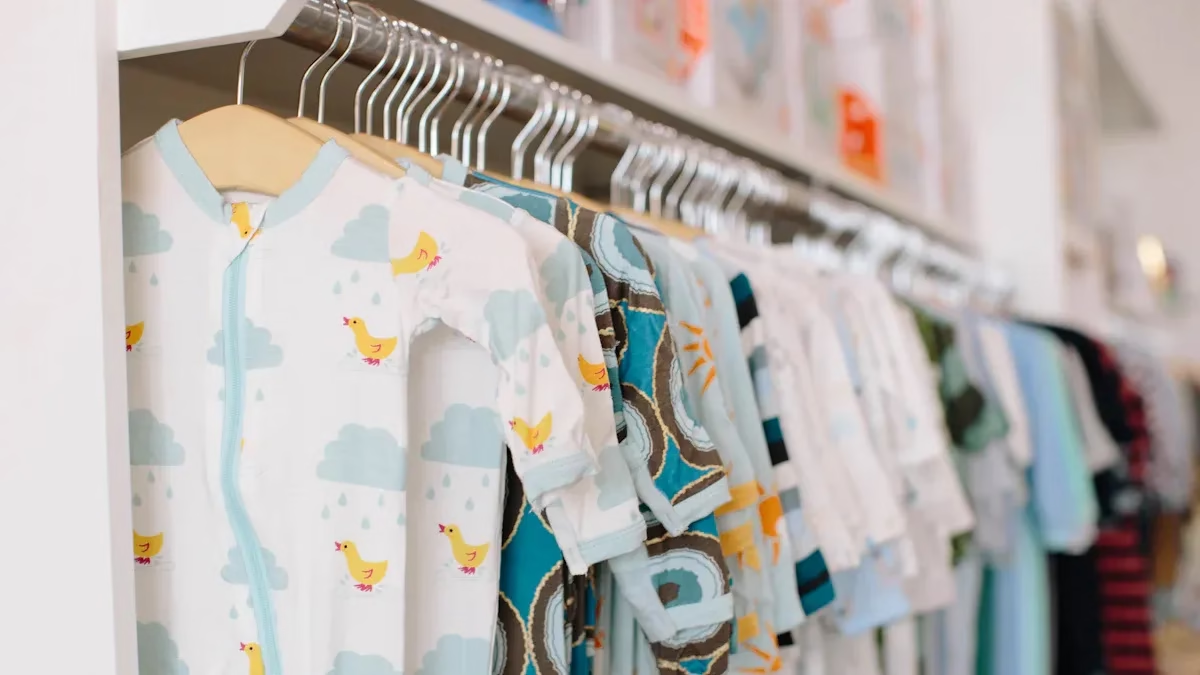
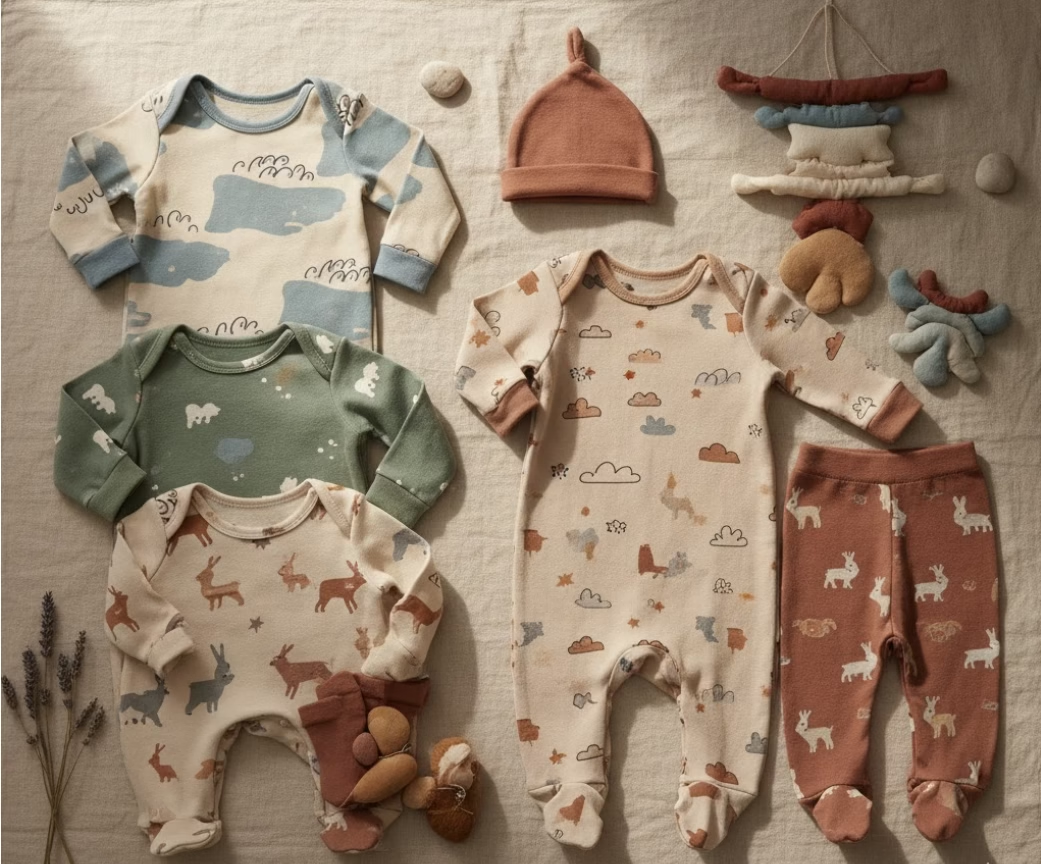
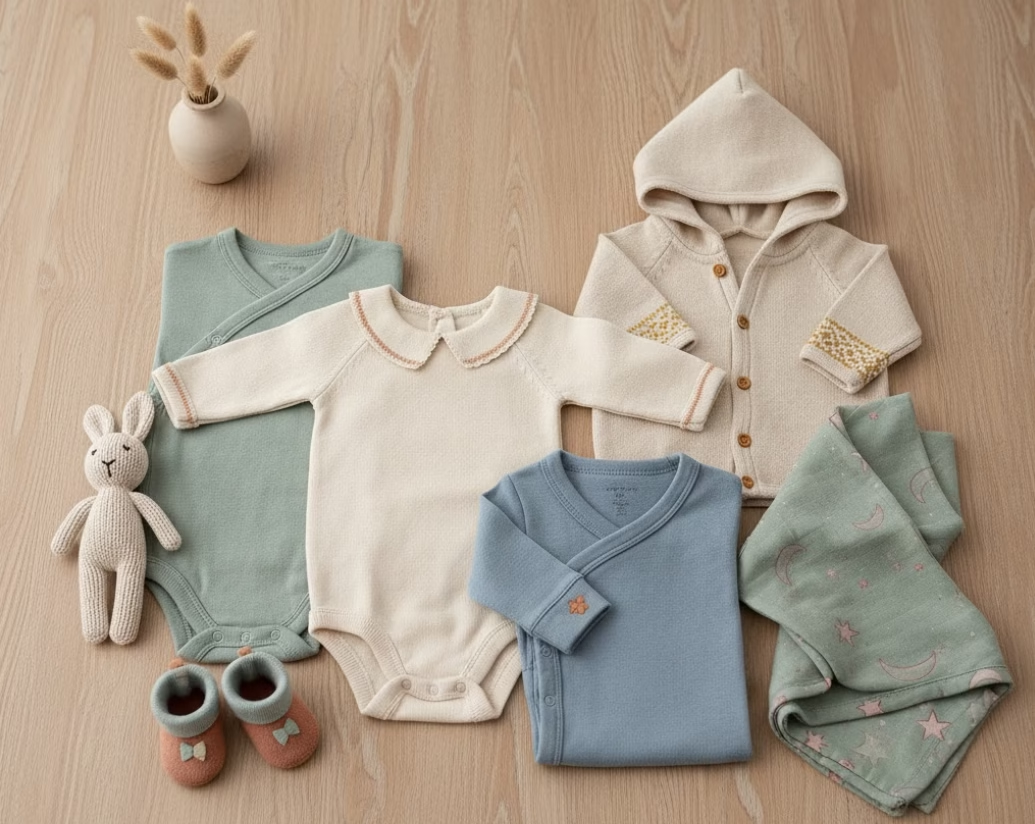
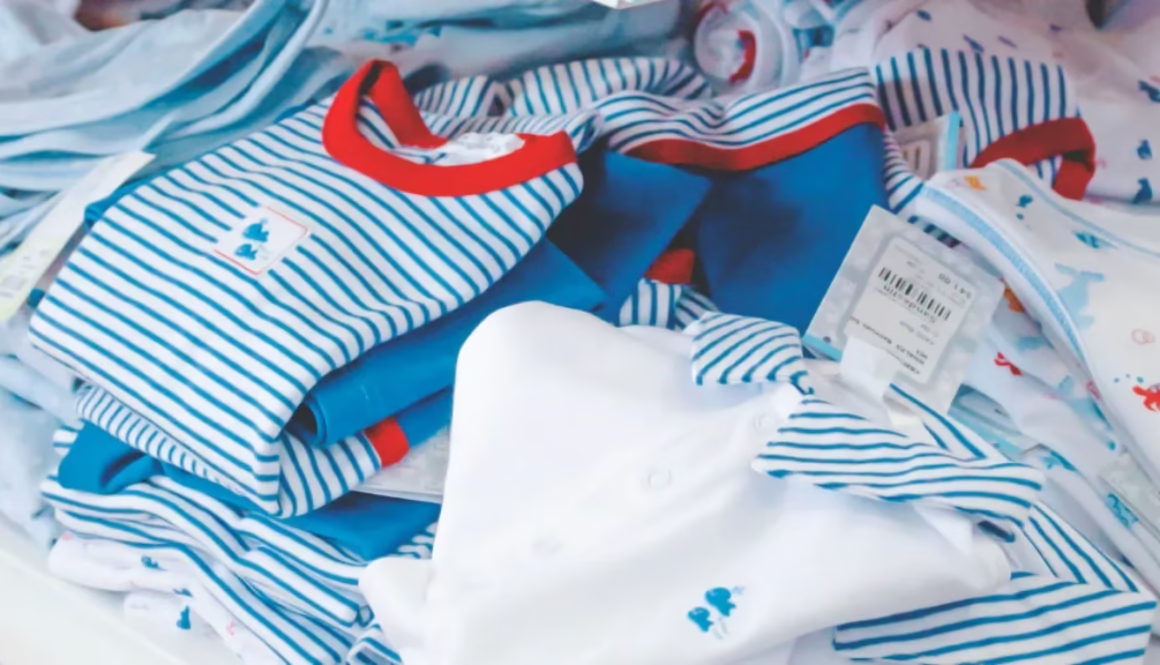
Why the Baby Apparel Market is a High-Margin Niche
The baby apparel market is a consistently growing and highly resilient vertical. It thrives not just on natural population growth, but on three core drivers:
High Repeat Purchases: Babies grow rapidly, requiring constant wardrobe updates. From Newborn to Toddler, purchasing is a continuous, predictable cycle.
The Gift-Giving Economy: Baby clothes are a perennial favorite for gifts, lending the product category a high perceived value and emotional premium.
The Rise of Conscious Parenting: Modern parents are willing to pay a premium for safer, eco-friendly, and well-designed garments, prioritizing sustainable fabrics like organic cotton and bamboo.
No idea how to make children’s clothes? This is the definitive, all-in-one guide the kids’ apparel industry doesn’t want you to have.
Differentiating Private Label vs. White Label vs. Custom Manufacturing
White Label: Buying unbranded, pre-produced items from a factory and simply attaching your own label. Pros: Fast and low cost. Cons: Lacks uniqueness and faces intense competition.
Private Label: Partnering with a manufacturer to produce goods based on your specific design and specifications. You maintain full control over the design and brand. This is the focus of this guide.
Custom Manufacturing: Designing and producing unique fabrics, patterns, and trims from scratch. This typically requires the highest Minimum Order Quantity (MOQ) and capital investment.
This ultimate guide translates your startup idea into a compliant, sustainable, and profitable launch plan. Consider this your roadmap for successfully launching a Private Label Baby Clothing brand in 2026.
With 17 years of experience, petelulu provides a full range of manufacturing services from design to delivery. Start from scratch , Create your own brand.
Your UVP is your “why”—what makes your brand distinct from the competition.
The Niche: Which age group are you serving (e.g., 6-12M sleep sacks), which specific need are you addressing (e.g., adaptive wear, clothing for babies with eczema), or which product category are you mastering (e.g., footed pajamas, ethical dresses)?
The Problem You Solve: Is it ultimate Comfort (e.g., tagless designs), strict Sustainability (e.g., zero-carbon footprint), absolute Safety (e.g., hypoallergenic fabrics), or unique Style (e.g., Scandi-minimalism)?
The Fabric: Fabric is the soul of baby apparel and the key to commanding a premium price:
Bamboo: Known for softness, breathability, and moisture-wicking properties.
GOTS Organic Cotton: The industry’s gold standard for environmental and safety compliance.
Merino Wool: Naturally temperature-regulating, often used for high-end sleepwear.
2. Market Research & Competitor Analysis
Deep Dive: Analyze the top 5 successful baby brands. Examine their pricing strategy, brand voice, and distribution channels.
Identify Market Gaps: What is the existing market missing? Is it high-quality gender-neutral basics, high-functionality outerwear, or specialized sizing for specific needs?
Target Customer Persona: Is your customer the “eco-conscious working mom,” the “value-driven grandparent,” or the “minimalist urban family”? This informs your design, pricing, and marketing messaging.
Product Design & Compliance (The Non-Negotiables)
3. Design and Technical Specifications
Product specifications are the only language your manufacturer understands and executes.
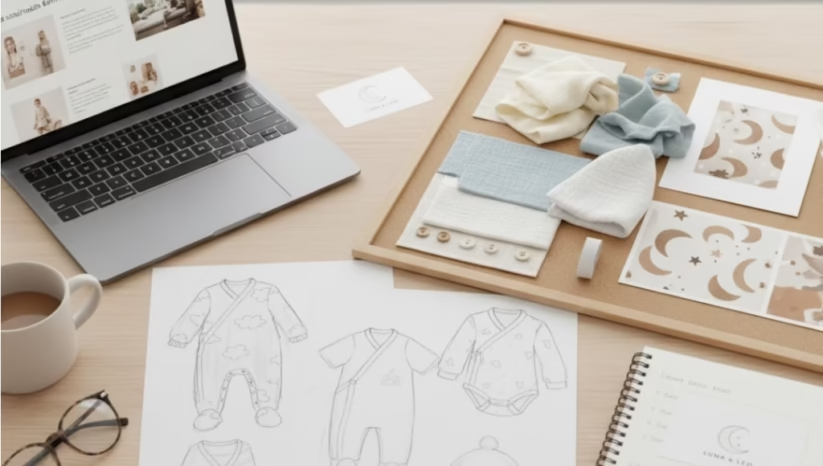
The Flat Sketch: A basic line drawing illustrating the front and back of the garment.
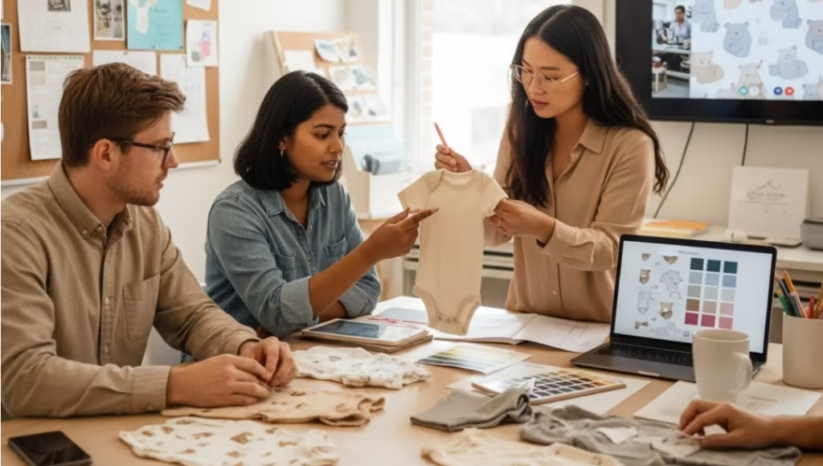
The Tech Pack (Crucial Step): This is the blueprint for your factory and the basis for quotes and production. It must include:
Bill of Materials (BOM): Fabric type, weight, and all trim components (snaps, zippers, labels).
Detailed Measurements: Clear, specific data for length, chest width, sleeve length, etc.
Color Codes: Use globally recognized Pantone Swatch Codes.
Construction Details: Stitching type (e.g., flatlock seam), specific processes (e.g., heat sealing, print placement).
Sizing & Grading: Ensuring your garments fit consistently and proportionally across all sizes. Reference international or target market standard sizing charts.
4. Safety & Legal Compliance (CPSIA Focus)
In the infant product space, compliance is the biggest barrier to entry. Safety regulations must be factored into the design phase.
CPSIA (Consumer Product Safety Improvement Act): Mandatory for all children’s products sold in the US. Key mandatory tests include:
Lead and Phthalates: Must be below mandated limits in all components.
Small Parts Testing: Any detachable components must not pose a choking hazard.
Flammability Testing: Especially for children’s sleepwear.
Tracking Labels: Legally required to be permanently affixed to the garment, showing:
Name of the private label or manufacturer.
Batch or run number.
Location and date of manufacture.
Record Keeping:Stress the absolute necessity of maintaining all safety test reports (from CPSC-accepted labs) for a minimum of 5 years. This is critical for customs and regulatory audits.
Sourcing & Production
5. Finding the Right Manufacturer
The right partner determines your product quality and supply chain stability.
Low MOQ vs. Bulk: Startups should prioritize low-MOQ manufacturers to minimize initial inventory risk and manage cash flow.
Overseas (e.g., Vietnam, Turkey, India):Pros: Cost and volume advantage. Cons: Longer lead times and more complex QC management.
Vetting Checklist:
Ask about their social and environmental certifications (e.g., GOTS, Oeko-Tex).
Confirm their Minimum Order Quantity (MOQ) and Turnaround Time (Lead Time).
Understand their sampling costs and their internal Quality Control (QC) process.
6. Sampling, QC, and Finalizing Costs
Production is an iterative process, not a single step.
Initial Samples: Checking the feasibility of the design.
Second and Final Revision Samples (PP Sample): Checking that the fabric, color, and all technical details match the Tech Pack exactly.
Quality Control (QC): Conducted either by you or a third-party inspection company:
Stitching Audit: Check all seams for strength and flatness.
Trims Check: Ensure snaps and zippers are secure and fully functional.
Label Placement: Verify the accuracy and location of tracking and care labels.
Final Costing (COGS): Locking in the Cost of Goods Sold (COGS) is necessary to accurately calculate your retail price and a healthy profit margin. Aim for a margin of at least 50-65% on the retail price.
Launch & Scaling
7. Branding & Packaging
In a crowded market, your brand story is key to establishing an emotional connection.
Brand Identity: A simple, warm logo, a consistent color palette (e.g., soft neutrals), and a brand story that resonates with parents.
Sustainable Packaging: Today’s parents prioritize materials. Using biodegradable mailers, recycled paper inserts, and custom tissue paper elevates the brand experience.
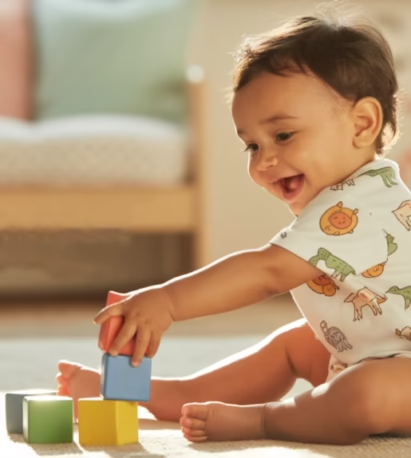
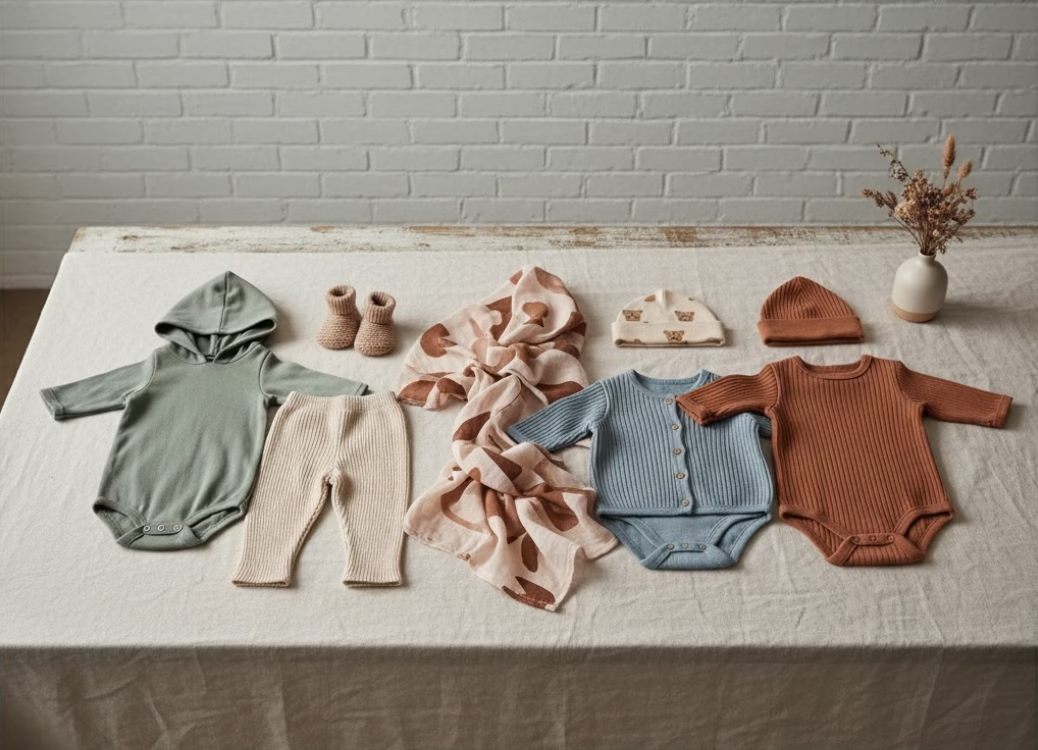
Lifestyle Photography: Invest in high-quality, aspirational product photos. This must include professional flat lays and lifestyle shots capturing babies wearing the clothes in real-life settings.
8. Go-to-Market Strategy
Sales Channels:
Shopify Store: Offers maximum control and the highest profit margins.
Etsy or Amazon: Leverage existing platform traffic for quick market testing.
Wholesale: Target high-end baby boutiques to quickly build brand awareness.
Marketing:
Influencer Marketing: Partner with Mom/Parenting Influencers on Instagram and TikTok.
Paid Ads: Utilize targeted ads to precisely reach your customer persona.
Pre-Launch Email List: Build a robust email list before launch with engaging content and exclusive discounts to ensure a successful first wave of orders.
With 17 years of experience, petelulu provides a full range of manufacturing services from design to delivery. Start from scratch , Create your own brand.
Q1: How much capital is needed to start a private label?
A: Startup costs vary widely, from $5,000 to $25,000+. This depends heavily on your initial MOQ, fabric selection, sampling costs, and first-round marketing budget. Start small with a high-margin core product line.
Q2: What are the safest fabrics for baby clothes?
A:GOTS-certified organic cotton and Oeko-Tex Standard 100-certified bamboo are considered the safest. These certifications ensure the material is free from harmful chemicals throughout the supply chain.
Q3: How long does the sampling process take?
A: Typically, it takes 6-12 weeks from submitting your final Tech Pack to receiving your final approved sample (PP Sample). Always budget time for necessary revisions and re-samples.
About the author
Xhiney, founder of Petelulu, brings over 20 years of experience in children’s wear design, production, and international trade. A contributor to Children’s Wear and Junior magazines, Xhiney has spent 17 years working with high-end children’s wear brands in Europe and the U.S., offering expert insights and support.
You might ask if bamboo rayon and bamboo viscose are the same. Brands often use the terms “rayon vs viscose bamboo” interchangeably, which can make shopping for bamboo products confusing. Choosing the right one affects how soft, strong, and eco-friendly the fabric is. Advertisements about bamboo, such as claims that it keeps you dry, can entice you to make a purchase.
When you compare rayon vs viscose bamboo, understanding what the labels mean will help you select the best bamboo fabric for your needs.
Key Takeaways
Bamboo rayon and bamboo viscose are both made from bamboo. The names can be confusing for shoppers. Both words mean the same material, but how they are made can be different. The chemicals used can also be different.
When you pick bamboo products, look at how they are made. Do not just look at the name. Try to find brands that use safer chemicals. Good brands will tell you how they make their products.
Bamboo viscose is usually softer than bamboo rayon. It is also stronger. If you want sheets that last a long time, pick bamboo viscose. These sheets feel smooth and do not get fuzzy easily.
You may notice that brands use the terms rayon vs viscose bamboo in different ways. This can make shopping for bamboo products confusing. Both rayon and viscose describe fabrics made from bamboo, but the names come from different places.
The word viscose is more common in other countries.
Both words describe similar ways to turn bamboo into soft fabric.
When you see rayon vs viscose bamboo on a label, you are looking at two names for almost the same thing. Companies choose which word to use based on where they sell their products. This can make you wonder if there is a real difference. You should know that both terms mean the fabric comes from bamboo, but the process and chemicals may change how the fabric feels and how eco-friendly it is.
Production Process Comparison
You want to know how rayon vs viscose bamboo is made. The process starts with bamboo plants. Factories break down the bamboo and turn it into a pulp. Then, they use chemicals to make the pulp into threads for fabric.
If you see bamboo rayon on a label, you may get a fabric made with fewer harsh chemicals. Bamboo viscose often uses sodium hydroxide and carbon disulfide. These chemicals can affect the environment and the safety of workers. You should check product details if you care about how your bamboo fabric is made.
Why Brands Use Different Terms and How This Affects You
Brands use rayon vs viscose bamboo to make their products sound special. Some companies want you to think their bamboo fabric is softer or greener. The words on the label can make you believe there is a big difference. In reality, most bamboo fabrics made with rayon or viscose feel very similar.
You may see claims about moisture-wicking, softness, or eco-friendliness. These claims often depend more on the production process than the name on the label. If you want the best bamboo fabric, look for details about how the bamboo was processed. Ask questions about the chemicals used and how the company treats the environment.
Practical Implications for Product Selection
When you shop for bamboo products, you should focus on how the fabric is made, not just the name. Rayon vs viscose bamboo can mean almost the same thing, but the chemicals and methods matter. You want a fabric that feels soft, lasts long, and does not harm the planet.
Here are some tips for choosing bamboo fabric:
Tip: Look for brands that share details about their bamboo production process. Ask if they use safer chemicals like those in Tencel. Check for certifications that show the bamboo fabric is eco-friendly.
You can make better choices when you understand the difference between rayon vs viscose bamboo. Pay attention to the label, but also ask about the process. This helps you find bamboo products that match your values and needs.
When you buy bamboo sheets, you want them soft and long-lasting. Many people pick bamboo viscose sheets because they stay smooth after washing. In tests, bamboo viscose lasted longer than bamboo rayon. After a few washes, bamboo rayon fabric got rough and started to pill. Bamboo viscose stayed soft and smooth. If you want comfy sheets, bamboo viscose is a good choice. Bamboo blend sheets are also strong, especially with cotton or microfiber.
Environmental Impact
You might care about how bamboo sheets affect the earth. Making bamboo rayon and viscose uses chemicals that can hurt nature. Factories use sodium hydroxide and carbon disulfide. These can pollute air and water. Waste from factories sometimes harms local plants and animals. Here are some facts about the impact:
Bamboo rayon uses chemicals that can hurt workers and nature.
The chemicals can cause pollution.
Factory waste can harm plants and animals nearby.
If you want eco-friendly bamboo blend or bamboo viscose sheets, look for brands with safer methods. Some companies use closed-loop systems to cut down on pollution.
Product Labels and Misconceptions
Labels on bamboo sheets can be hard to understand. You might see words like viscose, bamboo viscose sheets, or bamboo blend sheets. In the U.S., products must say “rayon from bamboo” or “viscose from bamboo” to follow the rules. The FTC checks labels so you know what you are buying. Here is a table that shows what agencies do about wrong labels:
Action Taken
Description
FTC Settlements
The FTC made stores follow rules for labeling rayon as bamboo.
Deceptive Claims
Some stores called products “100% organic bamboo” when they were rayon.
Warning Letters
The FTC sent letters to companies about wrong bamboo sheet labels.
Good Faith Guarantees
Stores can get promises from suppliers to avoid problems.
In the EU, every textile must have a label that shows the fiber content. Labels must be clear and easy to read. If you want to buy bamboo viscose or bamboo blend sheets, check the label for fabric details. Look for words like viscose or rayon from bamboo. This helps you choose the right bamboo sheets for your needs.
You see that bamboo rayon and bamboo viscose mean almost the same thing. Textile experts say both are semi-synthetic fibers made from bamboo. When you shop, check labels for clear terms like “rayon made from bamboo.” Choose bamboo products from brands that share their process. Look for certifications and Fair Trade suppliers for better bamboo choices.
FAQ
What makes bamboo fabric different from cotton?
Bamboo fabric feels softer than cotton. You notice that bamboo sheets stay cool and smooth. Bamboo also resists odors better than cotton. Many people prefer bamboo for comfort.
Is bamboo viscose safe for sensitive skin?
You find that bamboo viscose feels gentle on your skin. Bamboo sheets rarely cause irritation. Many people with allergies choose bamboo bedding. Bamboo fabric works well for sensitive skin.
How do you care for bamboo sheets?
You wash bamboo sheets in cold water. Use mild detergent for bamboo fabric. Avoid bleach. Dry bamboo sheets on low heat. Bamboo lasts longer with gentle care.
Tip: Always check the label for bamboo care instructions. Bamboo sheets stay soft when you follow the right steps.
You might feel stressed when looking for children’s clothing manufacturers for startups. Many new brands have trouble finding partners with the same values. If you want to start a children’s line, you need children’s clothing manufacturers who care about safety and quality. Think about your brand’s promise to be sustainable and ethical. Petelulu and other trusted companies provide real help to turn ideas into products.
Key Takeaways
Decide what your brand stands for before you talk to manufacturers. This helps you find partners who share your goals.
Make a smart budget for your startup. Begin with small orders to see how things go and lower money risks.
Talk clearly with your manufacturer and set rules early. This helps you build a strong partnership that lasts a long time.
Identifying Startup Needs for Clothing Manufacturers
Defining Product and Brand Vision
You should know what you want before talking to clothing manufacturers for startups. First, look at your market and see where you fit in. Think about what makes your brand special. Make a brand identity that your customers will like. Pay attention to the materials and how your clothes look. If you want to make clothes for kids, work with children’s clothing manufacturers who care about safety and style. Petelulu is a company that makes baby and children’s clothing. They help you turn your ideas into real products.
Tip: Write your brand values and product goals down. This helps you talk clearly with any clothing manufacturer.
Look at your market and find your niche
Make your brand stand out
Build a brand identity for your customers
Pick good materials and make your clothes look nice
Budgeting and Order Quantities
You need to plan your money before you start making clothes. Most new brands spend between $5,800 and $17,000 to start an online clothing line. Big retail brands often spend $64,500 to $131,300. The number of items you order changes your costs. Here is a simple table that shows common first order sizes and costs:
Order Quantity
Estimated Cost Per Unit
Total Cost
100 Units
$15.00
$1,500
300 Units
$12.00
$3,600
1000 Units
$9.00
$9,000
Note: Start with a small order to test your market and lower your risk.
Service Requirements: OEM, ODM, and Customization
You should know what services you want from clothing manufacturers. Many new brands want to customize, get products fast, and have good quality. Some manufacturers offer OEM and ODM services. Petelulu gives both and lets you customize baby and children’s clothing. Make sure your clothing manufacturer fits your needs and can do what you want.
Picking the right clothing manufacturers for startups helps you build a strong brand.
Types of Clothing Manufacturers for Startups
Children’s Clothing Manufacturers: Special Considerations
When picking children’s clothing manufacturers, safety and quality matter. You should look for companies with good certifications. Petelulu is special because it has OEKO-TEX, GOTS, and BSCI certifications. These show they use safe and eco-friendly materials. Check for things like strong buttons, no drawstrings, and flame-resistant sleepwear. These features help keep kids safe. Top manufacturers test their fabrics and seams to make sure they are strong.
Certification/Feature
Description
OEKO-TEX Standard 100
Fabrics free from harmful substances
GOTS
Organic and sustainable materials
ASTM International
Safety standards for flammability and durability
Secure Buttons
Prevents choking risks
No Drawstrings
Eliminates strangulation hazards
Flame-resistant Sleepwear
Required for babies 9 months and older
Non-toxic Dyes
Safe, lead-free colors
Quality Control
Fabric, seam, and wash testing
Tip: Always ask your clothing manufacturer about safety features and certifications.
Cut & Sew, Full Package, and CMT Explained
There are different ways to make clothes for startups. Each way has its own benefits. CMT means you have more control over your design. It costs less because you pay for labor only. You can change designs easily with CMT. FPP covers all services, but costs more. It is harder to change designs in the middle. CMT is good for small orders and growing brands. FPP works well if you want everything handled by the factory. Lead times are shorter with CMT because you control the process. FPP takes longer since the factory manages everything.
Feature
CMT (Cut, Make, Trim)
FPP (Full Package Production)
Control
High control over design
Less control over design
Cost
Lower, pay for labor only
Higher, covers all services
Flexibility
Easy to change designs
Harder to change mid-process
Scalability
Good for small runs and scaling
Flexible for growing brands
Lead Times
Shorter, direct control
Longer, factory-managed
You can also pick OEM, ODM, private label, or white label models. These let you choose how much control you want over your brand and design.
Domestic vs. Overseas Production
You need to choose where to make your clothes. Domestic manufacturers work faster but cost more. Overseas manufacturers are cheaper but take longer.
Production Type
Lead Times
Costs
Domestic Manufacturers
Faster turnaround times
Higher production costs
Overseas Manufacturers
Longer lead times
Lower production costs
Many startups use Maker’s Row, Alibaba, and Kompass to find partners. You should always research each clothing manufacturer to make sure they fit your brand.
Finding Clothing Manufacturers for Startups
Online Directories and Platforms
You can look for clothing manufacturers online. These websites help you compare different companies. You can find ones that fit your needs. Maker’s Row, ThomasNet, Kompass, Alibaba, and Global Sources are popular choices. Each website lets you sort by location, specialty, and certifications. Check shipping times, prices, quality, and experience before you reach out.
Tip: Read industry magazines and visit trade association sites. These can help you find more contacts and learn about new trends.
Common online resources for startups:
Maker’s Row
ThomasNet
Kompass
Alibaba
Global Sources
Trade Shows and Networking
Going to trade shows lets you meet manufacturers in person. You can look at samples and ask questions. You can compare what each company offers. Trade shows have many suppliers in one place. This makes it easier to find the best match. Networking at these events helps you make friends and learn from others.
How to make the most of trade shows:
Write down questions about order sizes and timelines.
Collect business cards and brochures from companies.
Join workshops or panels to hear expert advice.
Contact people you met after the event.
Note: Trade shows and networking events help you find good manufacturers and build strong partnerships.
Referrals and Industry Connections
Getting referrals from other designers or brand owners is helpful. Recommendations from people you trust make you feel sure about a manufacturer. They help you avoid mistakes. You can join fashion forums, Facebook groups, and online communities. These places let you talk to people with experience.
Ways to build industry connections:
Ask designers or brand owners for referrals.
Join fashion groups and forums online.
Search for local manufacturers on Google or social media.
Go to industry events and join online communities.
Networking helps you find clothing manufacturers for startups that share your brand’s vision and values.
Vetting Clothing Manufacturers: Key Steps
Picking the right partner is very important for any startup. You want clothing manufacturers who care about your values and make good products. Here are ways to check clothing manufacturers and avoid mistakes.
Questions to Ask Potential Partners
You should ask good questions when you check clothing manufacturers. These questions help you see if a manufacturer fits your needs and can help your business.
What kinds of clothes do you make?
What services do you give, like CMT, FPP, or samples?
How long does it take to make samples and big orders?
How do you fix problems or check quality?
Can I place a small test order?
How do you set your prices?
Can you show references or reviews from other clients?
Tip: Always ask for a sample before a big order. This lets you check the quality and see if the manufacturer meets your needs.
Evaluating Experience and Certifications
Experience and certifications show if a clothing manufacturer is trustworthy and fair. Look for companies with a good history and the right certificates. Petelulu, for example, has BSCI, OEKO, and GOTS certifications. These mean the manufacturer uses safe materials, treats workers fairly, and cares about the environment.
GOTS Certification: This means products use at least 95% organic fibers. It checks the whole supply chain and supports people and the planet.
OEKO-TEX Certification: This means products do not have harmful substances. The rules change every year to keep things safe.
BSCI Certification: This is about better working conditions and social responsibility. Factories must follow rules and get checked often.
You can also ask for stories or reviews from other startups. These stories show how the manufacturer helped other brands. They give you real examples of what to expect during production.
Red Flags and Common Pitfalls
You need to watch for warning signs when checking clothing manufacturers. Some red flags can help you avoid big problems.
Common Red Flags to Watch For: They do not answer your questions clearly. They will not give a sample before a big order. They do not have a real website or business address.
You may get bad quality if you skip asking for samples.
High-Pressure Sales Tactics
Pushy salespeople may not care about your needs.
Vague Responses to Questions
Unclear answers can mean they are not professional.
Unprofessional Website or Address
A weak online presence can mean an unreliable manufacturer.
Do not pick a clothing manufacturer just because they are cheap. Low prices can mean low quality, which can hurt your brand. Always look for clear answers, a real address, and a good website. Ask for samples and check their quality control steps. The best clothing manufacturers will be honest and ready to help you grow.
If you follow these steps, you can find clothing manufacturers for startups who want you to do well. Take your time to check clothing manufacturers and build a strong start for your brand.
Production and Development Transition for Startups
The production and development transition is very important for new brands. You go from planning and designing to making real clothes. This step helps you turn your ideas into finished products. You must work closely with your clothing manufacturer. This helps you avoid mistakes and delays.
Creating Tech Packs and Specifications
Tech packs are important tools for clothing manufacturers for startups. You use tech packs to show all the details of your design. A good tech pack helps your clothing manufacturer understand your ideas. It helps them follow your instructions. You should add clear drawings, measurements, and a list of materials. You also need to include notes about colors, trims, and packaging.
Label every seam, stitch, closure, and design element.
Simplicity
Keep sketches simple and easy to read.
Bill of Materials (BOM)
List every material needed for your garment.
Garment Measurement Specifications
Give all measurements and include tolerance levels.
Cost Sheets
Break down costs for materials and labor.
Additional Elements
Add colorways, fabric placement, and packaging details.
Tip: A clear tech pack helps you avoid confusion. It saves time when you make your clothes.
Sampling and Prototyping
Sampling and prototyping help you test your designs before making many clothes. You start with prototype samples to check your ideas. You use fit samples to see how the clothes look and feel. Pre-production samples let you review the final design. Top of production samples come from the first batch and show the finished product.
Fit Samples: You check the fit and design based on your instructions.
Pre-Production Samples: You approve the final sample before making many clothes.
Top of Production Samples: You check the first samples from production for quality.
You need to give clear feedback to your clothing manufacturer at each step. This helps you fix problems quickly. It also reduces the number of sample rounds. You should plan your timeline. Sampling and prototyping can take several weeks, so set realistic deadlines.
Note: Sampling helps you find mistakes early. It improves quality control.
Approving Samples and Moving to Bulk Production
You must approve samples before making many clothes. You review and test the final sample. You share feedback with your supplier and confirm pricing. You talk about terms and conditions. You choose your supplier based on the sample and the agreement.
At the end of the sample approval process, make sure the final sample matches what you want. This sample becomes the reference for your production process. Both you and your supplier use it to check the finished clothes.
Here are the steps to move from sample approval to making many clothes:
Share feedback with your supplier after testing samples.
Confirm pricing and make sure costs fit your budget.
Talk about final terms and conditions.
Choose your supplier and start making many clothes.
You need to check quality during bulk production. You should look at samples from the production line to make sure they match your approved sample. You also need to track progress and talk with your clothing manufacturers. Using fashion PLM software helps you follow each step and avoid confusion.
Callout: Always keep records of your approved samples and agreements. This protects your brand and helps you fix problems if they happen.
The production and development transition is a big step for startups. You need to make your process better, use clear tech packs, and give feedback often. You also need to get your design and production teams working together early. These tips help you move smoothly from development to production and build a strong brand.
You must plan every step in making clothes. Startups talk with their clothing manufacturer to pick fabrics. They make samples and test products together. Before making lots of clothes, you finish planning and confirm your production slot. You also set a clear timeline for each step. Most factories take 2 to 8 weeks to finish orders. The time depends on how many clothes you want and the style. Here is a simple chart that shows the steps in making clothes:
Step
Description
Materials Approval
Check and approve all fabrics and trims
Cutting
Cut fabrics using approved patterns
Sewing
Skilled workers or machines sew garments
Finishing
Add labels, tags, and final touches
Tip: Always check your timeline with your manufacturer. This helps you avoid delays.
Quality Assurance and Inspections
Quality control helps you build a good brand. You need a process to check every part of making clothes. Teach your team to find mistakes early. Use AQL sampling to check some items in each batch. Store finished clothes in safe places to stop defects. Write down inspection results to find problems and get better. You can hire experts to do extra checks. Inspections at the factory help find issues before shipping. Good quality clothes make customers trust your brand.
Check products during and after making them
Teach staff to follow quality rules
Use sampling to check quickly
Store clothes the right way to keep them nice
Write down inspection results to improve
Communication and Expectation Management
Talking clearly helps you stop problems when making clothes. Visit your manufacturer’s factory if you can. This helps you trust them and see how they work. Share your product details and quality rules to set clear goals. Meet often to talk about progress and fix problems fast. Respect your manufacturer’s skills and be fair when you talk. Open talks help you work together and reach your goals.
Callout: Give updates and honest feedback often. This keeps your production on track and helps you succeed for a long time.
Building Long-Term Partnerships with Clothing Manufacturers
Agreements and Clear Terms
You build trust by making clear agreements with your manufacturer. Write down what you expect for time, quality, and delivery. Use easy words in your contract so everyone understands. Talking clearly helps stop mistakes and confusion. If a problem happens, work together to fix it. Petelulu gives flexible ways to pay and fast service, which helps startups. When you set clear rules, you show you want to work together for a long time.
Make sure each step has a clear timeline.
Agree on how to check quality and inspect products.
Write down how and when you will pay and get your order.
Work together to fix problems when they come up.
Tip: Always look over your agreement before you start making clothes. This keeps your brand safe and helps you build a strong team.
Consistent Communication
You need to talk often with your manufacturer. Share news about your business and any changes to your products. Ask questions and give feedback at every step. Treat your manufacturer like a teammate, not just someone who sells to you. Being respectful and clear builds trust. Start with a small order to see how you work together. Talking often helps you do well with your manufacturer for a long time.
You plan to grow with your manufacturer by setting goals and using smart steps. First, look at where your business is now. Use a SWOT analysis to find what you do well and what needs work. Make your production faster and waste less by using machines and tools. Try to find new customers and markets. Use technology to help design and manage your work. Set clear goals and make a plan for each step. Fix problems that slow you down and use your resources wisely. These steps help you grow and do well with your manufacturer for a long time.
Find what you do well, what needs work, and new chances.
Use Machines and Tools
Make things faster and waste less.
Find New Customers
Look for new people who might buy your clothes.
Use Technology
Use computers and software for design and management.
Set Clear Goals
Make goals that are easy to measure and understand.
Make a Step-by-Step Plan
Break big goals into small steps.
Fix Problems in Production
Solve issues that slow you down.
Use Resources Wisely
Balance your money and supplies to help you grow.
Note: Pick a clothing manufacturer who helps you grow and cares about being green and making customers happy.
You can make a strong clothing brand if you follow simple steps. First, do research to learn about the market. Pick a manufacturer who shares your values. Tell them what you need at each step. Always care about quality and doing things the right way. Work with trusted partners like Petelulu to help you do well.
Tip: Start now. Contact a manufacturer, explain your ideas, and begin your path in the clothing business.
FAQ
What is the minimum order quantity for most clothing manufacturers?
Most manufacturers want you to order 100 to 300 pieces. Some let you try smaller test orders first. Always ask about the minimum order before you start.
How do you check if a manufacturer uses safe and eco-friendly materials?
Look for certificates like OEKO-TEX, GOTS, or BSCI. Ask the manufacturer to show proof of these certificates. You can also ask for samples to check the fabric.
Tip: Always read the labels and ask about the materials.
How long does it take to produce a clothing order?
The time to make clothes depends on your order and design. Most manufacturers finish orders in 2 to 8 weeks. Always check the timeline before you order.
Order Size
Estimated Production Time
Small (100 pcs)
2-4 weeks
Large (1000+)
6-8 weeks
Can you customize designs with manufacturers like Petelulu?
Yes, you can change designs, fabrics, and sizes. Petelulu gives OEM and ODM services. You share your ideas, and their team helps you make special products.
What should you include in a tech pack for your clothing line?
You need to add drawings, sizes, fabric choices, colors, and trim details. A clear tech pack helps your manufacturer know what you want.
Note: Simple and clear tech packs help you avoid mistakes and save time.
You want your baby to feel safe and cozy each day. Picking an organic baby clothes manufacturer can help a lot. Organic choices let you skip chemicals like formaldehyde, phthalates, and Azo dyes. These chemicals can hurt your baby’s soft skin and health. Many parents worry about choking from decorations or getting caught on drawstrings. You also think about the earth and your money. Choosing a trusted manufacturer helps you feel calm and keeps your baby safe.
Key Takeaways
Picking organic baby clothes keeps your baby’s skin safe from bad chemicals. Organic cotton feels softer and does not cause allergies. It is good for babies with skin problems like eczema. Choosing organic clothes helps farmers use better ways to grow cotton. It is also good for the earth. Organic baby clothes can cost more at first. But they last longer and may save you money later. Check for labels like GOTS and OEKO-TEX. These show the clothes are safe and good quality.
Is Organic Baby Clothing Worth It?
Key Benefits for Babies
When you want the best for your child, organic baby clothing is a good choice. You want your baby to feel safe, happy, and comfortable. Organic cotton baby clothes have many good points for families.
Babies’ skin is about 30% thinner than adult skin. Their skin soaks up more from things around them, so what touches it is important.
Organic cotton is soft and does not often cause rashes or allergies. The National Eczema Association says organic cotton is good for babies with eczema because it has fewer things that can bother skin.
Your baby might sleep better in organic cotton clothes. The Sleep Foundation says organic cotton lets air move, so your baby stays cool or warm.
Organic baby clothes do not use bad chemicals. A 2022 study in Environmental Pollution found organic cotton bodysuits had much less PCBs than regular ones. PCBs can give babies rashes and hurt their immune system.
Clothes with OEKO-TEX Standard 100 certification are tested a lot. These clothes do not have bad stuff, so you worry less about rashes or allergies.
Here’s a quick look at what science says about organic cotton baby clothes:
Evidence Source
Description
National Eczema Association
Organic cotton is recommended for infants with eczema due to fewer irritants.
Sleep Foundation
Organic cotton is breathable, helping babies regulate temperature.
2022 Study in Environmental Pollution
Organic cotton bodysuits have lower levels of harmful PCBs.
You help the earth when you pick organic baby clothes. Organic cotton farms do not use strong bug sprays or chemicals. This helps keep plants and animals safe and keeps soil healthy. Organic cotton uses up to 91% less water than regular cotton. Farmers see more good bugs and better land.
Advantage
Description
Reduced Chemical Use
Organic apparel does not contain harmful elements that can harm babies’ skin.
Lower Water Consumption
Organic cotton production can reduce water consumption by as much as 91%.
Positive Impact on Biodiversity
40% of organic cotton farmers reported an increase in beneficial organisms.
Drawbacks and Considerations
You want to make a smart choice, but you should think about the downsides too. Organic baby clothes usually cost more than regular ones. The price can make you stop and think, especially if you need a lot or have a small budget.
Organic baby clothes cost more than synthetic ones, so some families may not buy them.
There are not as many organic fabrics as synthetic ones, so they can be harder to find.
Regular baby clothes are easy to find and come in many styles. You might see more choices in stores or online. Sometimes you need something fast or cheap, and regular clothes work for that.
Organic cotton baby clothes do not always come in every size or style. You may have to look harder or wait for new stock. If you live in a small town, you might need to order online.
You also need to think about washing. Organic cotton is strong, but it needs gentle care. Wash with mild soap and let clothes air dry to keep them soft and safe.
Tip: If you want organic cotton but worry about price, buy a few main things like bodysuits or pajamas. You can mix these with regular clothes for a good mix.
Picking organic baby clothes from a trusted manufacturer helps you feel calm. You know your baby’s skin is safe, and you help the earth. Still, you should think about the price and how easy it is to find before you decide.
Comparing Baby Clothes Manufacturers
Organic vs Conventional Manufacturers
When you shop for baby clothes, you have two main choices. You can pick organic manufacturers or conventional ones. Organic manufacturers, like Petelulu, use certified organic materials. They care about the earth and use eco-friendly ways to make clothes. They use organic cotton, bamboo, and recycled fibers. These fabrics are gentle on your baby’s skin. They do not use harmful pesticides. Petelulu checks every piece to make sure it is safe and comfy for babies.
Conventional manufacturers use synthetic fabrics and regular cotton. Synthetic baby clothes can feel soft. But they might have chemicals that bother sensitive skin. Regular cotton uses more water and pesticides. Synthetic baby clothes can trap heat and sweat. This can cause rashes. You can find synthetic baby clothes almost everywhere. They usually cost less. But they may not be as safe as certified organic clothes.
Here is a quick list to help you compare:
Organic manufacturers use certified organic cotton and recycled materials.
Conventional manufacturers use synthetic fabrics and regular cotton.
Synthetic baby clothes are easy to find, but certified organic ones protect your baby’s skin better.
Certifications and Standards
You want to trust the clothes your baby wears. Certifications help you know which brands meet high standards. Certified organic baby clothes often have labels like GOTS, OEKO-TEX, and BSCI. These labels show the company cares about safety, the earth, and fair work.
Environmental sustainability, social responsibility
Ensures eco-friendly processes and fair labor practices
OEKO-TEX®
Tests for harmful substances
Ensures consumer safety and product transparency
BSCI
Improved working conditions, ethical standards
Promotes better labor practices and supply chain transparency
CPSC
Compliance with safety standards
Ensures product safety and regulatory compliance
Petelulu is special because they use certified organic fabrics. They meet strict rules like GOTS. You can feel calm knowing your baby’s clothes are safe and made with care. Conventional manufacturers may not follow these rules. Synthetic baby clothes and fabrics rarely have these labels. When you pick certified organic, you help your child and the planet.
Tip: Always look for GOTS and other labels before you buy baby clothes. Certified organic choices give you extra peace of mind.
You want your baby’s clothes to be safe. Many parents worry about chemicals in synthetic baby clothes. These chemicals can hurt your child’s health. Synthetic baby clothes may have fire retardants, pesticides, formaldehyde, glues, dyes, and antimicrobial treatments. These things can cause skin problems, allergies, or breathing trouble.
Fire retardants can make skin itchy and cause breathing trouble.
Pesticides can give babies rashes and allergies.
Formaldehyde can bother skin and cause dermatitis.
Glues and adhesives can mess with hormones.
Dyes can make skin itchy.
Antimicrobial treatments can dry skin or cause dermatitis.
Tip: Always look for labels like GOTS when you buy organic cotton baby clothes. These labels show the fabric is safe and chemical-free.
Comfort and Skin Sensitivity
Your baby’s comfort is important too. Babies have soft and delicate skin. Synthetic baby clothes can bother sensitive skin, especially if they have pesticides or strong chemicals. You might see rashes or allergies after your baby wears synthetic clothes.
Organic cotton feels soft and gentle. It does not have harsh chemicals and is hypoallergenic. Babies with eczema or rashes do better in organic cotton clothes. You help your child avoid itching and pain. Organic clothes are best for sensitive skin. You also help farmers who use good methods when you pick organic cotton.
Organic baby clothes are gentle and hypoallergenic.
Regular clothes can cause allergies.
Organic cotton keeps your baby comfy and safe.
You want your child to feel good in every outfit. Picking organic cotton baby clothes helps you worry less about health and comfort.
You may ask how organic cotton baby clothes help the earth. Organic cotton farming uses less water and fewer resources. Farmers use natural ways and skip harmful pesticides. They do not use synthetic fertilizers. This keeps the soil healthy and helps animals nearby. Most organic cotton farms use rainwater. This means rivers and lakes do not get stressed. When you pick organic cotton, you help save water.
A Textile Exchange study showed organic cotton uses much less water. It uses up to 91% less water than regular cotton. That is a big difference! Organic cotton also makes less pollution. Farmers use renewable energy and local sources. You help keep the air clean when you choose organic cotton baby clothes.
Here is a table that shows the difference between organic and regular cotton:
Aspect
Organic Cotton
Conventional Cotton
Water Usage
91% less
Higher
Carbon Footprint
Lower
Higher
When you pick organic cotton baby clothes, you help the planet. You support good farming and protect nature for your child’s future.
Conventional Manufacturing Effects
Making regular baby clothes can hurt the environment in many ways. Factories use synthetic dyes and pesticides. These chemicals can pollute water and soil. Sometimes, they cause skin problems for babies. Regular cotton farming uses lots of water and chemicals. This leads to more pollution and higher water use.
The fashion industry uses many resources and makes waste. Regular cotton production often uses fossil fuels. This makes more pollution and raises the carbon footprint. You see regular baby clothes everywhere, but they harm the earth more.
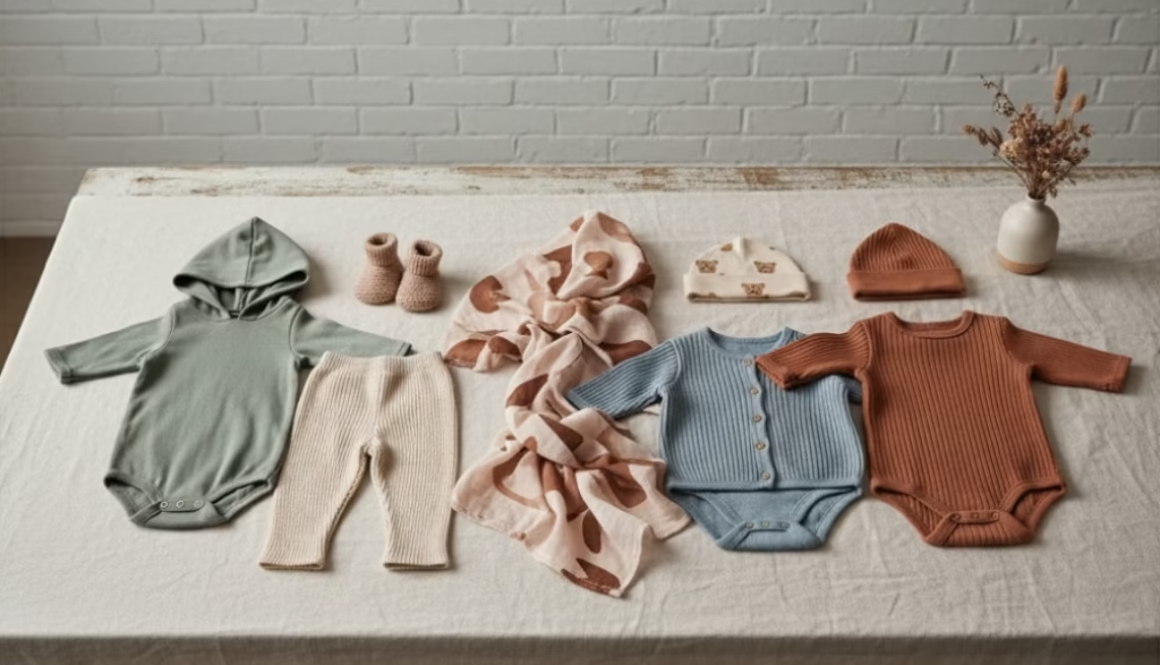
Here are some main effects of regular manufacturing:
Factories use bad chemicals like synthetic dyes and pesticides.
Regular cotton farming needs lots of water and chemicals.
The fashion industry pollutes and uses a lot of water.
Regular baby clothes have a bigger carbon footprint than organic ones.
You can help the earth by picking organic cotton and supporting organic farms. Every small choice helps the environment.
Cost of Organic vs Conventional
Price Differences
When you shop for baby clothes, you see the price first. Organic cotton onesies cost more than regular ones. You pay extra because organic cotton uses safer farming. Farmers do not use strong chemicals. Synthetic baby clothes usually cost less. Regular cotton is cheaper because it uses fast farming and more chemicals.
Synthetic baby clothes cost about the same as regular cotton. Sometimes, synthetic fabrics are even cheaper. Lower prices make it easy to buy lots of regular or synthetic baby clothes. If you want to save money, you might pick regular cotton or synthetic fabrics. Organic cotton costs more, but it is better for your baby’s health and comfort.
Value for Money
You may wonder if organic cotton is worth the price. Many parents say organic cotton baby clothes last longer. You can wash them many times, and they stay soft and bright. Synthetic baby clothes can fade or wear out faster. Regular cotton can lose its shape after a few washes.
Parents think organic cotton is a smart buy. You pay more at first, but you get clothes that protect your baby’s skin. Organic cotton is gentle and does not have strong chemicals. You can reuse organic cotton clothes or give them to younger kids. Synthetic baby clothes may not last as long, so you buy new ones more often.
Parents say organic cotton baby clothes last and keep their color.
The higher price is worth it for health and safety.
You can reuse organic cotton clothes, which saves money over time.
If you want clothes that last and keep your baby safe, organic cotton is a good choice. Regular cotton and synthetic fabrics cost less, but you may spend more later if you need to buy new clothes often.
Durability and Practicality
Longevity of Organic Clothing
You want baby clothes that last through playtime, nap time, and lots of washes. Organic cotton stands out for its strength and durability. You can count on these clothes to keep their shape and softness, even after many trips through the laundry. When you choose organic cotton, you get garments made to handle daily wear. Parents often find that organic cotton clothes stay looking new longer than conventional options.
Organic cotton and hemp fabrics are tough. You can wash them often without worrying about fading or tearing. Many families pass organic cotton baby clothes down to younger siblings or friends. This helps you save money and cut down on waste. You build a wardrobe that grows with your child. Adjustable designs and high-quality stitching make organic cotton a smart investment. You spend a little more at first, but you get clothes that last.
Did you know? Organic cotton baby clothes can become hand-me-downs, helping you reduce waste and support sustainability.
Care Tips
You want to keep your organic cotton baby clothes looking fresh and feeling soft. Simple care steps help you get the most out of every piece. Try these tips:
Use mild detergents that protect sensitive skin and keep organic cotton soft.
Skip fabric softeners. If you want extra softness, add a splash of white vinegar.
Choose the gentle cycle to reduce wear and tear.
Wash similar fabrics together so you avoid snags and damage.
Air dry when you can. High heat can shrink organic cotton.
Store clothes in a cool, dry place to protect them from fading and deterioration.
You don’t need fancy products or complicated routines. With these steps, your organic cotton baby clothes stay comfortable and last longer. You keep your child happy and your wardrobe sustainable.
Myths About Organic Baby Clothes
Safety Misconceptions
Some people think organic baby clothes are always safe. That sounds good, but it is not always true. Labels like “100% organic cotton” only show how cotton was grown. They do not tell you how the fabric was made. Companies sometimes use chlorine bleach or heavy metal dyes. These chemicals might not be listed on the label. Your baby could still touch these chemicals.
Many parents believe “organic” means no risk at all. The word “organic” can be confusing. Some brands use “organic” just to sell more clothes. You might see words like “eco-friendly” or “green.” These words do not always mean the clothes are safe. You should look for real certifications, not just fancy words.
Baby skin is thinner than adult skin. It soaks up more from clothing. Babies’ bodies cannot remove toxins as well as adults. Chemicals from synthetic fabrics or treatments can build up in babies. You want to keep your child safe. Always check for trusted certifications like GOTS or OEKO-TEX.
All organic baby clothes are processed without chemicals.
Tip: Always look for clear certifications. Ask questions about how clothes are made.
Environmental Claims
People say organic baby clothes help the environment. This is true in many ways, but not always. Using organic fabrics like cotton or bamboo lowers harmful chemicals. Sustainable practices can use less water and energy. Organic manufacturing often leaves a smaller mark on the earth.
Here are some facts:
Evidence
Description
Organic Fabrics
Using organic fabrics like cotton or bamboo reduces harmful chemicals.
Ecological Footprint
Organic manufacturing significantly lowers the ecological footprint.
Sustainable Practices
Sustainable processes reduce water and energy consumption.
Some people think organic cotton always saves water. This is not always true. Sometimes, organic cotton needs more water than regular cotton. High demand for organic cotton can cause farming problems. You want to help the planet, but you should check how brands grow and process their cotton.
Synthetic baby clothes use fabrics made with pesticides and harsh chemicals. These can hurt the environment and your baby’s health. More people now worry about chemical sensitivities. Organic options can lower these risks, but you should always look for proof of sustainable practices.
Note: Do not trust claims like “plastic-free” or “green” without real proof. Ask brands for details about their materials and how they make clothes.
Real Experiences and Expert Insights
Parent Stories
You want to know what other parents think before you buy. Many families talk about using organic baby clothes. Some parents say their babies stopped getting rashes after switching to organic cotton. Others notice their kids sleep better in soft, chemical-free pajamas. You might hear stories about clothes lasting through many washes and still looking new.
Here’s what parents often say:
Their babies have fewer skin problems.
Clothes feel softer and more comfy.
Outfits stay bright and strong after lots of washes.
They feel good knowing they help the planet.
One mom said, “I tried Petelulu’s organic bodysuits for my daughter. Her eczema got better, and the clothes stayed soft even after many laundry days.” Another parent shared, “Petelulu’s fast delivery helped me get safe clothes quickly. I like that they use recycled fabrics.”
Parents trust Petelulu because the company cares about quality and safety. You feel calm when you pick a brand with a good reputation.
Pediatrician Advice
You want expert advice for your baby’s health. Pediatricians often suggest organic baby clothing, especially for babies with sensitive skin. They say organic cotton and bamboo are soft, let air move, and do not have bad chemicals. These fabrics help stop skin problems and conditions like eczema.
Breathable fabrics help keep your baby cool and comfy.
Soft materials lower friction, which helps babies with skin problems.
Pediatricians agree that picking organic baby clothes can help your child feel better and stay healthy. You help your baby avoid allergies and stay happy all day.
When to Choose an Organic Baby Clothes Manufacturer
Best Situations for Organic
You want your baby to be safe and comfy. Sometimes, picking organic baby clothes is the best idea. If your child has allergies or sensitive skin, organic cotton is a smart choice. Babies chew on their clothes a lot. You do not want them to touch bad chemicals. Organic cotton helps protect soft skin and lowers the chance of rashes.
You may also care about the earth. Organic baby clothes help the planet by using less water. They support farms that do not use strong chemicals. This keeps nature clean for your child’s future. Many parents pick organic to help workers get fair treatment. Organic baby clothes makers follow strict rules to treat workers well.
Here are times when organic is the best pick:
Your baby has eczema, allergies, or very sensitive skin.
You want to keep chemicals and pesticides away from clothes.
You care about the earth and want to help good farms.
You want workers to be treated fairly and get safe jobs.
Sometimes you need baby clothes quickly or want to save money. Conventional cotton is easy to find and comes in many styles. If your baby does not have skin problems, regular clothes can work fine. You might pick conventional baby clothes for playtime or daycare.
Conventional cotton costs less. You can buy more clothes for less money. This helps if you have a small budget or need extra outfits. Regular baby clothes come in lots of colors and designs. You get more choices and can shop almost anywhere.
Here’s a simple table to help you choose:
Situation
Organic Cotton
Conventional Cotton
Sensitive skin or allergies
Best choice
May cause irritation
Eco-friendly and ethical values
Supports sustainability and fair labor
Less focus on environment or ethics
Budget and accessibility
Higher price, less variety
Lower price, more variety
Everyday wear and convenience
Good for basics and essentials
Great for play clothes and extras
You can use both types. Pick organic cotton for pajamas and bodysuits. Use regular cotton for play clothes. This way, your baby stays comfy and you get the best of both.
If you want soft, certified fabrics and safe clothes, Petelulu is a great choice. Pick what works best for your family. Trust yourself because you know what your baby needs.
FAQ
What makes organic baby clothes different from regular ones?
Organic baby clothes use natural fibers. These fibers are grown without bad chemicals. The fabric feels softer and gentle on skin. Certified organic clothes help protect the earth.
How do I know if baby clothes are truly organic?
Check for labels like GOTS or OEKO-TEX. These labels mean the clothes are safe and eco-friendly. If you are not sure, ask the brand for more info.
Are organic baby clothes safe for babies with allergies?
Yes! Organic cotton is hypoallergenic. It does not often cause rashes or irritation. Many parents see fewer skin problems after switching to organic.
Do organic baby clothes last longer than regular ones?
Organic cotton stays strong after many washes. The fabric keeps its softness and shape. You can reuse these clothes for siblings or friends. This saves you money over time.
Is it hard to care for organic baby clothes?
No, it is easy. Wash with mild detergent and cold water. Do not use harsh chemicals or fabric softeners. Air drying helps keep clothes soft and makes them last longer.
If you want a very soft and comfy plain baby onesie, bamboo is often best. Bamboo feels nice on sensitive skin. It stays cool and does not shrink much after washing. Cotton is strong and lasts through daily use. Choosing the right fabric helps your baby feel good. It also helps you feel calm and happy.
When you touch a plain baby onesie, you want it to be soft. Bamboo onesies feel smooth and silky. Many parents say Kyte Baby and Little Sleepies make very soft bamboo onesies. These onesies get even softer after you wash them. Bamboo blends like TENCEL™ and modal feel smooth and help babies with sensory issues feel good.
Organic cotton is also gentle, especially if it does not have harsh chemicals. Parents trust organic cotton because it is soft and safe. Here’s what people and experts say about how these fabrics feel:
Bamboo-derived fabrics are known for being breathable and silky.
Little Sleepies bamboo pajamas are soft and good for babies with sensory needs.
Kyte Baby onesies are soft and breathable, and they get better after each wash.
If you want a plain baby onesie that feels extra smooth, bamboo is a great pick. If you want something classic and gentle, organic cotton is a good choice.
Breathability and Temperature
To keep your baby comfy, pick a onesie that lets air move and helps control heat. Bamboo fabric is famous for letting air flow and pulling moisture away. It keeps your baby cool and dry, even on warm nights. Cotton also lets air in, but it holds moisture longer, so your baby might feel damp.
Doctors say babies should wear clothes made from breathable fabrics. Bamboo is great because it helps control body heat. Babies in bamboo pajamas stay dry and comfy, even in rooms around 72°F. Cotton works well, but bamboo’s moisture-wicking keeps your baby from getting sweaty or cold.
Breathable fabrics like bamboo and cotton help control temperature.
Bamboo’s moisture-wicking keeps babies comfy.
Cotton holds moisture longer and does not control temperature as well.
If you want a plain baby onesie for any season, bamboo is a smart choice.
Sensitive Skin Suitability
You want your baby’s skin to stay healthy and not get irritated. Both organic cotton and bamboo are good for sensitive skin. Organic cotton is grown without fake chemicals, so it is safe. Bamboo fabric feels smooth and helps stop irritation.
Both fabrics are less likely to cause allergies than regular cotton or fake materials. Bamboo’s natural antimicrobial properties help lower the chance of skin infections and control smells. This helps if your baby drools or spits up a lot.
There is no proof that bamboo is hypoallergenic, but its smooth fibers help stop irritation.
Bamboo processing uses chemicals that may be risky, so pick trusted brands.
Organic cotton is grown without fake chemicals, so it is healthier.
You might find that a plain baby onesie made from organic cotton is best for babies with eczema or allergies. Bamboo is also a good pick, especially if you want something soft and breathable.
When you buy a plain baby onesie, you want it to last through many washes and lots of play. Bamboo fabric has a higher tensile strength than cotton, so it can handle stretching and pulling without tearing. You might notice that bamboo onesies keep their shape well, even after your baby wears them all day. Cotton is tough too. It stands up to rough play and frequent washing, which makes it a favorite for many parents.
But there are some differences. Bamboo feels silky at first, but if you wash it too harshly, it can lose that soft touch. Cotton can handle more aggressive washing, but over time, it may start to pill. Pilling means little balls of fabric form on the surface, which can make the onesie feel rough.
Tip: If you want your plain baby onesie to last longer, try to wash it gently and avoid high heat in the dryer.
Shrinking and Fading Resistance
You might worry about your baby’s clothes shrinking or losing color. Bamboo onesies usually resist shrinking better than cotton. They keep their size and shape, even after many washes. Cotton onesies can shrink, especially if you use hot water or a hot dryer. If you want to keep your plain baby onesie fitting just right, always check the care label.
Color fading and pilling are also important. Here’s how both fabrics compare:
Cotton onesies can handle harsher washing but often develop pilling, which affects their texture over time.
If you want a onesie that stays bright and smooth, gentle washing is key for both fabrics.
Care and Maintenance
Taking care of your baby’s clothes helps them last longer and look better. Both bamboo and cotton need some special attention. Bamboo clothing likes gentle washing, air drying, and careful storage. These steps help keep the fabric soft and prevent damage. Cotton also does better with gentle handling, even though it can take a bit more roughness.
Run an extra rinse cycle to avoid detergent residue.
For grease stains, use baking soda before a gentle stain remover.
For set stains, leave the remover on longer and try natural options first.
Always run an extra rinse, especially for small loads, to make sure no detergent stays on the fabric.
Keep your washing machine clean and air it out often.
If you follow these steps, your plain baby onesie will stay soft, bright, and comfy for your baby. You will also get more value from every purchase.
Value and Practical Factors
Price Comparison
When you buy a plain baby onesie, price is important. Cotton onesies usually cost less than bamboo onesies. Brands like Lark sell cotton onesies for about $10 less than bamboo onesies. Bamboo onesies from Kyte Baby and Little Sleepies cost more because they are softer and have extra features. Some bamboo onesies have fold-over hands and feet or longer fits. These features make them worth more. Cotton onesies last a long time and are easy to replace. You spend less money over time.
Here is what parents say about value:
Brand
Pros
Cons
Lark
Costs less than bamboo; feels strong
Not many styles; thicker fabric
Little Sleepies
Fits longer; fold-over hands and feet
Looks like pajamas
Kyte Baby
Good resale value; stylish solid colors
Slim fit; can be see-through
Cotton is a good choice if you want to save money and have more options.
Environmental Impact
You want to help the planet, so fabric matters. Cotton needs lots of water and pesticides. This can hurt the soil and pollute water. Bamboo grows fast and needs less water and fewer chemicals. It is better for the earth, but how companies make bamboo fabric can change how green it is.
You want choices when you shop. Cotton onesies are easy to find. There are many styles, colors, and sizes. Bamboo onesies are not as common, but brands like Kyte Baby and Little Sleepies have solid colors and special fits. Lark has fewer styles, but their onesies feel strong. Bamboo onesies can look like pajamas, so they are best for sleep or relaxing.
Tip: If you want lots of choices and easy shopping, pick cotton. If you want something soft and special, bamboo is a good idea.
You want your baby to feel comfy and safe. Bamboo onesies win for softness and stretch, making them great for sensitive skin and active toddlers. Cotton is easy to care for and lasts through lots of washes. Check out this quick guide:
If your baby sweats a lot or has skin issues, go with bamboo. For easy care and classic comfort, cotton works well. Many parents mix both to get the best of each. 😊
FAQ
Are bamboo onesies safe for babies with allergies?
Yes, bamboo onesies feel gentle on sensitive skin. You can trust them for babies with allergies. They rarely cause irritation. Always check for trusted brands to avoid harsh chemicals.
Do bamboo onesies stretch out over time?
Bamboo fabric has great stretch. It bounces back well after washing. If you wash gently, your onesie keeps its shape. Avoid high heat to help it last longer.
Will cotton onesies shrink after washing?
Cotton onesies may shrink if you use hot water or a hot dryer. To keep the right fit, wash in cold water and air dry when possible.
Which fabric is easier to clean?
Tip: Both bamboo and cotton clean up well. For tough stains, use a gentle stain remover and rinse twice. Bamboo needs a bit more care, but both fabrics stay soft with gentle washing.
Choosing the best infant clothing manufacturers can help your brand do well. You need products that are good quality and show what your brand stands for. Working with skilled partners helps you earn trust from your customers. Your brand becomes known when you give safe, cool, and comfy clothes. Find manufacturers who care about quality and doing the right thing.
Key Takeaways
Decide what your brand needs for infant clothing. Think about style, comfort, and safety.
Pick manufacturers with good certifications like GOTS and OEKO-TEX. This helps make sure the clothes are safe and high quality.
Look at how much experience the manufacturers have. Check if they offer customization and can make more clothes as your brand gets bigger.
Choose manufacturers that care about sustainability and fair labor. This helps your customers trust your brand.
Ask for samples before you order a lot. This lets you check the quality and design. Make sure they match your brand’s standards.
Define Brand Needs
Product Requirements
First, write down what your brand wants in baby clothes. Think about style, comfort, and how the clothes work. Many brands want soft fabrics and easy-to-use designs. Safety is also very important for infants. Here are some things brands often look for:
Safety features like snap buttons and seams that are covered
The ability to order the right amount for your business
Petelulu lets you pick different styles and materials. You can choose fabrics that are natural, organic, or recycled. This helps your brand stand out and match your values.
Quality and Safety Standards
You need to make sure your clothes are safe and high quality. The best infant clothing manufacturers follow strict rules to keep babies safe. The table below lists some important certifications and what they mean:
Standard
Description
GOTS Certification
Uses organic fibers and follows tough rules for the environment and workers. No bad chemicals.
OEKO-TEX® Standard
Checks for harmful stuff in every step of making clothes. Safe for babies.
CPSIA Compliance
Tests for lead and choking dangers in baby clothes sold in the U.S.
EN71 Standards
Focuses on safety for toys and child products in Europe, like fire and chemical risks.
Petelulu has BSCI, OEKO, and GOTS certifications. This means they care about making safe and fair products.
Target Market
You should know who will buy your baby clothes. Look at how old the parents are and how big their families are. Think about how much money they make. Culture also affects what styles people like. Most people who buy baby clothes online are women. Many are between 25 and 44 years old. Here are some things to think about:
When you search for top infant clothing manufacturers, check their skills and how they meet your brand’s needs. This helps you pick a partner who can grow with your business. It also keeps your products safe and high quality.
Experience and Capabilities
First, see how long the manufacturer has made infant clothes. Companies with many years in the business know how to fix problems. They also meet high standards. Look for strong certifications. BSCI, OEKO, and GOTS show the company cares about safety and the environment.
Petelulu has over 17 years of experience. Their team has more than 100 sewing workers and 10 baby clothing designers. You get expert help at every step. You should find a manufacturer who offers both OEM and ODM services. This lets you use your own designs or pick from their ideas.
Tip: Always ask for proof of certifications and past work. This shows if the manufacturer meets your needs.
Customization Options
You want your brand to be special. Customization is important. Many infant clothing manufacturers let you pick special designs and safe printing. You can choose water-based or digital printing. These are safe for babies and good for the earth. Customization helps you make clothes that parents like and trust.
Petelulu gives you many ways to customize. You can pick natural, organic, or recycled fabrics. Their design team helps you make tech packs with all the details. This makes sure your ideas become real products. You can add your logo, choose colors, and pick trims. These choices help your brand stand out.
Production Scalability
As your brand gets bigger, you need a manufacturer who can keep up. Good infant clothing manufacturers manage their supply chain well. They use advanced tools to make clothes faster. They also check quality at every step. This keeps your products safe and on time.
Here is a sample timeline for making infant clothes:
Manufacturers like Petelulu use quality control inspectors and follow the AQL 2.5 inspection standard. They check fabrics, test products in labs, and give reports before shipping. This helps you send safe and high-quality clothes to your customers.
Note: Pick a manufacturer who can make more clothes as you grow. They should not lose quality. This helps your brand grow well.
When you check infant clothing manufacturers, look at their experience, how they customize, and if they can grow with you. These steps help you build a strong partnership and make products parents trust.
You should check what certifications a manufacturer has. Certifications show the company cares about safety and the environment. Many top infant clothing manufacturers show their certifications. This helps parents and stores trust them. Here is a table with some important certifications:
Certification Name
Description
OEKO-TEX
Makes sure clothes do not have harmful chemicals. This keeps infants safe.
Fair Trade
Promises fair pay and safe work for workers. This supports good practices.
B Corporation
Shows the company cares about people and the planet. They are honest and responsible.
Global Organic Textile Standard (GOTS)
Proves the use of organic fibers and eco-friendly ways. This means the products are natural.
OEKO-TEX Standard 100
Checks for bad substances in materials. This keeps baby clothes safe.
Manufacturers with BSCI, OEKO, and GOTS certifications follow strict rules. You can sell products that parents trust. These certifications help your brand get noticed.
Quality Control
You want every item to be high quality. Quality control starts before making clothes and goes until the end. Top infant clothing manufacturers use many steps to keep clothes safe:
These steps help you avoid mistakes and give safe clothes to customers. Manufacturers who care about people and the planet make better clothes.
Tip: Ask your manufacturer how they check quality. This helps you know your clothes are safe.
Safety Regulations
You must follow safety rules to protect babies and obey the law. Manufacturers need to know and follow rules from groups like the Consumer Product Safety Commission (CPSC). Here is a table with important steps for following rules:
Compliance Step
Description
Understanding CPSC Regulations
Manufacturers must learn and follow CPSC rules to keep products safe.
Partnering with Testing Labs
Working with trusted labs helps check safety standards.
Technological Innovations
Using new technology helps manufacturers improve safety.
Manufacturers test products in labs approved by the CPSC. They give a Children’s Product Certificate after testing. Sleepwear must pass flammability rules. Some clothes need tests for lead and phthalates. These steps keep your clothes safe and legal.
Note: Always ask for safety certificates and test results before you order.
Pricing & Logistics
Cost Structure
You need to know what it costs to make infant clothing. Manufacturers split costs into different groups. Each group changes your final price. Here is a table that shows usual costs:
Cost Category
Typical Cost
Material Costs
$2.25 to $6.50 per item
Labor Costs
$2 to $12 per item
Customization Costs
$2 to $10 per item
Shipping & Logistics
$300 to $800 per month
Volume Discounts
5%-20% off depending on order size
Additional Business Costs
$20 to $200 per month for website maintenance
Operational Costs
$0.75 to $2 per unit
You can save money if you buy more at once. Many manufacturers give volume discounts. You should also remember extra costs like website fees and shipping.
Payment Terms
Manufacturers have different ways to pay for orders. You need to know when and how much to pay. Some companies want a deposit before they start making clothes. Others want all the money before they ship your order. Here is a table with common payment rules:
Manufacturer
Payment Terms
Leading Baby Clothes Manufacturer 1
30% upfront, 70% before shipping
Jianer
30% TT deposit upfront, 70% within 7 days of receiving B/L copy
Always check payment rules before you order anything. Clear payment terms help you plan your money and avoid problems.
Delivery Options
You want your clothes to arrive safe and on time. Manufacturers offer different shipping choices. Some give free ground shipping, even for orders from other countries. Expedited shipping costs more but is faster. Sometimes, duties and taxes are included in the price for international orders. If your order is over $800, you might have to pay import duties.
Delivery Option
Details
Standard Shipping
Free ground shipping on all orders, including international and freight shipping.
Expedited Shipping
Fees apply when selecting expedited shipping at checkout.
Duties and Taxes
Duties included for international orders; import duties may apply for shipments over $800.
Some companies, like HoneyDew, ship orders the same day if you order early.
Buske Logistics helps brands by handling inventory and making shipping faster.
Good logistics stop delays and keep your customers happy.
Tip: Ask your manufacturer about shipping times and choices. Fast and safe delivery helps your brand do well.
Ethics & Communication
Sustainable Practices
You want your brand to work with companies that care about people and the earth. Many infant clothing manufacturers try to help the planet and keep people healthy. They do this in different ways.
They pick eco-friendly fabrics like organic cotton and bamboo.
They make clothes using less energy and water.
They pay workers fairly and keep them safe.
They use strong materials so clothes last longer and waste less.
They ask buyers to think about how their choices affect the world.
Petelulu uses natural, organic, and recycled fabrics. They also make sure workers are treated well and work in safe places.
Customer Service
Good customer service helps you trust your manufacturer. The best infant clothing manufacturers give great support and talk with you often. You should look for these things:
Follow safety rules for baby and children’s clothing.
Customization
Offer design services and options for your brand.
Ethical Practices
Support fair labor and care for the environment.
Customer Service Quality
Give clear support and updates during production.
Petelulu works with you from the start to the end. Their team answers your questions and helps fix problems fast.
References & Samples
You need to see samples before you order a lot. Fast samples help you check if the quality and design are good. Petelulu can make samples in just 7 days. This is much faster than most companies, which take 4 to 6 weeks. Some other companies give free samples or let you test the fabric and stitching.
Manufacturer
Sample Turnaround Time
Free Samples Offered
Petelulu
7 days
No
Love Natural Touch
N/A
Yes
Organic and More
N/A
N/A
Ask for references and samples to see if the manufacturer is right for you. Getting samples quickly helps you start your brand sooner and avoid mistakes.
Tip: Pick a manufacturer who shares your values and talks clearly. This helps you build a strong and honest partnership.
You can find a great infant clothing manufacturer by using simple steps. First, know what your brand needs and what it stands for. Pick partners who care about safety and quality. Good communication is also important. Brands that care about ethics and being green earn trust. They also do well for a long time. Use this checklist to help you choose:
Dimension
Checklist Items
Website & Digital Transparency
Professionalism, Product Focus, Case Studies, Responsiveness
Remember: Look at many companies and ask for samples. Check how they talk with you. This helps you pick a partner who helps your brand grow.
FAQ
What certifications should you look for in infant clothing manufacturers?
Look for certifications like OEKO-TEX, GOTS, and BSCI. These show the company cares about safety and quality. They also prove the manufacturer follows good rules. Certifications help you trust their products.
How can you request samples before placing a large order?
You can ask the company for sample clothes. Many manufacturers give samples so you can check quality. This helps you see the design before you buy more. Petelulu sends samples in only 7 days.
What is the difference between OEM and ODM services?
OEM means you make the design and the company makes the clothes. ODM means the company designs and makes the clothes for you. Both choices help you get special products for your brand.
How do you know if a manufacturer uses sustainable materials?
Tip: Ask for a list of materials and look for organic or recycled fabrics. You can also check for eco-friendly certifications. Some companies, like Petelulu, use natural and recycled fabrics.
MOQ Depth Guide: How Startup Brands Balance Order Volume and Profitability?
Introduction: MOQ, The Barrier to Startup Brand Growth
Startup brands, particularly Product Managers and Designers entering the children’s wear (baby clothing manufacturing) sector, face a common and pressing pain point: Minimum Order Quantities (MOQ) are too high, leading to significant capital tie-up and inventory risk. Traditionally, high MOQs are necessary to reduce factory production costs, but this creates a massive hurdle for brand scaling. This professional report aims to provide 5 actionable strategies to help your baby clothing brand negotiate MOQs effectively, optimize the supply chain, and achieve profitability without sacrificing quality.
No idea how to make children’s clothes? This is the definitive, all-in-one guide the kids’ apparel industry doesn’t want you to have.
5 Key Strategies: Startup Brands Mastering the MOQ-Profitability Balance (Addressing the Pain Point)
We offer the following 5 pragmatic and data-backed strategies to help you gain the advantage in baby clothing manufacturing:
With 17 years of experience, petelulu provides a full range of manufacturing services from design to delivery. Start from scratch , Create your own brand.
Strategy 1: Implement “Fabric Consolidation” and SKU Integration
We recognize that the core driver for factory MOQs is the raw material purchasing volume. Startup brands must proactively consolidate multiple SKU designs (e.g., T-shirts, pants, dresses using the same fabric and color) into a single fabric batch.
Actionable Steps: Product Managers need to aggregate the demand for various sizes and styles into one total fabric MOQ. For example, instead of ordering 100 T-shirts in three different colors separately (total MOQ 300 units), we design T-shirts, pajamas, and blankets using the identical base fabric, consolidating the purchase to 1,000 meters of material to meet the factory’s minimum purchase requirement.
Authoritative Insight: This “horizontal integration” approach shifts the brand’s negotiation focus from “units” to “material,” which typically results in a 15-20% reduction in MOQ for your baby clothing brand.
Strategy 2: Adopt a “Core + Seasonal” Dual Ordering Model
To mitigate inventory risk, your team should employ a differentiated ordering strategy.
Core Styles (70% of Orders): For evergreen, best-selling classics, we accept a slightly higher MOQ to achieve a lower unit cost. These styles have lower risk and help amortize annual costs.
Seasonal/Trendy Styles (30% of Orders): For higher-risk, trend-driven designs, we request the factory use in-stock or standard, widely available colors and proactively seek low-MOQ pilot production runs. This significantly increases the agility of baby clothing manufacturing and effectively reduces capital tie-up.
Factories value long-term, stable relationships more than a single large order. We advise the brand to proactively propose a multi-year “Virtual MOQ” contract.
Actionable Steps: Commit to achieving a specific total production threshold over the next three years (e.g., 30,000 units), rather than demanding 10,000 units in a single order. In return, the brand requires the factory to agree to a 50% reduction in the MOQ for the first year’s orders.
Conveying EAT: This strategy communicates your professionalism and long-term planning capabilities to the supplier, helping your baby clothing brand build trust and gain greater negotiating leverage.
Strategy 4: Optimize Supply Chain Layering: Distributing Process Complexity
MOQ generally increases with the complexity of the production process. We recommend breaking down the production flow across different specialized suppliers.
Layering Strategy: Basic sewing and cutting (high MOQ, low unit cost) are assigned to a large factory; while highly complex processes, such as custom printing or special embroidery (low MOQ, high unit cost), are outsourced to specialized processing workshops.
Data Support: By shifting complex finishing processes to suppliers who specialize in small-batch customization, the brand can effectively reduce the final product’s MOQ by 25% without changing the overall design.
MOQ pressure often stems from a lack of confidence in sales forecasts. We must arm our baby clothing marketing with data.
Actionable Steps: Utilize social media pre-sale data, small-scale test marketing, or crowdfunding campaigns to validate market demand for new designs before placing the final order. We use specific, verifiable customer interest data (e.g., pre-order conversion rate reached X%) to negotiate with the factory, proving the certainty of the order and persuading them to accept a lower MOQ.
Strategic Execution Summary
By systematically implementing these 5 strategies, Product Managers and Designers can effectively solve the capital and inventory pressure caused by high MOQs, taking control of the baby clothing manufacturing process.
For more information on children’s clothing design or manufacturing, please contact us.
With 17 years of experience, petelulu provides a full range of manufacturing services from design to delivery. Start from scratch , Create your own brand.
We consolidate fabric demand across multiple SKUs and centralize raw material purchasing.
Shifts negotiation from “units” to “fabric,” reducing MOQ by 15-20%.
Strategy 2
We use low-MOQ pilot runs for high-risk, trendy styles.
Reduces inventory risk and enhances market agility.
Strategy 3
We sign multi-year “Virtual MOQ” partnership agreements with suppliers.
Immediate 50% MOQ reduction in the first year, establishing long-term trust.
Strategy 4
We decompose the production flow, outsourcing complex processes to specialized workshops.
Effectively reduces the final product MOQ by approximately 25%.
Strategy 5
We use pre-sale data to validate demand and persuade the factory with data.
Increases order certainty, facilitating negotiations for lower MOQs.
Frequently Asked Questions (FAQ)
Q1: Are factories generally willing to accept “Virtual MOQ”?A: Yes. For factories that value stable production, long-term, committed volume is more valuable than a single large order. We must demonstrate that your baby clothing brand has a clear baby clothing marketing and growth plan.
Q2: Does implementing Strategy 1 (Fabric Consolidation) sacrifice design variety?A: Quite the opposite. You only need consistency in the fabric base (e.g., all 100% organic cotton, medium weight). Design variations (e.g., neckline, prints) can still be diverse. This is an effective way to balance cost and creativity in baby clothing manufacturing.
Q3: How do we quantify the profitability improvement from MOQ strategies?A: Primarily through two metrics: Inventory Turnover Rate (lower MOQ increases turnover) and Capital Tie-Up Cost (reducing unnecessary inventory frees up cash flow). Improvements in these metrics directly translate to enhanced profitability.
About the author
Xhiney, founder of Petelulu, brings over 20 years of experience in children’s wear design, production, and international trade. A contributor to Children’s Wear and Junior magazines, Xhiney has spent 17 years working with high-end children’s wear brands in Europe and the U.S., offering expert insights and support.
How to Select the Right Baby Clothes Supplier for Your Needs
Image Source: pexels
To pick the right baby clothes supplier, look at quality and safety. Think about ethical sourcing and if they are honest. Check their prices and if they are reliable. Good customer support is important too. You want baby clothes that are soft and safe. Always look for soft fabrics and strong stitching. Good support helps you when you need it. Pick a supplier who shares your values.
Key Takeaways
Always put quality and safety first when picking baby clothes. Choose soft fabrics like cotton because they are kind to sensitive skin.
Look for fabric certifications such as Oeko-Tex and GOTS. These show the materials are safe and come from good sources.
Pick suppliers who have strong customer support. Good communication helps fix problems fast and builds trust.
Think about ethical sourcing practices. Suppliers who share how they make their products earn your trust.
Check the prices and what you get for your money. Compare costs and make sure you get good products that last.
No idea how to make children’s clothes? This is the definitive, all-in-one guide the kids’ apparel industry doesn’t want you to have.
Quality and Safety in Baby Clothes
Best Baby Clothes Materials
When picking baby clothes, comfort and safety come first. The best baby clothes use soft, high-quality fabrics. Cotton is a top choice for many parents and suppliers. It feels soft and lets air through, so it is good for sensitive skin. Cotton also helps babies stay cool when it is hot. Wool and other rough fabrics can bother the skin, so do not use them next to the skin. Sleepwear should have a low fire hazard label to keep babies safe. Tightly woven fabrics help block the sun, which is good for outdoor clothes.
Tip: Pick soft fabrics like cotton for daily use. Check labels for safety features. Do not buy clothes with small parts that babies could choke on.
Cotton is soft and lets air through.
Cotton is good for sensitive skin and keeps babies cool.
Sleepwear needs a low fire hazard label.
Stay away from things that could choke or strangle.
Tightly woven fabrics help protect from the sun.
With 17 years of experience, petelulu provides a full range of manufacturing services from design to delivery. Start from scratch , Create your own brand.
Look for fabric certifications when buying stylish, high-quality kids clothing. These show the materials meet strict safety and environmental rules. Suppliers who use certified fabrics care about quality and doing the right thing. The table below shows the most well-known certifications for baby clothes:
Makes sure textiles are safe and free from harmful stuff.
ZQ Certified
Proves good animal care in wool making.
RWS/RAS
Checks animal welfare and tracks wool from farm to product.
Bluesign Certified
Looks at safety and the environment in the textile supply chain.
Always check for these certifications on labels or supplier websites. Certified fabrics help you know your baby’s clothes are safe and made the right way.
Safe Stitching and Finishing
Good baby clothes are not just about fabric. Strong stitching makes clothes last longer and keeps babies safe. Top suppliers set clear rules for each piece of clothing. They check the fabric and how it is sewn. Inspections happen before, during, and after making the clothes to keep quality high. Special tests check if the fabric is strong and safe. Many makers work with outside experts to check quality and give advice.
Suppliers set clear quality rules for every piece.
Inspections happen at important steps to keep things the same.
Special tests check strength and safety.
Outside experts help make sure quality is high.
When you pick a supplier who cares about quality and safety, your child gets the best baby clothes for comfort and protection.
Ethical Sourcing and Transparency
Picking a baby clothes supplier who cares about ethical sourcing and being open helps you trust them. It also makes you happy with your choice for a long time. You should know where your baby’s clothes are made. You should know how they are made too. This helps you feel calm and helps the planet.
Supply Chain Transparency
Supply chain transparency means you can follow each step in making the clothes. You can see where the materials come from. You can see how workers are treated. Many people now want proof that clothes are made the right way. Brands that share this information earn your trust. You will want to buy from them again. If suppliers hide things, you may not trust them. They could get in trouble for bad actions.
Aspect
Importance
Risks of Non-Transparency
Ethical Practices
Makes sure workers are treated fairly and human rights are followed
Workers may be hurt or forced to work. Children may be used.
Consumer Trust
Helps you believe in the brand and its products
People may stop buying and the brand could lose respect
Environmental Responsibility
Helps the planet and uses better ways to make clothes
The earth could be harmed and people may think badly of them
Note: Making clothes needs lots of workers and is often done in other places. This can make it easier for bad things to happen to workers. You should pick suppliers who tell you where and how they make their clothes.
Ethical Manufacturing Practices
Ethical manufacturing makes clothes better and helps the brand look good. You get clothes made with organic and eco-friendly materials. These are safer and last longer. Suppliers who use safe dyes, like water-based dyes, help keep the earth clean. These dyes are gentle on your child’s skin. Fair labour means workers get fair pay and safe places to work. This shows the supplier wants to do what is right.
Organic materials make clothes safer and stronger.
Safe dyes help babies and the earth.
Fair labour matches your values and builds trust.
Environmental Standards
Environmental standards in making baby clothes help keep the earth safe for the future. You should pick suppliers who follow strict rules for the environment. They should have well-known certifications. Two important certifications to look for are:
This is a world standard for organic textiles. It needs at least 70% organic fibres and strong rules for the environment and people.
OEKO-TEX
This is a global certification. It checks that textiles do not have harmful stuff. It keeps babies and children safe.
When you pick suppliers with these standards, you help make baby clothes that are safe, fair, and good for the planet.
With 17 years of experience, petelulu provides a full range of manufacturing services from design to delivery. Start from scratch , Create your own brand.
Strategy Execution: The Color and Pattern Emotional Value Matrix
To maximize emotional value, brands must quantify the potential emotional impact of colors and patterns during the design phase.
Design Element
Recommended Color/Pattern
Core Emotional Value (Designer Goal)
Design Action (Active Voice)
Main Color Palette
Ash Blue, Oat Beige, Sage Green (Low Saturation)
Security, Tranquility
We ensure all basic colorways follow the psychological “calmness” principle.
Pattern Theme
Abstracted nature elements, linear patterns
Tenderness, Connection
The team integrates patterns into the brand narrative to enhance baby clothing marketing efficiency.
Accent Colors
Small amounts of low-saturation Mustard Yellow, Caramel
Joy, Positivity
We strategically use accent colors to differentiate our baby clothing brand.
Customisation Options
Customisation options make a baby clothes supplier special. You might want your own designs, special fabrics, or small orders. The best suppliers have many choices, like organic cotton and bamboo clothes. Some let you order as few as 10 pieces. This makes it easy to try new things or fill special orders.
If you pick a supplier with good customisation, you can build your own brand and keep your customers happy.
Pricing and Value
Fair Pricing
You want to make sure you pay a fair price for baby clothes. A good supplier sets prices that match the materials, design, and effort used. You should compare prices from different suppliers. This helps you see if the cost matches the value you get. Some suppliers offer discounts for larger orders. Others may include free samples or shipping. Always check what is included in the price before you decide.
Tip: Ask for a clear price list. This helps you avoid hidden costs and plan your budget.
Value for Money
Value for money means you get the best mix of price and quality. You should not only focus on the lowest price. High-quality baby clothes last longer and feel better for your child. When you choose a supplier, check the stitching, fabric, and finishing. These are important things to look for in baby clothing. A good supplier will show you samples or photos of their work. You can also ask about the care instructions. Easy-to-wash clothes save you time and money.
Check the fabric and stitching.
Ask for samples or photos.
Make sure the clothes are easy to care for.
Return and Exchange Policies
A clear return and exchange policy gives you peace of mind. Sometimes, you may need to return items if they do not fit or meet your needs. Reliable suppliers explain their policies in detail. They tell you how long you have to return items and what steps to follow. You should read these rules before you order. This helps you avoid problems later.
Policy Feature
Why It Matters
Return Timeframe
Lets you act quickly if needed
Condition Required
Tells you how to return items
Exchange Options
Gives you more flexibility
A supplier with a fair policy shows they care about your satisfaction. This builds trust and helps you feel confident in your choice.
Customer Service and Reliability
Communication and Support
It is important to talk clearly with your baby clothes supplier. Good customer support helps you fix problems fast. You will always know what is happening with your orders. You should get quick answers to your questions. A supplier who listens to you builds trust. This makes you feel important. Many suppliers help by email, phone, or online chat. You can ask about products, order updates, or when things will arrive. If you have a problem, good support gives you answers right away.
Tip: Pick a supplier who has clear ways to contact them and replies fast. This makes everything easier and less stressful for you.
Delivery and Consistency
You need shipping you can count on. You want your orders to come on time and in good shape. Top suppliers use smart plans to keep items ready to send. They keep extra stock so they do not run out. Inventory allocation helps products move quickly to you. Suppliers watch what people buy and plan for busy times. They check how long it takes to get products from their suppliers.
When shipping is reliable, you trust the supplier more. Getting your orders on time makes you want to buy again. When delivery and quality stay the same, you stay loyal and your business can grow.
You should pick a baby clothes supplier who matches your needs. Make sure they care about quality and safety. Check if they use ethical sourcing and are open about their work. Look at their prices and see if they are reliable. Good customer service is important too. These things help you make smart choices. They keep your child safe and comfortable.
Organic cotton grows without fake pesticides. This makes it safer for babies. It does not have bad chemicals that can hurt a baby’s skin. It is a healthier choice for baby clothes.
Choosing organic baby clothes helps the planet. It stops water from getting dirty.
Ethical choices mean workers get fair pay and safe jobs.
Factor
Benefit
Quality
Clothes last longer and feel nice
Transparency
Helps you trust the supplier
Ethical sourcing
Makes sure workers are treated well
Using these points gives you peace of mind. You will feel happy with your choice for a long time.
FAQ
What certifications should you look for in baby clothes suppliers?
Look for certifications like GOTS and OEKO-TEX. These show the supplier uses safe and organic materials. Certified suppliers follow strict safety and environmental rules.
How can you verify a supplier’s ethical practices?
Ask the supplier about their supply chain and labour rules. Good suppliers share details about their factories and working conditions. Check for third-party audits or reports.
Why is customisation important when choosing a baby clothes supplier?
Customisation lets you make special designs and pick fabrics you like. You can meet your brand’s or customers’ needs. Suppliers with custom options help you stand out.
What should you do if you have issues with your order?
Contact the supplier’s customer service team straight away. Good suppliers reply quickly and give clear answers. Always read their return and exchange rules before you order.
About the author
Xhiney, founder of Petelulu, brings over 20 years of experience in children’s wear design, production, and international trade. A contributor to Children’s Wear and Junior magazines, Xhiney has spent 17 years working with high-end children’s wear brands in Europe and the U.S., offering expert insights and support.
5 Strategies: How to Elevate Product Emotional Value Through Color Palettes and Pattern Design
Introduction: Emotional Value Driving Brand Growth
In a saturated market, mere functionality no longer meets consumer demands. For Product Managers and Designers, the core pain point is finding effective emotional design strategies to enhance product appeal and build lasting brand loyalty. This professional report offers insights based on psychology and market data, illustrating how your baby clothing brand can leverage sophisticated color and pattern design to infuse powerful emotional value, thereby optimizing baby clothing marketing and boosting market competitiveness.
No idea how to make children’s clothes? This is the definitive, all-in-one guide the kids’ apparel industry doesn’t want you to have.
Macro Market Analysis: Emotional Value and Purchasing Decisions
Research indicates that over 60% of apparel purchasing decisions are influenced by emotional factors. For infant and children’s products, parents desire items that convey safety, joy, and a sense of belonging. A successful baby clothing trend is no longer just about style; it’s about the emotional connection the product establishes with the wearer and the purchaser. Therefore, your design team must treat emotional elements as core metrics.
With 17 years of experience, petelulu provides a full range of manufacturing services from design to delivery. Start from scratch , Create your own brand.
Core Design Strategies (Addressing the Pain Point): 5 Pillars of Emotional Design
We find that by precisely controlling the “stimulus intensity” and “narrative depth” of colors and patterns, brands can effectively enhance the product’s emotional value.
1. Psychological Color Application: The Calming Power of Low Stimulus
Strategy Focus: Product designers actively adopt low-saturation, muted (Morandi) palettes and earth tones.(click to the all-in-one guide for popular baby clothing colors.) These colors are psychologically proven to reduce visual stress, mimicking the soft light of the womb environment, providing infants with an immediate sense of security and calm.
Authoritative Insight: In baby clothing manufacturing, we must adhere to using eco-friendly, non-irritating dyes certified by Oeko-Tex Standard 100, ensuring that the “calm” color is backed by a credible promise of “safety.”
2. Pattern Emotional Narratives: Building Parent-Child Connection Points
Strategy Focus: When designing patterns, avoid overly cartoonish or complex imagery. We advocate for simple, abstract natural elements (like hand-drawn clouds, stars, irregular waves) or gentle animal silhouettes. These patterns trigger feelings of nostalgia and tenderness in parents, becoming emotional exchange points between parent and child.
Marketing Optimization: In baby clothing marketing, name these patterns “Dream Series” or “Exploration Series,” giving them a function beyond the visual, enhancing the product’s storytelling and emotional depth.
3. Contrast and Balance: Dynamic Creation of Joy
Strategy Focus: Enhancing emotional value requires joy. Designers should strategically incorporate small areas of sophisticated neutrals or low-saturation contrasting colors (e.g., a subtle band of pale ginger on an oat-colored collar) over a calm base color. This dynamic balance maintains the calm needed for the infant while sparking positive, lighthearted joy through visual “highlights.”
Product Application: This color contrast method is particularly suitable for outerwear and accessories, creating a baby clothing trend that is easy to style yet design-forward.
4. Pattern Repetition and Rhythm: Enhancing Predictability and Comfort
Strategy Focus: Utilize small, uniform repetitive patterns. Whether tiny dots, stripes, or geometric shapes, rhythmic repetition establishes predictability in the brain. This brings a psychological sense of comfort and order to both infants, who are accustomed to stable environments, and parents seeking routine.
Manufacturing Consideration: Good baby clothing manufacturing processes ensure accurate pattern alignment, avoiding visual confusion and maintaining the consistency of emotional value.
5. Integrating Culture and Identity: Establishing Belonging
Strategy Focus: Designers abstract regional, seasonal cultural elements or traditional colors (e.g., the symbolic colors of a certain holiday) and weave them into the design. This allows consumers to feel that the product connects with their identity and family tradition, building a strong sense of belonging and recognition.
Brand Positioning: This strategy is crucial for differentiating your baby clothing brand from mass-market competitors, elevating the product into a vehicle for family memories and cultural heritage.
For more information on children’s clothing design or manufacturing, please contact us.
With 17 years of experience, petelulu provides a full range of manufacturing services from design to delivery. Start from scratch , Create your own brand.
Strategy Execution: The Color and Pattern Emotional Value Matrix
To maximize emotional value, brands must quantify the potential emotional impact of colors and patterns during the design phase.
Design Element
Recommended Color/Pattern
Core Emotional Value (Designer Goal)
Design Action (Active Voice)
Main Color Palette
Ash Blue, Oat Beige, Sage Green (Low Saturation)
Security, Tranquility
We ensure all basic colorways follow the psychological “calmness” principle.
Pattern Theme
Abstracted nature elements, linear patterns
Tenderness, Connection
The team integrates patterns into the brand narrative to enhance baby clothing marketing efficiency.
Accent Colors
Small amounts of low-saturation Mustard Yellow, Caramel
Joy, Positivity
We strategically use accent colors to differentiate our baby clothing brand.
Conclusion: Emotional Design Empowering the Future
By systematically implementing these 5 color and pattern design strategies, your Product Manager and Designer teams can effectively convert emotional value into market value. Proactively mastering the design language ensures that every color choice and pattern detail serves an emotional connection, not only solving the pain point of “enhancing product appeal” but also solidifying your brand’s position as an industry leader in the competitive baby clothing trend landscape.
Frequently Asked Questions (FAQ)
Q1: How do we determine which colors convey “security”?
A: “Security” colors are typically neutral and low-saturation colors, such as light gray, off-white, and soft blues and greens. Product designers are advised to consult authoritative color psychology research and test emotional responses with small consumer groups to validate.
Q2: Will overly abstract patterns reduce product recognition?
A: Appropriate abstraction can elevate the premium feel and artistry, which is an emotional value in itself. The key is consistency. Your baby clothing brand should use a set of signature abstract patterns, making them the brand’s visual signature to boost baby clothing marketing effectiveness.
Q3: How can small brands compete in the high cost of “emotional design”?
A: Emotional design does not necessarily mean high cost. Small brands should focus on the natural texture of materials and the purity of colors, using minimalist design (reducing baby clothing manufacturing complexity) to emphasize the authenticity and quality of the color and pattern, which is often more compelling than complex embellishments.
As a professional baby clothes manufacturer, we also provide full-scale custom services and OEM/ODM solutions for global brands. Visit our homepage to explore our manufacturing capabilities.
About the author
Xhiney, founder of Petelulu, brings over 20 years of experience in children’s wear design, production, and international trade. A contributor to Children’s Wear and Junior magazines, Xhiney has spent 17 years working with high-end children’s wear brands in Europe and the U.S., offering expert insights and support.
3 Key Strategies for 2026 Baby Clothing Trends: Design to Manufacturing
Introduction: From Concept to Commercial Value
In 2026, the competition in the children’s wear market intensifies. The key to brand growth lies in addressing the core pain point: How to find novel, widely accepted design concepts without significantly increasing manufacturing costs, while simultaneously building a credible brand image. This report provides a pragmatic blueprint for Product Managers, Designers, and Brand Founders, guiding your baby clothing brand to seize immediately achievable baby clothing trend concepts.
No idea how to make children’s clothes? This is the definitive, all-in-one guide the kids’ apparel industry doesn’t want you to have.
Macro Market Analysis: Realistic Challenges and Opportunities
We observe that by 2026, consumer demand for “sustainability” has shifted from an option to a basic requirement. However, they also demand reasonable pricing. Therefore, the focus of design innovation must be on supply chain optimization and material efficiency. The regionalization and efficiency improvements in global supply chains are expected to enable brands to offer high-quality, responsible products at more competitive prices
With 17 years of experience, petelulu provides a full range of manufacturing services from design to delivery. Start from scratch , Create your own brand.
Core Design Trends (Addressing the Pain Point): The 2026 Pragmatic Innovation Blueprint
Successful, innovative design combines practicality, safety, and responsible production. Here are the three pragmatic pillars guiding the design strategy for 2026:
1. Supply Chain Transparency: Focus on Traceable Material Certification
The novel design concept lies in building trust. Brands must clearly communicate the story behind the product, relying not on complex digital technology, but on verifiable certification and batch tracing.
Design Innovation:“Traceability Badge Design.” Designers must focus on using fabrics certified by authoritative bodies like GOTS (Global Organic Textile Standard) or Oeko-Tex Standard 100, and display their certification information (e.g., batch number, cotton origin) in a simple graphic or text format, high-visibility on the garment label or packaging.
Authoritative Insight: This pragmatic strategy significantly reduces the complexity of baby clothing manufacturing while enhancing the persuasiveness of baby clothing marketing in the most direct and trustworthy manner.
2. Practical Functionality: Modular and Ultra-Durable Design
Design must solve parents’ daily usage pain points: quick changes and long-term durability. We encourage designers to create “parent-easing” apparel.
Functional Innovation:“Grow-with-Me Modular Design.“ Introduce hidden, adjustable designs for cuffs and hems, allowing a garment to adapt to a child’s growth for up to 12 months, rather than the traditional 6 months. Emphasize the use of high-abrasion resistance, easy-to-clean, and PFC-free waterproof fabrics, ensuring the clothing maintains its color and shape after multiple washes.
Target Group: This design directly addresses parents’ demand for “value and durability,” making the clothing functionally more competitive and establishing a new baby clothing trend.
3. Natural Colors and Sensory Safety: Low-Stimulus Design
Design must prioritize the safety and comfort of infants and toddlers, moving away from highly saturated, stimulating design elements.
Material and Color Innovation: Utilize natural plant dyes or low-reactive mineral dyes, focusing on a soft, earthy palette (e.g., sage green, oat white, baked apricot). In cutting, minimize inner seams and skin-irritating embellishments. All prints and embroidery must use water-based, eco-friendly, and soft materials.
Authority Assertion: We define this as “Low-Stimulus Design,” which provides a calmer, safer environment for infants by reducing visual and tactile stimulation. This significantly elevates the brand’s professional image.
With 17 years of experience, petelulu provides a full range of manufacturing services from design to delivery. Start from scratch , Create your own brand.
Strategic Execution: Lean Manufacturing and Cost Control
Effective baby clothing manufacturing must serve pragmatic design. Brand founders should focus investments on quality control and standardized processes.
To help brands efficiently implement the 2026 design trends, we summarize key manufacturing and strategic execution points:
Area
2026 Recommended Actions (Active Voice)
Value/Effect
Supply Chain
We prioritize long-term contracts with fabric suppliers certified for specific environmental standards (e.g., bluesign®).
Ensures raw material quality and sustainability, reducing baby clothing manufacturing risk.
Design Efficiency
The design team focuses on simplifying cutting patterns, reducing waste and complex sewing processes.
Lowers production complexity and cost, increases capacity, supporting competitive pricing.
Marketing Strategy
The brand utilizes User-Generated Content (UGC) to highlight garment durability and grow-with-me features.
Conclusion: Executable Design is the Future Growth Driver
The success of children’s wear brands in 2026 hinges on pragmatic and executable innovation. We advise brand founders to immediately shift the design focus from high-concept to high-efficiency, high-durability, and high-safety. Systematically implementing these design strategies effectively solves the consumer pain point of seeking “high value-for-money and high trust” products, solidifying your baby clothing brand‘s market position.
Frequently Asked Questions (FAQ)
Q1: Will focusing on pragmatic design make our brand seem less “innovative”?
A: Quite the opposite. In 2026, true innovation is demonstrated by delivering superior practicality in a more responsible way. Traceable certification and grow-with-me designs are the most valuable baby clothing trend in consumers’ eyes.
A: By simplifying cuts and standardizing materials. Reduce the number of SKUs (using grow-with-me design) and focus on a few certified high-quality fabrics, which leads to economies of scale and lowers unit production costs.
Q3: How can small brands better implement “Supply Chain Transparency”?
A: Small brands should choose to partner with local or regional certified suppliers, making it easier to conduct site visits and obtain clear certification documents. In your baby clothing marketing, focus on telling this “small, beautiful, and trustworthy” story.
About the author
Xhiney, founder of Petelulu, brings over 20 years of experience in children’s wear design, production, and international trade. A contributor to Children’s Wear and Junior magazines, Xhiney has spent 17 years working with high-end children’s wear brands in Europe and the U.S., offering expert insights and support.