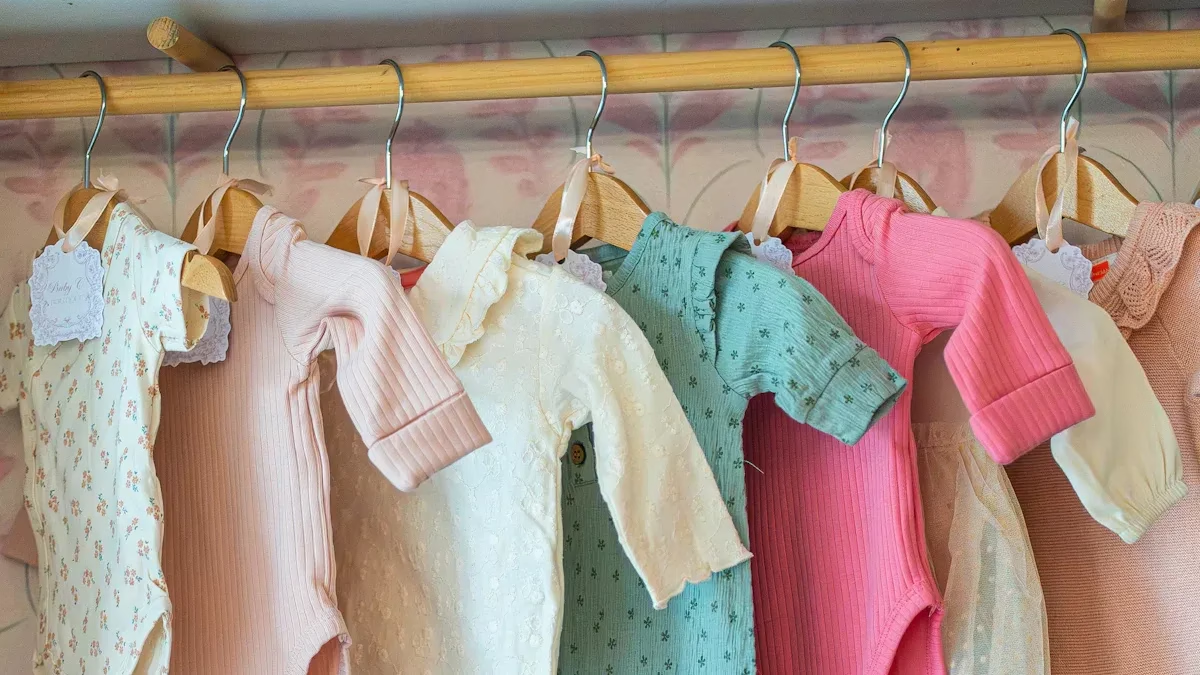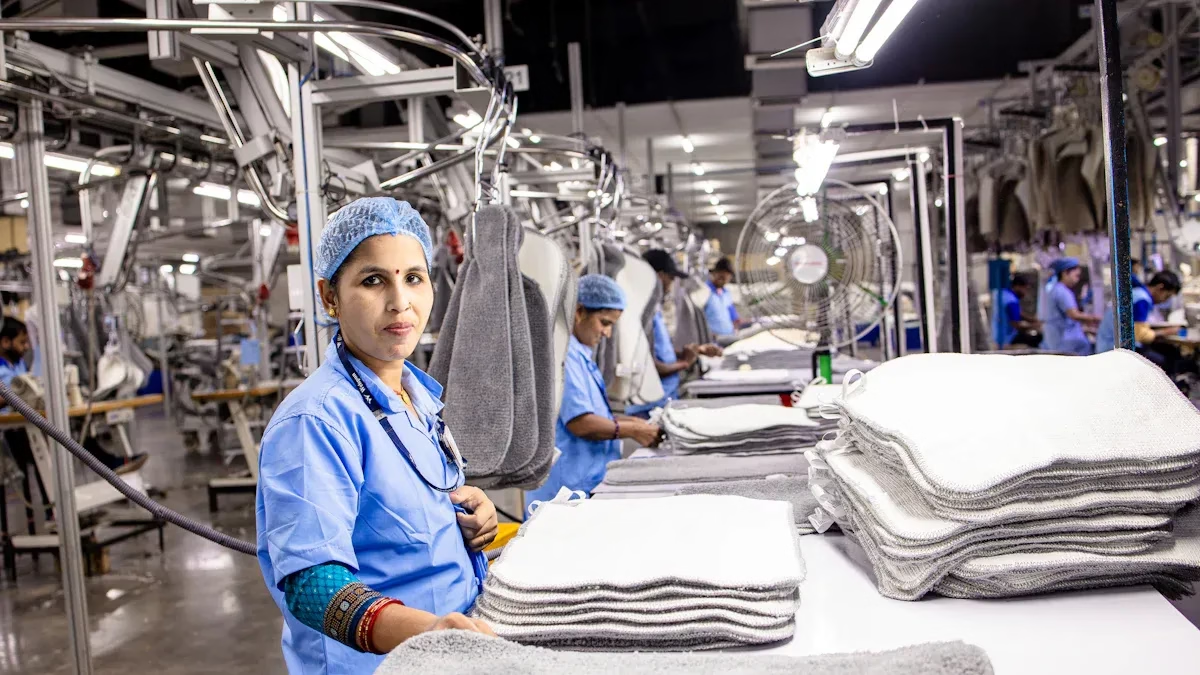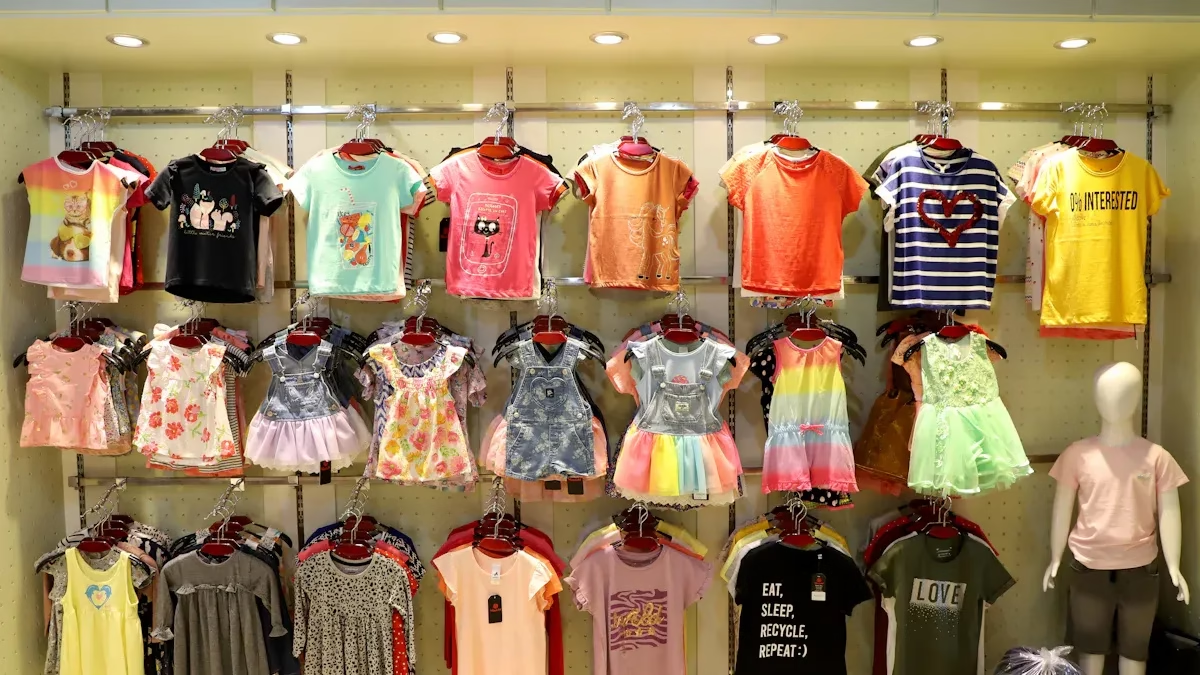
You want the best for your kids, especially when it comes to what they wear. Safety matters most to parents, with 74% saying quality is their top priority when buying children’s clothing. Comfort comes next for 65% of parents, but style also plays a big part in making choices. Finding kids clothing manufacturers who care about these things can feel tough. You deserve kids’ clothing that keeps your little ones happy and safe every day.
Key Takeaways
Put safety first by picking manufacturers who follow strict safety rules like CPSIA and OEKO-TEX. This makes sure your kids’ clothes do not have dangerous chemicals.
Choose eco-friendly materials like organic cotton and recycled polyester. This helps your child’s health and is good for the planet.
Find customization options to make special clothes that match your child’s style. Many manufacturers let you pick designs without needing to buy a lot.
Pick full-service production partners to make things easier. They take care of everything from design to delivery. This saves you time and lowers stress.
Always get samples before you buy a lot. This lets you check the quality, fit, and style. It helps you make smart choices.
What Makes a Great Children’s Clothing Manufacturer
Product Safety Standards
You want your kids to wear clothes that are safe. Safety is very important for parents. It is not just a word people use. It is something you need. The best children’s clothing makers follow strict rules. These rules help keep your kids safe. They make sure clothes do not have harmful chemicals. They also check for dangerous cords and flammable materials.
Here are some of the most important safety standards you should know:
Safety Standard
Description
CPSIA Compliance
Sets rules for children’s products, focusing on lead content and flammability.
OEKO-TEX Certification
Makes sure textiles are free from harmful substances.
BSCI Certification
Promotes ethical production and safe working conditions.
You should also look for these safety checks:
Mechanical Safety Regulations: These rules help stop choking and strangling.
Cords & Drawcord Regulations: These keep drawstrings safe for kids.
Chemical Safety Regulations: These limit bad chemicals in kids’ clothing.
Flammability Standards: These make sleepwear safer by lowering fire risks.
When you pick children clothing manufacturers who follow these rules, you help your kids stay safe.
Eco-Friendly Materials
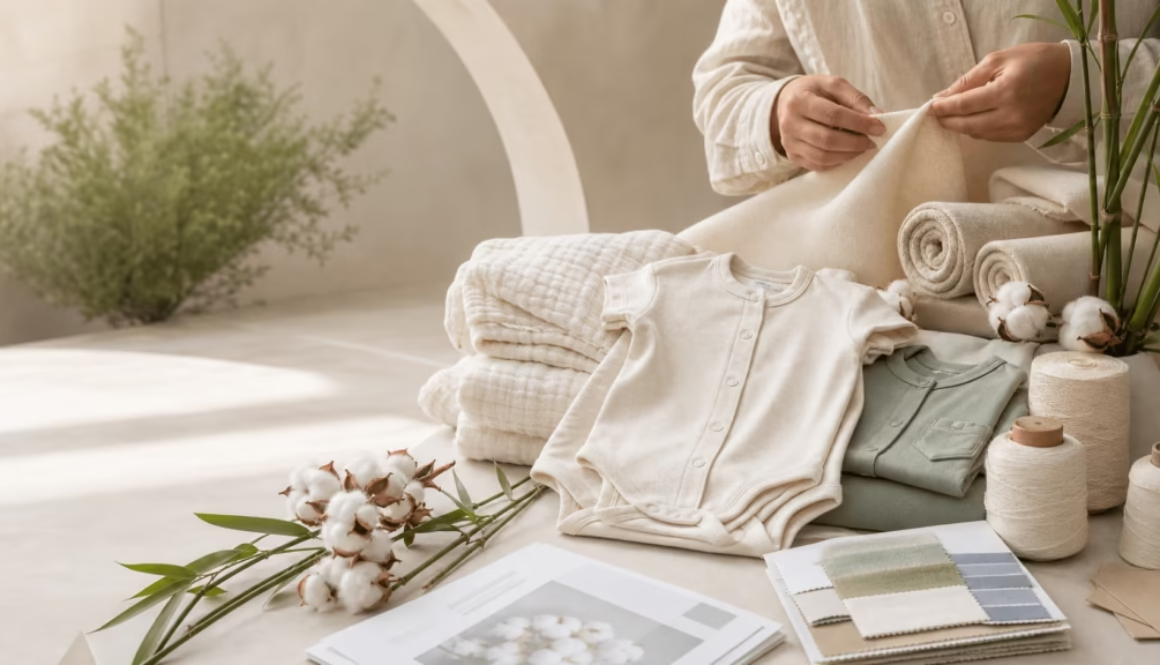
You care about the earth and your kids’ health. Many top kids clothing manufacturers now use eco-friendly fabrics. These materials are soft on your child’s skin. They are also better for the planet. Some brands use organic cotton, recycled polyester, and safe dyes. For example, TPC Textile and Finn + Emma use certified organic cotton and safe dyes. Patagonia Kids uses recycled materials to help cut down on waste.
The trend is clear. More companies use organic cotton from farms that save water. They also use recycled polyester to keep plastic out of landfills. When you choose kids’ clothing made from these materials, you help protect the earth for your kids.
Tip: Always check the label for words like “organic cotton” or “recycled polyester” when shopping for your baby clothing line.
Customization Options
Every child is different. You might want special designs, colors, or sizes for your kids. Some manufacturers let you customize so you get what you want. This is helpful if you have a store or want matching outfits for your family.
Here is a quick look at what some companies offer:
You do not always need to order a lot. Some companies like Honeydew USA have no minimum order. Others, like PKW Group and ChengLin Clothing Manufacturer, let you order small amounts. This makes it easy to try new ideas or start small.
Full-Service Production
You want things to go smoothly from start to finish. Full-service production means the manufacturer does everything. They find clothing manufacturers, cut, sew, and deliver. This saves you time and lowers stress.
You get updates quickly, so you can plan better and get your orders on time.
Builds customer satisfaction
Good management means better quality and faster delivery for your kids’ clothing.
When you work with a full-service partner, you feel calm. You know your products will come on time and meet your needs. This is important for anyone starting a baby clothing line or growing a business.
Evaluating Kids Clothing Manufacturers
Picking the right partner for your kids’ clothing business can be hard. You want every item to be safe and comfy. Clothes should last through all your kids’ fun times. Here is how you can check kids clothing manufacturers and make good choices.
Material and Fabric Quality
Begin by looking at the materials. Good kids’ clothes feel soft but are also strong. You can ask for samples or check these things:
Tested for durability and safety using international standards.
Stitching Quality
Checked for strong seams and dense stitching to prevent rips.
Colorfastness
Ensures colors stay bright after washing and wearing.
Soft fabrics are best for comfort and let skin breathe. This is important for kids with sensitive skin. Stiff fabrics last longer and keep their shape. These are good for active kids. One parent said a wool blend romper lasted many play days and washes. It did not lose its shape.
Customer Service and Communication
You need a manufacturer who listens and answers fast. Look for clear talks and quick replies. Here are some things to look for:
Good delivery means you get your kids’ clothes on time. Ask about shipping times and what happens if there are delays. Fast shipping and tracking help you plan and keep customers happy.
Ethical and Sustainable Practices
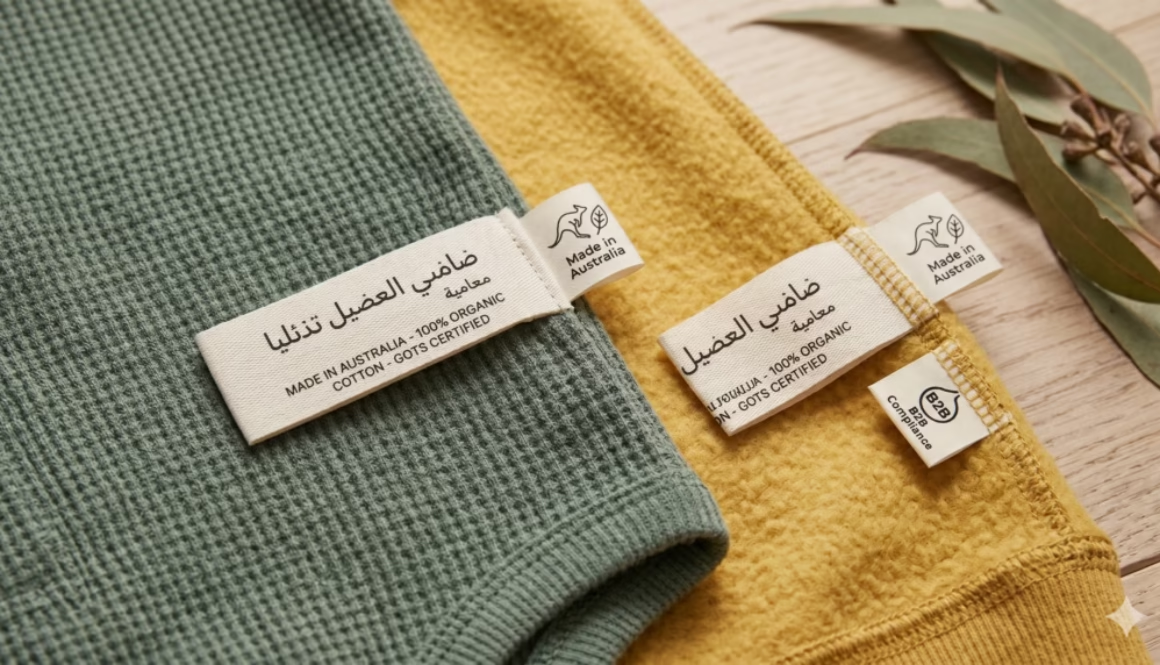
Many parents care about how clothes are made. Look for certifications like GOTS, OEKO-TEX Standard 100, Fair Trade, or Better Cotton Initiative. These show the maker uses safe materials, pays fair wages, and avoids bad chemicals.
Reviews and Testimonials
Always read what other buyers say. Check reviews and testimonials online. These give you real info about quality, service, and price. Good reviews talk about low prices, nice fabric, and lots of choices. Bad reviews may say prices are high or materials are not good.
You want to find kids clothing manufacturers who fit your goals and wallet. Start by thinking about what you need. Do you run a baby clothing line or sell in the kids’ fashion market? Some companies work best with big orders, while others help small brands grow. Take a look at this table to compare your options:
Factor
Description
Production Scale
Large-scale production is great for steady demand. Small runs suit new brands.
Domestic vs. Overseas
Domestic makers offer quick delivery and easy checks. Overseas makers often cost less.
Budget & Cost Considerations
Watch for minimum order sizes and extra fees.
Specialization Requirements
Some makers know more about certain styles or fabrics.
Target Market
Pick a partner who understands your customers.
You should also:
Research manufacturers who focus on children’s clothing.
Make sure they use safe materials and follow rules.
Never skip samples. You want to see and feel the clothes before you buy a lot. Samples help you check quality, fit, and style. Here’s why samples matter:
Benefit
How It Helps You
Matches Expectations
You see if the final product looks and feels right.
Allows Feedback
You can ask for changes before a big order.
Tests Service and Quality
You learn how the supplier treats you and handles your requests.
Tip: Samples save you from mistakes and help you build trust with a reliable clothing manufacturer.
Building Long-Term Relationships
You want your kids’ clothing partner to stick with you as you grow. Good relationships make business easier. Talk often and share your plans. Brands that succeed keep in touch with their manufacturers and respect their work. Try these strategies:
Show trust and let your partner know you believe in their process.
Pay bills on time and respect their needs.
Speak to your production manager often to build a strong bond.
Other ways to keep the partnership strong:
Be reliable and professional.
Solve problems together.
Say thank you for good work.
Give feedback to help them improve.
Grow together by sharing your future plans.
When you build a strong partnership, your kids’ clothing business can thrive. You get better service, higher quality, and support for your brand.
When you search for kids clothing manufacturers, think about what is most important. The best ones are easy to spot because they give you:
Children’s clothing that is safe and high quality
Choices that are good for the earth and made the right way
Ways to make clothes special and help from start to finish
Do you want to tell your story or ask something? Leave a comment below!
FAQ
What certifications should you look for in kids clothing manufacturers?
You need to look for CPSIA, OEKO-TEX, and GOTS certifications. These show the company cares about safety and the environment. Always ask to see proof before you buy anything.
How can you test the quality before placing a big order?
Get samples first. Touch the fabric and look at the stitching. Wash the clothes to see if they last. If you like the sample, you can trust a bigger order.
Do you need to order large quantities to work with a manufacturer?
No, you do not always need to order a lot. Some companies let you buy small amounts. Find manufacturers with low minimum order rules. This helps you try new products or start your business small.
What should you do if you have a problem with your order?
Talk to your manufacturer as soon as you can. Tell them what went wrong in simple words. Most good companies will fix the problem or help you. Keep notes of your talks so you remember what was said.
You want your brand to be noticed in the busy baby clothes market. If you want a special look and want to control everything, private label is best. This way, you can design items, pick good fabrics, and make packaging that fits your ideas. You get more money and loyal customers by putting your name on each product. Wholesale is good if you want things fast or easy, but you have less control. The main differences between these two ways change how you work with infant wear manufacturers and how much say you have over your products. Petelulu helps you pick the best choice for your goals.
Key Takeaways
Private label clothing lets you make your own brand. You choose the designs, fabrics, and packaging. This helps customers like your brand more.
OEM means you control how your products look. You can make special styles. It takes more time and costs more money.
Wholesale clothing is quick and simple. You buy lots of finished clothes at once. You cannot change the design or brand much.
Private label is good for new brands that want to start fast. It costs less and lets you follow new trends easily.
Petelulu helps with private label and wholesale choices. They make sure all products are safe and good quality.
Key Differences: Private Label vs OEM vs Wholesale Clothing
What Is Private Label Clothing?
Private label clothing lets you start your own brand. You can change how products look and pick the fabrics. You also put your own name on the clothes. This helps your brand stay strong and unique. You get to decide when things are made and check the quality. Many brands like private label because it gives:
Choices for design and branding
A strong brand identity
Flexible production
Quicker time to sell
You work with infant wear manufacturers to make your ideas real.
What Is OEM in Infant Wear?
OEM stands for Original Equipment Manufacturer. You work with a factory to make clothes from your own designs. You send your drawings and fabric choices to the factory. The factory makes samples for you to check. If you like them, they make more. The steps are:
OEM lets you be creative, but you need the factory’s help for quality and timing.
What Is Wholesale Clothing?
Wholesale clothing means you buy finished clothes in large amounts. You do not get to pick the design or put your name on them. You have to buy what the supplier has in stock. Wholesale is good if you want to start fast and save money. You can sell these clothes with the supplier’s name or sometimes add small changes after buying.
Private Label vs OEM: Main Distinctions
You might ask how private label and OEM are not the same. Here is a simple chart:
Private label gives you more say in branding and a faster start. OEM lets you change more things, but it takes longer and costs more. Wholesale is fast and easy, but you do not control the design or brand.
Private Label Clothing with Petelulu
How Private Label Works for Infant Wear
You can start your own brand with private label clothing. You work with infant wear manufacturers like Petelulu. You pick the designs and fabrics you want. You also choose how the packaging will look. Petelulu helps you at every step. You share your ideas, and Petelulu makes samples for you. If you like the samples, they start making more clothes. You get finished products that are ready to sell. This way, you control every detail and make your brand special.
Benefits of Private Label Clothing
Private label clothing gives your business many good things. You control how your products look and when they come out. You pick safe, high-quality fabrics for your clothes. You can quickly change styles to match new trends. You save money on making clothes, so you earn more. You can grow your business and sell in new places with help from manufacturers.
Tip: Private label services help you make a special brand and keep your clothes high quality.
Make your own collections with special patterns and colors.
Quality Control
Pick fabrics that are safe and meet high standards.
Flexibility
Bring out new collections fast.
Better Margins
Low costs let you set higher prices.
Scalability
Grow your business with big orders from trusted partners.
Petelulu’s Private Label Cloth Sourcing
Petelulu is a leader in private label cloth sourcing. You can pick from many fabric choices, like bamboo viscose and organic cotton. You can also choose eco-friendly and branded packaging, like biodegradable bags. Petelulu makes sure all fabrics are safe with OEKO-TEX Standard 100 certification. You can ask for special fabrics for swimwear or for different seasons.
Note: Petelulu uses fair and honest ways to make clothes, so you always know where your products come from.
Bamboo viscose and organic cotton with lots of choices
Fewer fabric options
Labeling
Labels made in-house with many choices for main, size, and care labels
Simple label choices
Packaging
Eco-friendly and branded packaging, including biodegradable options
Regular packaging
Safety Compliance
OEKO-TEX Standard 100 certification for safety from harmful chemicals
Not always the same
Functional Fabrics
Special fabrics for things like swimwear and seasonal clothes
Basic fabric types
You get private label cloth sourcing that is safe and made in a fair way from start to finish.
Costs and Investment for Private Label
Petelulu lets you start private label with small orders. You can order as few as 150 pieces to try new ideas. The more you order, the less each piece costs.
Order Quantity
Price per Piece
150 – 4999 pieces
$11.50
5000 – 9999 pieces
$10.50
>= 10000 pieces
$8.30
You get flexible orders, low costs, and can order in bulk. Petelulu’s private label services help you grow, whether you start small or order a lot.
Wholesale Clothing Solutions for Infant Wear
How Wholesale Clothing Works
Wholesale clothing is a simple way to fill your store. You buy finished infant wear in large amounts from manufacturers. This method is fast and easy. You do not need to make new designs. You pick from what is already made and order it. Wholesale clothing lets you get products quickly. You can follow trends and meet what customers want. You get fast shipping and quick restocks, which helps you sell faster.
You need to think about the good and bad sides before picking wholesale clothing. The table below shows the main points:
Advantages
Disadvantages
Lower cost per item helps you make more money.
You must spend a lot at first to buy in bulk.
You might get special designs or private label options.
You could end up with too many sizes or styles that do not sell.
You can better control your stock and timing.
Wholesalers may not let you return items.
You can sell sets, like gift packs.
Shipping or customs can sometimes be slow.
Wholesale cloth sourcing means you pay less and get items fast. But you have to watch your stock and spend more at the start.
Petelulu’s Wholesale Infant Wear Services
Petelulu helps you with many wholesale cloth sourcing choices. You work with skilled infant wear manufacturers to plan your idea. You make a tech pack and get a free sample before big orders. Petelulu gives you quick service and checks quality at every step.
Service Step
Description
Develop a Concept
Work together on ideas for babies, kids, or teens.
Create a Tech Pack
Make a clear plan with design, fabric, color, and size details.
Sample it!
Get a free sample and fabric book to test before ordering more.
Make the Product
Start big orders after you like the sample and plan.
Quality Control
Each item is checked to make sure it is good.
You get wholesale cloth sourcing that fits your business and gives you fast orders every time.
Typical Costs and Margins
Wholesale clothing costs less than private label. You can start with $1,000 to $5,000. Wholesale cloth sourcing gives you about 10% to 20% profit. You make money faster because you get products quickly. You do not control the brand, but you save money and restock fast. Wholesale cloth sourcing helps you grow your business with less risk and more speed.
Tip: Wholesale cloth sourcing is best if you want fast orders, low costs, and quick sales.
Private Label vs OEM: Which Is Best for Your Brand?
Side-by-Side Comparison Table
You want to pick the best option for your brand. The table below shows how private label and oem are different. This helps you see which one matches your needs.
Feature
Private Label
OEM
Design Control
Pick styles that already exist, change labels and packaging
Make new designs, have full control
Lead Time
Takes about 10-15 days to make
Takes 30-45 days for custom orders
Cost Comparison
Costs less at first, good for small orders
Costs more because you make new things
Pricing
Prices from the factory, can change as you order more
Prices change based on what you want
Minimum Order Quantity
You can order as few as 150 pieces
You need to order more, depends on design
Branding
Strong brand, can sell fast
Unique brand, but takes longer to launch
Quality Assurance
Uses certified fabrics and safety rules
You pick materials, must check safety yourself
Flexibility
Change styles fast, easy to grow
Can change things, but takes more time
Ethical Practices
Sourcing is clear, partners are certified
You must check if standards are met
Tip: Private label helps you start fast and try new ideas. OEM lets you make something special if you want full control.
Decision Guide for Infant Wear Manufacturers
You need to choose which model is right for your brand. Think about these important things when you compare private label and oem:
Quality Matters Babies need soft and safe fabrics. Private label partners like Petelulu use certified materials and check quality. OEM lets you control everything, but you must check quality yourself.
Safety Standards and Certifications Your brand must follow safety rules like CPSIA and OEKO-TEX. Private label partners often have these certificates. With OEM, you need to check and make sure you follow the rules.
Customization Options Private label gives you choices for labels, packaging, and fabrics. OEM lets you design every part, like shape and stitching.
Production Capacity and Timelines Private label is faster, usually 10-15 days. OEM takes longer, sometimes 45 days or more. You need to plan when you want to launch and restock.
Ethical Manufacturing Practices You want partners who use fair labor and eco-friendly materials. Private label partners show where they get materials. OEM means you need to check if they use good practices.
Communication and Collaboration You need clear updates and help. Private label partners guide you through each step. OEM needs more talking and technical details.
Cost Comparison and Pricing Private label costs less at first and has flexible prices. OEM costs more because you pay for new designs and samples.
Flexibility and Scalability Private label lets you try new styles and grow fast. OEM can change things for you, but it takes more time.
Note: If you want to launch fast and spend less, private label is best. If you want full control and can wait, OEM is better for you.
Checklist: Matching Your Brand’s Needs
Use this checklist to see if private label or oem fits your brand. Go through each point before you decide.
Read reviews and case studies about private label manufacturing.
Callout: Brands face problems like checking quality, managing supplies, and keeping up with trends. You need a partner who knows these problems and helps you grow.
You want to work with infant wear manufacturers who use certified fabrics, follow good practices, and offer flexible choices. Private label and oem both have good points. Private label is fast, costs less, and makes branding easy. OEM gives you full control and custom products. Think about your goals, budget, and time. This helps you pick the best choice for your brand.
Why Choose Petelulu as Your Infant Wear Manufacturer?
Sustainable and Certified Production
You want your baby clothes to be safe and special. Petelulu is a leader in making clothes that are good for the earth. They use private label sourcing to get high-quality organic materials. These materials keep babies safe and help the planet. Petelulu has a Fluffy Organic line made from bamboo and bio-cotton. These fabrics are soft and great for babies with allergies. The materials do not hurt the environment. You can trust every step, from picking fabric to making the final product. Petelulu has important certifications:
OEKO-TEX Standard 100 checks that the clothes are safe from bad chemicals.
Fair Trade Certification shows workers have good jobs.
B Corporation Certification means Petelulu cares about people and the planet.
Petelulu uses a zero waste plan and helps your brand stay true to its values.
Unique Value Proposition
Description
High-Quality Organic Materials
Petelulu uses organic materials that are safe for infants and environmentally friendly.
Customization Options
Offers drawing-based and full customization for infant wear, catering to individual preferences.
Commitment to Environmental Sustainability
The company follows a zero waste and socially responsible approach in its production processes.
Flexible MOQs and Global Support
You need a partner who knows your business size and market. Petelulu lets you order small or big amounts. This is good for new brands or if you want to try new ideas. Private label sourcing with Petelulu helps you test products and enter new places with less risk. Petelulu works with clients all over the world. They offer fast and reliable shipping. You can pick ready-to-brand designs and custom packaging. This makes private label sourcing easy and quick.
Feature
Description
Flexible MOQs
Petelulu allows global clients to start with smaller orders, which is beneficial for new brands or those testing the market.
Customization Options
Offers various child-friendly customization techniques to make brands unique.
Ready-to-brand Designs
Provides a portfolio of designs that can be easily branded with a logo and customized packaging.
Petelulu’s team answers fast and ships worldwide.
End-to-End Brand Custom Services
You want your brand to show your ideas. Petelulu helps you from start to finish. First, you talk about your design and what you want. Then you pick from special fabrics that are comfy and safe. Petelulu lets you add prints, embroidery, or other cool details. You get samples to check before making lots of clothes. The team checks quality at every step. This makes sure your private label products are always great.
Service Type
Description
Design
In-depth design consultation to understand brand story and aesthetic preferences.
Fabric Selection
Curated selection of premium materials focusing on comfort, durability, and safety.
Creation of prototype samples for review and adjustments before full production.
Production
Efficient bulk manufacturing with rigorous quality checks at multiple points.
Packaging & Delivery
Custom branding options for packaging and efficient shipping logistics.
You get private label sourcing that covers design, fabric, making, and delivery. Petelulu’s experts help you make products that your customers will love.
Pick Petelulu for private label sourcing that is green, flexible, and made just for your brand.
When you pick private label, OEM, or wholesale, think about your brand’s needs. Private label is fast and costs less, so it is good for new brands. OEM lets you control designs and helps your brand grow. Wholesale helps you start selling quickly. Factories in China have lots of skill and make good products. Private label helps you save money and try new ideas fast. Petelulu helps you at each step:
Find safe materials for your private label clothes.
Make and test samples to check your private label items.
To begin with private label, look at your tech pack, make a first sample, share your thoughts, and say yes to the final sample. Petelulu helps you through every private label step. Contact them to learn more or start your private label project. Trust yourself and make smart private label choices for your brand’s future.
FAQ
What is the main difference between private label and OEM kids wear manufacturing?
You choose private label when you want ready-made designs with your brand. You pick OEM kids wear if you want to create your own styles from scratch. OEM gives you more control over design and quality.
How do I ensure the quality of kids clothing with OEM solutions?
You work closely with the manufacturer. You review samples and check every detail. You can ask for certifications and regular updates. OEM solutions let you set your own quality standards for kids apparel.
Can I start with a small order for kids clothing using OEM kids wear?
You can start with a low minimum order quantity. Many OEM kids wear manufacturers offer flexible options. This helps you test the market before making a big investment in kids products.
Why should I choose OEM kids wear for my brand?
You want unique kids designs and full control over materials. OEM kids wear lets you build a strong brand identity. You can meet special needs for kids and set your own quality benchmarks.
How does Petelulu support brands with OEM kids wear and OEM solutions?
Petelulu guides you from design to delivery. You get help with fabric selection, sampling, and production. Their OEM solutions focus on safety, quality, and fast service for kids clothing brands.
You must know the real cost when sourcing children’s clothing. The real cost includes all money spent from making to shipping. This helps you choose the best price and make more money.
Companies that do this well usually achieve profit margins near 47%. Understanding these costs helps your business stay healthy.
Key Takeaways
Know every cost when buying children’s clothing. This includes materials, labor, shipping, and hidden fees. Knowing these costs helps you set fair prices. It also helps your business stay strong.
Use tools like Garment Costing and Price Calculators. These tools help you track what you spend. They make sure your prices cover all your costs. This keeps your profits safe and helps your business grow.
Check your costs often and change your prices if needed. Knowing your costs helps you avoid problems. It also keeps your customers happy.
When you start sourcing children’s clothing, you must check every cost. Each piece has costs from making to delivery. Knowing these costs helps you set good prices. It also keeps your business strong. Petelulu is a baby apparel manufacturer. They show you each cost clearly. This helps you control your budget.
Material and Production Costs with Petelulu
Material costs are a big part of the total price. You pay for fabrics, trims, and special features. Most children’s clothing has material costs at 30% to 40% of the retail price. If you want organic or certified materials, the cost goes up. You get better quality and safety with these materials.
Petelulu uses a “Fiber to Finished Product” method. You control every step, from picking GOTS-certified cotton to the last stitch. You save money when you order more. This is called economies of scale. Petelulu uses advanced machines and makes clothes in bulk. This helps you save money and keep quality high.
The base cost of fabrics, which can change based on quality and certifications like GOTS.
Customization Complexity
Extra costs for custom designs, logos, and labels.
Labor Costs
The cost of workers who make the clothes.
Shipping and Logistics
The cost to move goods from the factory to your door.
Volume Discounts
Lower prices per unit when you order more.
Payment Terms
Flexible payment options can help you manage cash flow.
Petelulu gives you a clear cost structure. You see what you pay for: materials, labor, overhead, and setup. This helps you make smart choices when sourcing garments.
Shipping, Logistics, and Duties
Getting products from the factory to your store adds more costs. You pay for shipping, customs, and extra fees. The price depends on how much you ship and how fast you need it.
You also pay import duties. These can be 10.2% to 32% of the garment cost. Other fees include harbor maintenance, customs bonds, and examination fees. These costs add up. You must include them when sourcing children’s clothing.
Hidden Fees and Overhead
Some costs are easy to miss when sourcing garments. You must plan for employee expenses, rent, insurance, and marketing. These overhead costs can take up 15% to 20% of your budget. Rent for a retail or storage space averages $3,500 per month. Insurance protects your business and usually costs 0.5% to 1% of your total revenue.
You also pay for licenses, compliance testing, and audits. Testing for safety and labeling costs $350 to $550 per style. These steps are important. Children’s clothing must meet strict safety rules. Petelulu holds certifications like OEKO-TEX, GOTS, and CPSIA. These show your products are safe and made with care.
Certification Name
Description
OEKO-TEX
Ensures clothing is free from harmful chemicals.
Fair Trade
Guarantees fair wages and safe working conditions.
B Corporation
Shows commitment to social and environmental responsibility.
Global Organic Textile Standard (GOTS)
Confirms use of organic materials and eco-friendly methods.
OEKO-TEX Standard 100
Tests for harmful substances in textiles.
Tip: Always include quality control and compliance fees in your budget. These costs protect your brand and help you sell in more markets.
When you know all these key cost parts, you make better choices. You keep your business safe, your prices fair, and your customers happy.
You must know the true landed cost before setting prices. This cost is every dollar spent to get products from the factory to your warehouse. If you miss a step, you might lose money. Here is an easy way to find the true landed cost for each item:
Write down all supply costs. This means manufacturing, shipping, insurance, import duties, warehousing, and other fees.
Add all these costs together. For example, if you buy 100 baby shirts, and manufacturing is $4 per shirt, shipping is $150, warehousing is $50, and import duty is 10%, your total cost is $640.
Divide the total cost by the number of shirts. In this case, $640 divided by 100 shirts is $6.40 for each shirt.
Always include every supply cost, even small ones like samples, inspections, or agent fees. Leaving out costs can hurt your profit.
Pricing Strategies for Children’s Clothing Business
You want your business to make money and grow. To do this, you need a good pricing plan. Start by knowing your total cost for each item. This means you must know all supply costs, like materials, labor, overhead, and shipping.
Next, pick your profit margin. Many brands choose a margin that covers all costs and helps them grow. For example, if your total cost per shirt is $6.40 and you want a 50% margin, you would set your price at $12.80.
You can use different ways to set prices:
Cost-plus pricing: Add a set percent to your total cost.
Value-based pricing: Set your price by what customers think your product is worth.
Competitor analysis: Check what other brands charge for similar items.
Promotions: Give discounts or bundles to get more buyers.
If you sell handmade clothing, prices can be higher because it takes more time and care. Always check your supply costs and change your prices if needed. You can use tools like a Garment Costing Calculator or a Garment Price Calculator to help you set prices. These tools help you see if your prices cover all costs and meet your goals.
Tool Name
Description
Garment Costing Calculator
Finds total production costs, including materials, labor, and profit margins.
Garment Price Calculator
Estimates wholesale and retail prices, sample costs, and bulk production costs.
Apparel & T-shirt production cost calculator
Helps you find the best way to make products by looking at all supply costs.
Petelulu helps you save money by cutting out middlemen. You get direct updates and clear messages at every step. This makes it easier to run your business and keep your prices right.
Common Pitfalls in Cost Calculation
Many people make mistakes when they figure out costs for a children’s clothing business. You can avoid these problems if you know what to look for:
Some forget hidden supply costs like middlemen fees, which can make your total cost higher.
Others skip quality control costs. This can make customers unhappy and cause more returns.
Many guess wrong about how long production takes. Delays can leave you with empty shelves.
Some miss costs like customs duties, banking fees, or packaging. These can lower your profit.
Beginners often forget small things like trims, labels, or inspection fees.
Tip: Always check your supply costs and total cost before you set prices. Use a checklist to make sure you include every cost, from raw materials to shipping and compliance testing.
When you work with Petelulu, you get updates and clear messages. This helps you spot extra supply costs early and keeps your business running well.
Cost of Starting a Children’s Clothing Business
Initial Inventory and Setup Costs
You need to think ahead when starting a children’s clothing business. The cost depends on what you pick for inventory, branding, and setup. Most new brands spend a lot on first inventory, design, and production setup. If you work with Petelulu, you can order in bulk. This lowers the price for each item.
Remember to plan for marketing and branding. These help you find new customers and grow your brand. You also need to pay for rent and utilities. These keep your business running.
Budgeting for Growth and Customization
As your business gets bigger, you need money for new designs and more production. You can pick print-on-demand or inventory-based models. Print-on-demand lets you sell custom designs without keeping lots of stock. Inventory-based models need more money at first but can make more profit.
Try these tips to manage growth:
Set prices that cover all your costs.
Use tools to track your stock and orders.
Check your products to keep quality good.
Teach your team to follow quality rules.
Store clothes the right way to protect them.
When you order more, your costs can change. For example, buying 100 pieces may cost $15 each. Buying 1,000 pieces can lower the price to $9 each. Planning for quality and smart production helps you save money and grow faster.
Tip: Make clear goals for your business. Use tools to find what you do well and fix problems. This will help you do better in the children’s clothing market.
You must know every cost to set the right price and keep your business strong.
Track all expenses, including shipping, duties, and safety checks.
Review costs often and use tools to manage them.
“Petelulu’s direct pricing and strict quality control help you save money and focus on growth.”
FAQ
How do you calculate the true cost for children’s clothing?
You add up all costs for materials, labor, shipping, duties, and overhead. This helps you see the real price for each item you sell for children.
What makes children’s clothing cost more than adult clothing?
You pay more for safety checks, soft fabrics, and special designs. Children need safe, gentle clothes. These extra steps raise the cost for children’s clothing.
How to charge fairly for children’s clothing?
You set prices by knowing your total cost and adding a fair profit. This helps you charge fairly and keeps your business strong when selling to children.
You want to launch a kids’ clothing brand, but you keep asking yourself: Private Label vs OEM Kids Wear—which one fits your startup best? Most new brands find private label works better because it gives you speed, lower costs, and a quick way to test your ideas. Imagine picking your first styles and seeing your logo on them fast. Think about what matters most to you: control, cost, speed, or customization. Your choice shapes your brand’s future.
Key Takeaways
Private label is fast and costs less. It is good for startups that want to try ideas quickly. OEM lets you control the designs. You can make special products that fit your brand. Think about your goals. Pick private label if you want to launch fast and take less risk. Pick OEM if you want to customize and grow. Look at minimum order quantities to keep costs low. Private label often lets you order less. Petelulu helps with both choices. They offer eco-friendly options. This helps you make a green kids’ clothing brand.
Private Label vs OEM Kids Wear: Quick Answer
Best Fit for Most Startups
If you are just starting your kids’ clothing brand, you probably wonder which path to take. The private label vs oem kids wear debate is a big one for new founders. Right now, most startup brands lean toward OEM. Why? You get more flexibility, faster production, and the chance to scale up quickly. Many new brands want to launch fresh designs and see their ideas come to life fast. OEM lets you do that.
You can adjust your order size as your business grows.
Fast turnaround helps you test new styles and respond to trends.
Tip: If you want to stand out with your own designs and need speed, OEM is often the best choice for startups in the private label vs oem kids wear decision.
When to Choose OEM
OEM works best when you want full control over your product. Maybe you have a special design in mind or want to use a certain fabric. OEM lets you work with a manufacturer to make it happen. You can pick every detail, from the fabric to the buttons. This is great if you want your brand to be different from others.
You should choose OEM if:
You want to launch a unique collection that no one else has.
You need to change your designs often to keep up with trends.
You plan to grow your brand and need a partner who can scale with you.
The private label vs oem kids wear choice depends on your goals. If you want to test the market with ready-made styles and lower costs, private label can work. But if you dream of building a brand with your own look and fast growth, OEM is the way to go. Many startups today pick OEM because it matches their need for speed and flexibility.
Note: The private label vs oem kids wear question is not just about cost. It is about how much control you want and how fast you want to move. Think about your vision for your brand before you decide.
The private label vs oem kids wear decision shapes your business. Take time to weigh your options. Most startups find OEM gives them the edge they need to succeed.
You might hear people talk about private label and white label when starting a kids’ clothing brand. Both terms mean you sell products under your own brand, but there are some differences. Private label means you work with a manufacturer to put your brand name on products made just for you. You get to choose styles, colors, and sometimes even fabrics. White label is a bit different. You pick from ready-made products, and the manufacturer adds your logo. You do not change much about the product itself.
How Private Label Works
Launching a private label or white label kids’ clothing brand feels exciting. You get to build your own brand from the ground up. Here’s how the process usually goes:
Do market research to see what parents and kids want.
Pick your niche, like organic baby clothes or trendy toddler outfits.
Choose a catchy name for your brand.
Figure out who your target customers are.
Learn about your customers’ likes and habits.
Check out your competitors and see what works for them.
Design your products based on what’s popular.
Pick the best materials for your clothes.
Find a manufacturer who can make your private label or white label items.
Build a website to show off your collection.
Register your brand to protect your business.
Apply for a trademark to keep your brand safe.
Tip: Private label and white label both let you start your own brand without building a factory. You focus on branding and sales while experts handle the making.
Petelulu’s Private Label Services
Petelulu makes private label and white label easy for you. You can choose from a wide range of kids’ clothing styles. Petelulu uses organic and recycled fabrics, so your brand stands out as eco-friendly. You get flexible order sizes, fast turnaround, and help with design and packaging. Petelulu’s team guides you from your first idea to finished products with your logo. You can trust Petelulu to deliver safe, high-quality clothes that parents love.
What is OEM in Kids Wear?
OEM Defined
OEM in kids’ clothing means a factory makes clothes for your brand. You give the factory your ideas and what you want. The manufacturer follows your design, fabric, and safety needs. You get clothes that look how you want and meet quality rules. Many brands use OEM to make special collections. You can pick every detail, so your brand is unique.
You might also hear about ODM. This means Original Design Manufacturer. With odm, you get even more choices. You can ask for new styles, special fabrics, and cool features. The odm team helps turn your ideas into real clothes. Experts help you make safe and stylish kids’ clothes.
How OEM Works
OEM lets you control the whole process. You start with your own designs and work with the factory. Here are the steps:
Step Number
Step Name
Description
1
Design & Technical Flats
Turn your ideas into clear instructions for the factory.
2
The Tech Pack
Make a guide with all the info the factory needs.
3
Material Sourcing & Compliance Vetting
Pick safe fabrics and check if the factory follows safety rules.
4
Sample Creation & Safety Testing
Make samples and do safety tests.
5
Bulk Production & Quality Control
Start making lots of clothes and check the quality.
6
Finishing, Branding, & Packaging
Add final touches, your brand, and check before shipping.
7
Shipping, Logistics, & Fulfillment
Handle shipping and make sure products get to customers.
You work with the odm team at every step. You share ideas, pick fabrics, and check samples. The odm experts help you follow safety and quality rules. You get updates as your clothes are made. The odm process helps your brand match your vision.
Tip: If you want your own style for your kids’ clothing brand, odm and OEM help you do it.
Petelulu’s OEM Solutions
Petelulu gives strong OEM and odm help for new kids’ clothing brands. You get support at every step. Here’s what you get:
Brand Custom Services: You can make your own styles and labels with Petelulu’s odm team.
Premium Fabric Lines: Petelulu finds safe, organic, and recycled fabrics for your odm projects.
Bulk Customization & Cost Optimization: You can order small or big batches. The odm team helps you save money and time.
Petelulu’s odm service helps you from your first sketch to the finished clothes. You get advice on design, fabric, and safety. The odm team checks quality and handles packaging. You can trust Petelulu to make clothes that meet world standards. The odm process is fast, flexible, and great for startups who want a strong brand.
Note: Petelulu’s odm and OEM help you start a kids’ clothing brand that stands out. You get expert help, safe materials, and quick results.
Private Label vs OEM Kids Wear: Key Differences
Control & Customization
You want your kids’ clothing brand to stand out. Control and customization matter a lot. With private label, you get to choose styles, colors, and sometimes even fabrics. You can add your logo and branding, but you work with existing designs most of the time. If you want full creative freedom, custom cut & sew is the way to go. You can create unique products from scratch and pick every detail, from the fabric to the buttons.
Let’s look at how control and customization compare:
With private label, you get a lot of say in how your clothes look, but you start with templates. Custom cut & sew gives you the chance to design everything. You can make your brand truly special. Petelulu helps you with both options, so you can decide how much control you want.
Tip: If you dream of launching unique products and want to shape every detail, custom cut & sew gives you the most control.
Cost Comparison
Cost is a big deal for any startup. You want to save money but still get quality. Private label usually costs less because you use existing designs and the manufacturer handles most of the work. You pay for branding and small changes. Custom cut & sew costs more because you create new patterns, source special fabrics, and test samples. You pay for design, development, and production.
Here’s a quick list to help you compare:
Private label: Lower upfront costs, faster setup, less risk.
Custom cut & sew: Higher investment, more design fees, longer development time.
Petelulu offers competitive pricing for both models. You get cost savings with private label and flexible options for custom cut & sew. You can start small and grow as your brand gets bigger.
Note: If you want to test the market and keep costs low, private label is a smart choice. If you want to invest in your own designs, custom cut & sew is worth it.
Speed to Market
You want your brand to launch fast. Speed to market helps you catch trends and keep customers excited. Private label is quick because you use ready-made styles. You can add your branding and start selling in weeks. Custom cut & sew takes longer. You need time for design, sampling, and production. It can take months to get your first collection ready.
Here’s how the two models compare:
Private label: Fast turnaround, quick launch, easy to test new ideas.
Custom cut & sew: Longer process, more steps, but you get unique products.
Petelulu supports fast timelines for both options. You get help with design, sampling, and production. Their team works quickly so you can launch your brand and keep up with trends.
Tip: If you want to move fast and see your logo on clothes right away, private label is the best choice. If you want to build a brand with custom cut & sew, plan for extra time.
Minimum Order Quantities
Minimum order quantities (MOQ) can make or break your startup. You want to start small and grow as you learn. Private label usually offers low moq, so you can order fewer pieces and test the market. Custom cut & sew often requires higher moq because of the work involved in making new designs.
Here’s a table to show typical moq for custom orders:
Petelulu gives you flexible moq options. You can start with small batches and increase your orders as your brand grows. Their low moq helps you reduce risk and manage your budget. You get the freedom to try new styles without worrying about big investments.
Note: If you want to start with small orders and test your ideas, private label and custom cut & sew with low moq are great options. Petelulu’s flexible moq lets you grow at your own pace.
Petelulu also uses sustainable practices. You get eco-friendly fabrics and safe production. Your brand can stand out as green and responsible. You get support from design to delivery, so you can focus on building your business.
Pros and Cons of Private Label and OEM
Private Label Pros & Cons
When you start your own kids’ clothing brand, you want to know what you’re getting into. The private label model gives you a lot of control, but it also comes with some challenges. Here’s a quick look at the main pros and cons:
Ability to adapt products based on customer feedback
Need for effective brand building
You get to decide how your clothes look and feel. You can change your products quickly if customers ask for something new. This direct feedback loop helps you stay on trend and keep shoppers happy. You also get to build your own brand from the ground up, which can be very rewarding.
But you need to be ready for the work. You must invest money upfront to develop your products and buy inventory. Managing stock can get tricky, especially if you’re just starting out. You also need to work hard to make your brand stand out in a busy market.
Tip: If you love having control and want to shape your brand’s story, private label could be a great fit. Just make sure you plan for the costs and learn about inventory management.
OEM Pros & Cons
OEM gives you even more freedom to create something unique. You can design every detail, from the fabric to the buttons. This is perfect if you want your brand to look different from everyone else.
Pros of OEM:
Full creative control over your designs
Ability to use special fabrics and features
Easier to scale up production as your brand grows
Cons of OEM:
Longer lead times for design and production
Higher minimum order quantities
More complex process with extra steps
You get to bring your ideas to life, but you need patience and a clear plan. OEM works best if you want to build a brand that stands out and you’re ready to handle the extra steps.
Note: Think about your goals and resources before you choose. Both models can help you grow, but each has its own path.
Cost & Investment Factors
Upfront Costs
When you start a kids’ clothing brand, you need to spend money first. You pay for design, samples, and your first group of clothes. Private label costs less at the start because you use styles that already exist. OEM costs more because you make new designs and need special samples. You also pay for things like your logo, packaging, and website. These costs might seem high, but they help your brand grow strong.
Ongoing Expenses
You will have regular costs as you run your brand. You need to pay workers, keep track of your clothes, and tell people about your products. You also pay for software and tools every month. Here is a simple table that shows what you might spend:
Expense Category
Estimated Cost Range
Staffing and operations
$2,000 – $6,000 per month
Inventory and stock management
$5,000 – $50,000
Marketing and branding
$200 to $1,500 per month
Operations and software
$50 to $500 monthly
Inventory is usually the biggest cost. Marketing helps you find new buyers. Good software helps your business work well.
Petelulu’s Pricing Advantages
Petelulu helps you keep your costs low. You get good prices and can pay in ways that fit your needs, even for big orders. Petelulu uses organic and recycled fabrics, so you can sell eco-friendly clothes and save money. Here is how Petelulu compares to other brands:
Petelulu gives you good prices and payment plans, and cares about the planet.
Mud Pie starts at $2.50 for each item if you order a lot, but prices change with fabric and order size.
Appareify lets you order small amounts and has eco-friendly choices, with shipping in 7-20 days.
AEL Apparel has low order minimums and fair prices.
Penguin Kids Wear gives you big discounts if you buy in bulk, from 25% to 50%.
With Petelulu, you can start with small orders and grow when you are ready. You get help at every step, so you can build your brand and watch your spending.
Speed to Market & Flexibility
Private Label Timelines
You want to launch your kids’ clothing brand fast. Private label gives you a head start. You pick from ready-made styles, add your logo, and get your products quickly. Most brands see their first samples in just a week or two. After you approve the samples, production moves fast. You can expect your first order to be ready in a few weeks. This speed helps you test new ideas and respond to trends before your competitors do.
Tip: If you want to get your brand out there quickly, private label is a smart choice.
OEM Timelines
OEM gives you more control, but it takes a bit more time. You start with your own designs. The factory makes samples based on your ideas. This step usually takes a week or two. Once you approve the samples, the factory starts full production. OEM orders often take two to four weeks to complete. You get unique products, but you need to plan for a longer timeline.
Petelulu knows you want to move fast. Their team works hard to keep your project on track. You can get customized samples in as little as five days. For full OEM or ODM orders, Petelulu delivers in just 15 to 30 days. This speed helps you launch new collections, test new styles, and keep your brand fresh. You get updates at every step, so you always know what’s happening.
Note: Fast turnaround means you can react to trends, restock bestsellers, and grow your brand with confidence. Petelulu’s quick service gives you the flexibility you need to succeed.
Decision Guide: Choosing the Right Model
Checklist for Founders
Before you pick private label or OEM, you need to ask yourself a few key questions. This checklist will help you get clear on what matters most for your kids’ clothing brand:
How fast do you need your samples and full production? Are quick lead times important for your launch?
Do you need safety certifications for children’s products? Will your manufacturer provide proof?
How do you want to communicate with your supplier? Do you prefer email, phone, or instant messaging?
Tip: Write down your answers. This will help you compare different manufacturers and see which model fits your needs best.
Matching Model to Brand Vision
Your brand vision shapes your choice. Here’s a simple way to match your goals to the right model:
Choose soft, safe fabrics like organic cotton or bamboo if you want your brand to focus on comfort and health.
Make sure your products meet safety rules, like flame resistance for sleepwear, to protect kids.
Pick suppliers with strong ethics and certifications, such as GOTS, if you care about responsible production.
Use eco-friendly production methods, like low-impact dyeing, to show your commitment to the planet.
Set up strict quality checks so your clothes last and keep your brand’s reputation strong.
If you want to launch quickly with less risk, private label might be your best bet. If you dream of a unique collection and have a clear vision, OEM gives you more control.
Resources & Risk Tolerance
Think about your resources and how much risk you can handle. Private label lets you start with less money and smaller orders. You won’t have to worry about a warehouse full of unsold clothes. This makes it a safer choice for many startups. OEM usually needs a bigger investment and larger production runs. You take on more risk, but you also get more freedom to create something special.
Note: There’s no one-size-fits-all answer. Your goals, budget, and vision will guide you to the right path.
You want to make sure you pick the right partner for your kids’ clothing brand. Asking smart questions helps you avoid surprises and build trust. Here are some important questions you should ask any manufacturer before you start working together:
What is your minimum order quantity (MOQ)?
Can you give me a detailed cost breakdown for my order?
How long does production usually take?
What types of fabrics and materials do you use?
Do you offer pattern making and design services?
Can you share references or stories from other clients?
What steps do you take for quality control?
Do you have experience with sustainable and ethical production?
What is your policy on defects and returns?
Can you handle customs and shipping for international orders?
Tip: Write these questions down and bring them to your first meeting. You will get clear answers and feel more confident about your choice.
How to Get Started with Petelulu
Ready to launch your kids’ clothing brand with Petelulu? You can follow these simple steps to get started:
Conduct Market Research Find out what parents and kids want. Look at popular styles and see what is trending in kids’ fashion.
Design Your Clothing Line Sketch out your ideas. Think about colors, patterns, and styles that will make your brand stand out.
Choose Appropriate Fabrics Pick materials that are soft, safe, and durable. Petelulu offers organic cotton, bamboo viscose, and recycled fabrics.
Focus on Age-Appropriate Designs Make sure your clothes fit the needs of different age groups. Choose designs that are fun and comfortable for babies, toddlers, and older kids.
Note: Petelulu’s team will guide you through every step. You get expert advice, fast samples, and flexible order sizes. Your brand can grow with confidence.
You can start small and test your ideas. Petelulu helps you turn your vision into real products. You get support from design to delivery, so you can focus on building your brand.
Choosing between private label and OEM shapes your kids’ clothing brand. Private label gives you speed and lower costs. OEM lets you create unique designs with more control. Think about your goals, budget, and how fast you want to launch. Use the checklist to guide your choice. Ready to take the next step? Reach out to Petelulu or start your business plan today. You can build a kids’ brand that’s both successful and sustainable! 🚀
FAQ
What is the difference between private label and OEM?
Private label lets you put your brand on existing styles. OEM means you design your own clothes from scratch. You get more control with OEM, but private label is faster and easier.
How do I know which model is right for my brand?
Think about your goals. If you want speed and low risk, choose private label. If you want unique designs and full control, go with OEM. Write down what matters most to you.
Can I start with a small order?
Yes! Petelulu offers low minimum order quantities. You can test your ideas with a small batch before you decide to scale up. This helps you save money and reduce risk.
Are eco-friendly fabrics available for both models?
Absolutely! Petelulu uses organic cotton, bamboo viscose, and recycled materials for private label and OEM. You can build a sustainable kids’ clothing brand no matter which path you choose. 🌱
How long does it take to get my first samples?
You can get samples in as little as five days with Petelulu. OEM samples may take a bit longer, but you still get quick results. Fast samples help you launch your brand sooner.
Quality: YKK zippers (premium), custom woven size tags, and branded care labels.
~$0.50 – $1.50
III. Tier 2: Logistics Costs (The Hidden Fees)
These costs are often overlooked by new brands and can destroy margins if not accounted for.
Freight: Shipping from the factory (e.g., China, Vietnam) to your warehouse (e.g., USA). The method dictates the cost:
Air Freight (Expensive/Fast): Used for samples or rush orders.
Sea Freight (Cheap/Slow): Best for bulk production runs.
Customs Brokerage Fees: Fees paid to a third party to handle the paperwork, duties, and customs clearance.
Drayage/Local Delivery: The cost to move the container from the port to your final warehouse or 3PL (Third-Party Logistics) center.
Insurance: Protecting your shipment against loss or damage during transit (Incoterms like FOB or CIF determine who pays).
IV. Tier 3: Duties and Taxes
This is one of the most unpredictable areas for apparel, especially bamboo.
Tariffs/Import Duties: Calculated based on the product’s HS Code (Harmonized System Code) and the country of origin. Tariffs on certain apparel can be very high (e.g., in the 15-25%+ range).
Tariff Calculation Example: If a manufacturer charges 10$ for the pajamas, and the tariff rate is 16%, the duty is 1.60$ per unit.
Value Added Tax (VAT) / Goods and Services Tax (GST): Applicable if importing to regions like Europe, Canada, or Australia.
V. Tier 4: Pro-Rated Overhead
These are one-time or fixed costs that must be spread across all units produced.
Sampling: The cost of the initial proto-sample, fit sample, and production sample (e.g., 3 x$40 per sample).
Pattern Grading: The cost of creating patterns for all sizes (e.g., 0-3M up to 5T).
Compliance Testing (CPSIA): Mandatory testing for flammability, lead, and small parts for children’s sleepwear. This is a large, fixed cost (often $500 – $2,000+ per style/fabric/color batch) that must be added to your total Landed Cost.
VI. Conclusion & Profitability Checklist
The 3-5x Markup Rule: Once you have your accurate Landed Cost per Unit, you should typically multiply it by a factor of 3 to 5 to arrive at your competitive Retail Price (e.g., Landed Cost of $18 x 4 = $72Retail Price).
Profitability Check: Remind the reader that the retail price must cover Landed Cost, Marketing (Ads), and Operational expenses.
About the author
Xhiney, founder of Petelulu, brings over 20 years of experience in children’s wear design, production, and international trade. A contributor to Children’s Wear and Junior magazines, Xhiney has spent 17 years working with high-end children’s wear brands in Europe and the U.S., offering expert insights and support.
🌟 Introduction: CPSIA and the Safety Challenge of Bamboo Pajamas
The Consumer Product Safety Improvement Act (CPSIA) is the non-negotiable legal foundation for all children’s products (intended for children 12 or younger) sold in the United States. Bamboo pajamas are popular for their soft, breathable nature, but their underlying material is Rayon (or Viscose), which, if left untreated, is highly flammable like cotton.
For entrepreneurs planning to launch a bamboo baby clothing brand, compliance is the most significant hurdle and the basis for product pricing premium. This guide provides an in-depth breakdown of CPSIA compliance for bamboo pajamas across four core areas: Flammability, Chemical Content, Mandatory Labeling, and Documentation.
1. The Flammability Standard: Tight-Fitting vs. Flame-Resistant
The Core Rule:
Children’s sleepwear must comply with one of the following:
Flame-Resistant: Use chemically treated or inherently flame-resistant synthetic fabrics (like certain polyesters).
Tight-Fitting: Must meet the extremely precise dimensional tolerances set out in U.S. regulations to minimize air space and reduce the risk of fire spread.
The Bamboo Exception:
Most ethical and natural bamboo brands avoid chemical flame retardants, and thus must comply with the “Tight-Fitting Garment” requirements.
This means the pajamas must meet extremely specific measurement tolerances for the chest, waist, hips, upper arm, thigh, wrist, and ankle. This precise sizing is the most frequent area of failure in bamboo pajama compliance.
The Infant Exemption:
Garments in sizes $9$ months and under are generally exempt from the strict flammability standards (due to low mobility and reduced fire risk), but they must still meet the infant garment sizing requirements of $16$ C.F.R. $\S 1615.1(c)$.
The Yellow Warning Tag:
A mandatory yellow hangtag must be attached to all tight-fitting sleepwear (sizes larger than $9$ months) with the following warning:
“For child’s safety, garment should fit snugly. This garment is not flame resistant. Loose-fitting garment is more likely to catch fire.”
2. Chemical Testing Requirements: Lead, Phthalates, and Beyond
All accessible components of the children’s product must be tested by a CPSC-accepted, third-party laboratory.
Chemical Standard
Requirement
Bamboo Pajama Components Involved
Lead Content
Total lead content in any accessible part must be $\le 100$ parts per million (ppm).
Zippers (sliders, pulls, teeth), snaps, rivets, and any screen-printing ink or plastic appliqués. The bamboo fabric itself must also be tested.
Phthalates
Restricted to $\le 0.1\%$ in child care articles (bibs, blankets, etc.) and children’s toys.
While clothing fabric is not usually the concern, plastic components like skid-stoppers on footies, certain screen-printing inks, or plastic zipper pulls must be tested.
Other Harmful Substances
OEKO-TEX Standard 100 Certification: Not federally mandated by CPSIA, but crucial for consumer trust. This tests the finished textile for over $100$ known harmful substances (pesticides, formaldehyde, heavy metals, etc.).
Finished fabric, threads, dyes, and trims.
3. Essential Labeling and Tracking: The Permanent Identity
Every bamboo pajama product must have clear, permanent tracking and compliance labels.
Labeling Element
Requirement
Purpose
Permanent Tracking Label
Must be permanently affixed (sewn-in) and include: 1) Manufacturer/Private Labeler Name, 2) Location and Date of Production, 3) Detailed Batch/Run Number (e.g., Garment Production Unit – GPU).
Allows for rapid recall identification in case of a safety issue.
Fiber Content & Care
Must comply with the FTC’s Textile Fiber Rule, requiring permanent care instructions. Crucially: Bamboo fabric must be labeled as “Rayon (or Viscose) Made from Bamboo”—never just “bamboo” as it is a chemically processed fiber.
Avoids FTC false advertising claims and ensures the garment maintains its shape/fit/safety through laundering.
Size
Must be clearly and permanently marked.
Essential for confirming the garment meets the strict snug-fit size requirements.
4. Mandatory Documentation & Certification: The Legal Proof of Compliance
Compliance is not just about testing; it’s about the chain of proof.
Document Requirement
Description
Children’s Product Certificate (CPC)
Mandatory for all children’s products sold in the U.S. A document created by the importer or domestic manufacturer that certifies, based on testing, that the product complies with all applicable CPSIA rules (Lead, Phthalates, Flammability).
Test Reports
Must be issued by a CPSC-accepted third-party laboratory. These reports must be readily available to the CPSC upon request and serve as the foundation for your CPC. You must obtain new test reports if the product design, materials, or manufacturing processes change.
Periodic Testing
Manufacturers must establish a periodic testing program to ensure ongoing compliance, especially when using the same fabric supplier (Fabric Production Unit – FPU). Testing should be done at set intervals (e.g., quarterly or after a certain number of production units) to prove consistent compliance.
This multi-layered process ensures your bamboo pajamas are not only soft and cozy but legally safe for children. The Tight-Fitting standards are the most frequent area of failure, making precise sizing and pattern-making a non-negotiable step in the production process.
About the author
Xhiney, founder of Petelulu, brings over 20 years of experience in children’s wear design, production, and international trade. A contributor to Children’s Wear and Junior magazines, Xhiney has spent 17 years working with high-end children’s wear brands in Europe and the U.S., offering expert insights and support.
Bamboo pajamas have rapidly become one of the fastest-growing categories in children’s apparel and loungewear. Their ascent is no accident: the silky-soft feel, superior breathability, and gentle nature on sensitive skin make them a premium choice for health- and quality-conscious parents. Crucially, bamboo is a highly sustainable resource, aligning perfectly with modern consumer demands for eco-friendly products. If you are seeking a high-margin, high-repeat-purchase niche, private label bamboo pajamas offer a compelling opportunity.
[Defining “Private Label”]
In this guide, we focus on Private Labeling. This means you will leverage a manufacturer’s existing, proven design templates (e.g., the classic zip-up romper) and infuse it with your unique fabric colors/prints, branding labels, and packaging. This is in contrast to Custom Manufacturing, which requires significant capital and time commitment.
[The 8-Step Promise]
This guide provides a clear, 8-step checklist that will help you turn an idea into a compliant, profitable bamboo pajamas brand.
[Internal Link Strategy]
We will touch upon critical steps like CPSIA Compliance and the Tech Pack. Note that we have dedicated, in-depth guides for these complex topics, which you can link to for a deeper dive.
2. Step 1: Niche Down & Define Your Audience
Simply creating “bamboo pajamas” is no longer enough. You must Niche Down further.
Beyond Just “Pajamas”: Will you focus on:
Newborn/Infant zip-up footed pajamas?
Toddler and Kids’ Size 10+ two-piece loungewear sets?
Adult bamboo loungewear, extending the market to the whole family?
Buyer Persona: Is your customer a parent highly concerned with skin sensitivities (like baby eczema)? Is it a gift-giver looking for a luxurious product? Or a family strictly committed to environmentalism?
Pricing Strategy: Due to the higher cost of bamboo viscose/lyocell, your pricing must be premium. Ensure your brand story justifies this higher price point.
3. Step 2: Legal & Safety First (The Non-Negotiable Step)
Safety compliance is paramount for children’s sleepwear, especially when selling in the US.
Flammability Standards (Crucial H2): This is the strictest requirement for children’s sleepwear. Most bamboo fabrics will not pass flammability tests without chemical flame retardants.
Key Tip: If you want to use bamboo fabric without chemical flame retardants, the law mandates that your pajamas must be “tight-fitting.” This means your patterns and sizing must be precise to reduce air gaps and slow burning.
📜 Required Documentation:
You must have Testing Reports from a CPSC-accepted third-party laboratory.
You must issue a Children’s Product Certificate (CPC) before the product hits the market, attesting that your product complies with all applicable regulations.
🏷️ Branding Compliance:
Ensure your garments carry the legally required tracking labels, including the manufacturing location, date, and batch number.
You start by designing one base size (e.g., 12-18 months) and then grade the pattern up and down to cover the full size range. This is a critical step to ensure that a size 3T pajama has the same fit and proportion as a 6-month size.
🔄 The Sampling Process:
First Sample: To check fit and style.
Second Sample: To check color/print and the exact fabric.
Production Sample (PP Sample): The final quality check, confirming all labels, zippers, and packaging details are correct.
5. Step 4: Finding & Vetting the Right Manufacturer
For bamboo pajamas, you cannot select just any apparel factory.
🔎 Key Manufacturer Criteria:
Experience with Bamboo Viscose/Lyocell: They must have expertise in cutting and sewing the slippery, stretchy nature of bamboo viscose/lyocell.
Acceptable Low MOQ: Seek factories that offer smaller production runs (e.g., 300-500 pieces) to support startups.
Certifications: Prioritize factories with OEKO-TEX 100 certification (ensuring the final product is free from harmful substances). If using organic bamboo, GOTS certification is necessary.
6. Step 5: Finance & Finalizing Production
💰 Cost Breakdown:
Production costs typically break down into three main categories:
Materials: The cost of the bamboo fabric (often calculated per weight or yardage).
Labor/Manufacturing: The cost of cutting, sewing, and quality control.
Logistics/Customs: The cost of shipping, customs clearance, and insurance.
The industry standard is usually a 30% deposit to begin production and fabric sourcing, with the remaining 70% balance paid before the goods are shipped. Be prepared to negotiate reasonable terms.
✅ Quality Control (QC):
Before releasing the final 70% payment, it is highly recommended to arrange for a third-party inspection company to conduct a full check of the goods to ensure both quantity and quality meet your PP sample requirements.
7. Step 6: Shipping, Logistics, and Customs
🚢 Incoterms:
The most common Incoterm for beginners is FOB (Free On Board). This means the manufacturer delivers the goods to a specified port, and you take responsibility for the rest of the transport and costs.
DDP (Delivered Duty Paid) is the most hands-off, but costliest, option, where the supplier handles all shipping and clearance.
✈️ Freight Options:
Air Freight: Fast but expensive (ideal for urgent reorders).
Ocean Freight: Slow (typically 4–8 weeks) but affordable (best for large production runs).
📄 Customs Clearance:
You will need a Customs Broker to handle all the paperwork and duties. Ensure your Commercial Invoice and Packing List are accurate.
8. Step 7: Branding and Product Photography
🏷️ Labeling:
Custom woven labels and hang tags are key to elevating the brand feel.
Discuss eco-friendly options: use biodegradable poly bags or custom paper packaging.
📸 Lifestyle Shots:
The primary selling points of bamboo are softness and stretch. Your photography must capture this on models. Invest in high-quality Lifestyle Shots that capture the natural movement of a child playing or sleeping while wearing the pajamas.
9. Step 8: Launch & Marketing Strategy
🚀 Launch Sequence:
Soft Launch: Open to friends, family, and your email list only to gather early feedback and reviews.
Major Public Launch: Combine with paid ads and influencer marketing.
📣 Key Marketing Angles:
Sustainability: Highlight bamboo’s rapid growth and low water requirements.
Sensitive Skin: Promote the hypoallergenic nature and superior breathability for babies with eczema or skin conditions.
Luxury Feel/Thermal Regulation: Emphasize the silky hand-feel and unique ability to keep the wearer cool in summer and warm in winter.
⭐ Review Strategy:
Actively solicit reviews from your first buyers to quickly build Social Proof, which is the lifeblood of online sales.
10. Conclusion & Next Steps
The private label bamboo pajamas market offers massive growth potential, but it demands that you prioritize compliance and quality from the start. From niching down and adhering to CPSIA rules, to finding the right manufacturer, every step is a building block for an enduring brand.
About the author
Xhiney, founder of Petelulu, brings over 20 years of experience in children’s wear design, production, and international trade. A contributor to Children’s Wear and Junior magazines, Xhiney has spent 17 years working with high-end children’s wear brands in Europe and the U.S., offering expert insights and support.
All children’s products (for ages 12 and under, which includes baby clothes) sold in the US must comply with strict limits:
Total Lead Content Limit: Not more than 100 parts per million (ppm) in any accessible component part of the product.2
Lead in Surface Coatings/Paint Limit: Not more than 90 ppm in any paint or surface coating (like screen prints, painted snaps, or zippers).3
2. The Required Testing Method: Third-Party Labs
For a baby clothing brand, you must use a CPSC-accepted, third-party accredited laboratory for compliance testing.4
Why Lab Testing is Required: Only a certified lab can provide the accurate, quantitative (showing the actual amount in ppm) results needed to issue a legally required compliance certificate.
Do-It-Yourself Kits are Insufficient: While home test kits (like LeadCheck or D-Lead) exist, they are designed for screening lead-based paint and provide only a “yes/no” or presumptive result. They are not accepted by the CPSC for children’s product compliance.
3. What Needs to Be Tested?
While plain, undyed/untreated natural textiles (like plain cotton or nonmetallic thread) are often exempted from total lead testing, any component that is colored, printed, or metal needs to be tested.
The common areas in baby clothes that must be tested are:
Component
Why it needs testing
Limit
Metal Snaps, Zippers, Grommets
Metal components can contain high levels of lead.
100 ppm Total Lead
Screen Prints, Heat Transfers, Logos
The inks, pigments, or plastics in surface prints are considered surface coatings.
90 ppm Lead in Surface Coating
Plastic Components
Any plasticized part, like a bib lining or plastic zipper pull.
100 ppm Total Lead
Non-Metallic Trim/Embellishments
Rhinestones, decorative beads, or any non-fabric attachments.
If you are manufacturing or importing baby clothes, you must follow this process:
Select a CPSC-Accepted Lab: Find a laboratory that is accredited to perform testing for the Total Lead Content rule (15 U.S.C. § 1278a).
Submit Samples: Send samples of your final product, or the individual components (like snaps, zippers, and screen-printed fabric pieces), to the lab.
Receive Test Report: The lab will provide a formal report detailing the lead concentration in parts per million (ppm) for each component tested.
Issue a Children’s Product Certificate (CPC): If the results pass (i.e., meet the 100 ppm and 90 ppm limits), you must then draft and issue a Children’s Product Certificate (CPC).5This is a legal document confirming that your product complies with all applicable safety rules.6This certificate must accompany the shipment and be available to the CPSC upon request.7
In summary, to legally sell baby clothes in the US, you do not test them yourself with a home kit—you must rely on certified, third-party lab results.8
About the author
Xhiney, founder of Petelulu, brings over 20 years of experience in children’s wear design, production, and international trade. A contributor to Children’s Wear and Junior magazines, Xhiney has spent 17 years working with high-end children’s wear brands in Europe and the U.S., offering expert insights and support.
You want your baby to be comfy and safe. You also want your baby to look nice every day. As one of the leading baby clothes manufacturers, we use Pima cotton to help with this. Pima cotton is soft on your baby’s skin and does not cause allergies, making it great for babies. Pima cotton allows air to pass through, helping to keep your baby dry and happy. Many experts trust cotton for babies because it has natural fibers and does not contain harsh chemicals. When shopping, try to find clothes with OEKO-TEX® certification, as this means the clothes are very safe.
Pima cotton is safe and soft for babies.
Airy fabric helps keep babies cool.
Skin doctors say cotton is good for sensitive skin.
Key Takeaways
Pima cotton feels soft and is safe for babies. It is great for sensitive skin. Pima cotton lets air pass through. This helps babies stay cool and comfy all day. Check for OEKO-TEX® and SUPIMA® labels. These labels show the clothes are good and safe. Pima cotton clothes are strong and last longer than regular cotton. This helps parents save money. Picking brands like Petelulu helps workers get fair pay. It also helps the planet stay clean.
You want your baby to feel good all day. Pima cotton is special because it has long fibers. These fibers make the fabric softer than regular cotton. When you touch Pima cotton, it feels smooth. Your baby’s skin stays happy. You do not have to worry about rough fabric hurting your baby.
Pima cotton is as soft as Egyptian cotton, so your baby feels fancy.
Pima cotton is softer and stronger than upland cotton.
Tip: Pick baby clothes made with Pima cotton for cozy naps and fun playtime.
Durability for active kids
Babies move around a lot. Their clothes need to be strong. Pima cotton is tough and lasts a long time. The long fibers help the fabric stay strong after many washes. Pima cotton baby clothes keep their shape and color longer than regular cotton.
Pima cotton clothes last about 50% longer than regular cotton clothes.
Clothes stay soft and keep their shape after many washes.
The strong fibers help stop wear, pilling, and fading.
The fabric lets air in, so your baby stays comfy in any weather.
Baby clothes makers like Pima cotton because it helps parents save money and time. You do not need to buy new clothes as often.
Hypoallergenic safety
Your baby’s skin is gentle. Pima cotton is smooth and does not rub too much, so it does not bother your baby. Babies with allergies do better with Pima cotton because it does not cause problems like some fake fabrics. You can trust that your baby will be safe and comfortable.
Pima cotton’s natural features make it a smart pick for parents who want the best. You give your baby comfort, strength, and safety with every outfit.
Quality assurance by baby clothes manufacturers
Sourcing authentic Pima cotton
You want your baby’s clothes to use real Pima cotton. Top baby clothes makers follow strict steps to check the cotton. They work with trusted vendors who sell only the best Pima cotton. Each batch of fabric comes with a report about the fiber content. You can look for the SUPIMA® label on clothing tags. This label means the cotton is 100% U.S. Pima and meets high standards.
Here is how top manufacturers check for real Pima cotton:
Every piece gets checked for strength, size, and finish.
Certification
The SUPIMA® label shows the cotton is real Pima.
Fabric Composition Reports
Suppliers give test reports to prove where the cotton comes from.
Tip: Always look for the SUPIMA® label and ask brands about their cotton.
Ethical and safe production
You care about how your baby’s clothes are made. Good baby clothes makers focus on fair labor and safe workplaces. Many choose local sources and factories. This helps protect nature and lets them watch how workers are treated. These companies do not rush or skip steps. They make sure workers have safe places and fair pay.
Petelulu is a leader in making clothes the right way. The company uses natural and organic fabrics and follows strict safety rules. Petelulu’s team checks every step, from design to sewing, to keep each piece safe for your child. Other trusted brands, like The Pima Company, use Peruvian Pima cotton grown with care for water and the land. They also share their process, so you know your baby’s clothes come from a good place.
Certifications and standards
You want proof that your baby’s clothes are safe and made right. Certifications help you trust what you buy. The most respected certifications for Pima cotton baby clothes are GOTS, OEKO-TEX, and BSCI. These show the clothes meet strict rules for safety, the environment, and fair work.
Here is a table showing what each certification means:
Certification
Guarantees
GOTS
The whole process is green and fair, with no bad chemicals or unfair labor.
OEKO-TEX
The fabric is safe for babies, with no harmful stuff.
BSCI
The company follows high standards for worker safety and fair treatment.
Petelulu has all three certifications: GOTS, OEKO-TEX, and BSCI. This means you get clothes that are safe, eco-friendly, and made with care for workers. Other top makers also follow these rules, but Petelulu’s long experience and global reach make it a trusted choice for parents.
Note: Certifications help you feel sure. Always look for these labels when you shop for baby clothes.
How to choose the best baby clothes manufacturer
Key features to look for
When you look for a company to make your baby’s clothes, focus on what is most important. Pima cotton is special because it is soft, strong, and gentle on your baby’s skin. You want your child to feel safe and comfy every day. Look for these key things:
Supreme Softness: Pima cotton feels smooth and gentle, so it helps stop skin from getting irritated.
Durability: The long fibers help the fabric last longer and look new.
Breathability: The fabric is light, so your baby stays cool and comfy.
Hypoallergenic: Pima cotton is great for sensitive skin and helps lower allergies.
Color Retention: The clothes stay bright and colorful after many washes.
Eco-Friendly: Many top brands use farming and making methods that are good for the earth.
You should also see if the company uses safe dyes and stays away from harsh chemicals. Certifications like GOTS and OEKO-TEX mean the clothes follow strict safety and earth-friendly rules.
Tip: Always look for labels and certifications that show the clothes are safe and good for the planet.
Top Pima cotton manufacturers
You have many choices for baby clothes makers, but some are better because of their quality and values.
Petelulu is a leader with over 17 years in baby and kids’ clothes. Petelulu uses natural, organic, and recycled fabrics, so every piece is safe and stylish. The company has important certifications like BSCI, OEKO, and GOTS. Petelulu also lets you make custom orders, gives fast samples, and sells in North America, Europe, and Oceania. They care a lot about the earth and quality, so parents and brands trust them.
Other good companies are:
The Pima Company: This company uses 100% Peruvian Pima cotton and cares about where they get it. They help new brands with private-label services and small order sizes.
Burt’s Bees Baby: This brand is known for organic cotton baby clothes and cares about the earth and comfort.
Hanna Andersson: This brand uses high-quality cotton and follows strict safety rules for kids’ clothes.
All these companies work hard to make safe, comfy, and long-lasting clothes for babies.
Tips for evaluating brands
You want to feel sure about your choice. Use these tips to help you pick the best company for your baby’s clothes:
Criteria
Description
Product Quality
Make sure the clothes are safe and feel soft.
Sustainability
Pick brands that use earth-friendly materials and care about nature.
Look for GOTS, OEKO-TEX, or BSCI labels for extra peace of mind.
Communication
Choose companies that answer your questions quickly and clearly.
Experience
Trust brands that have made baby clothes for many years.
Quality Assurance
Check if the company has strong quality checks at every step.
Minimum Order Quantities
See if the company lets you order the amount you need.
Customization Options
Find out if you can add your own designs or logos.
Read what other parents say to learn about comfort and how long the clothes last.
Ask the company about their quality checks and how they test their products.
Make sure the company can deliver on time and meet your needs.
Pick brands with a good name and lots of happy customers.
Note: Good reviews and ratings from others can help you feel sure about your choice. Many parents trust brands with strong feedback and clear safety rules.
You want your baby to feel good each day. Pima cotton feels soft and helps stop skin from getting irritated. The fabric is gentle and smooth, so it is great for sensitive skin. Your baby stays cozy and happy, even after many washes. Pima cotton lets air move through the clothes, so your baby does not get too hot or cold. Many parents say these clothes feel soft and light, and they last a long time.
Here is a table that shows how Pima cotton helps your baby feel comfortable:
It does not cause allergies, so it is good for babies with eczema.
Breathability
Air can move through the fabric, so your baby stays comfortable.
Durability
The clothes stay nice after many washes, so they last longer.
Environmental Friendliness
Pima cotton is grown in a way that is better for the earth and makes less waste.
Tip: Soft fabrics like Pima cotton help stop skin problems and keep your baby comfy all day.
Stylish and practical
You want your baby to look nice and feel good. Pima cotton baby clothes come in many styles and sizes, so you can pick outfits for play or special days. The fabric stays bright and soft, even after lots of washing. Easy snaps and tagless labels make changing your baby quick and simple. Strong seams and double stitching help the clothes last longer and keep their shape.
Here are some things that make Pima cotton clothes both nice-looking and useful:
Soft fabric for gentle skin
Strong seams for longer use
Breathable fabric for comfort in any season
Snaps or zippers that are easy to use
No tags to stop itching
Many styles for all kinds of days
Clothes meet safety rules for your peace of mind
Peace of mind for parents
You want to know your baby’s clothes are safe. Certified Pima cotton baby clothes help you feel sure. OEKO-TEX® Standard 100 means the fabric was checked for over 100 bad chemicals. Labs test for things like pesticides, formaldehyde, and heavy metals. These tests help keep your baby’s skin safe from rashes and health problems. You feel better knowing your child wears clothes that meet strict safety rules.
OEKO-TEX® means the clothes are safe for sensitive skin.
Careful testing makes sure there are no bad chemicals.
Soft and airy fabric helps your baby feel calm and happy.
Note: Picking certified Pima cotton baby clothes helps keep your child healthy and lets you worry less every day.
Picking good baby clothes makers helps your child feel safe and comfy. You also help workers and the earth by choosing brands that care. Parents want these things:
Brands like Petelulu make it easy to pick safe clothes.
FAQ
What makes Pima cotton better for babies?
Pima cotton is softer than regular cotton. It lasts longer, too. The fabric is gentle and protects sensitive skin. The fibers do not pill, so clothes look new.
How do you know if baby clothes use real Pima cotton?
Look at the label for SUPIMA® or Pima cotton. You can ask brands for fiber reports. Good manufacturers share how they get their cotton and show certifications.
Are Pima cotton baby clothes safe for sensitive skin?
Yes, Pima cotton is hypoallergenic. It does not have harsh chemicals. Certified clothes help stop rashes and allergies.
Tip: Check for OEKO-TEX® or GOTS labels for safety.
What certifications should you look for when buying baby clothes?
Certification
What It Means
GOTS
Organic and ethical
OEKO-TEX®
Tested for safety
BSCI
Fair labor practices
Can you customize Pima cotton baby clothes with your own designs?
Yes, you can. Many makers, like Petelulu, offer OEM and ODM. You pick styles, colors, and logos for your brand or taste.
You want your baby to have the best. So, you look for newborn clothes manufacturers who make cute trends. These brands decide what you find in stores. They use soft and skin-friendly fabrics. They also pick eco-friendly materials. You see more options now. Smaller brands sell to you online. Comfort is very important. Safety is also important.
Key Takeaways
Pick brands that care about safety and comfort. Search for soft materials like organic cotton and bamboo.
Look for trusted certifications like GOTS and OekoTex. These labels show clothes are safe and do not have bad chemicals.
Read what other parents say in reviews. Their advice helps you find clothes that fit well and stay nice for a long time.
There are many choices for baby clothes. Some brands are better because they care about style, comfort, and safety. Here are some top newborn clothes manufacturers you might know:
Taian Lianchuang Textile Co., Ltd. uses new textile technology. They make clothes that are safe and comfy.
Bambini Layette makes classic baby clothes. Their items are soft, simple, and easy to use.
Seam Apparel offers custom designs. They help brands make special clothes.
Argus Apparel checks every item for quality. They make sure their clothes are always good.
What sets them apart
Each newborn clothes manufacturer has something special. You may wonder how they are different. Here are some things that make them unique:
Tip: Pick brands that share your values, like eco-friendly or local products.
Brand Name
Unique Strengths
Notable Recognition or Awards
Taian Lianchuang Textile
New textile tech, focus on safety
Australian Business Awards
Petelulu Apparel
Organic, eco-friendly, stylish basics
GOOD DESIGN® Awards
Bambini Layette
Classic styles, soft fabrics
Seam Apparel
Custom designs, special solutions
Argus Apparel
Strong quality checks, high standards
Some brands win awards for their good designs and business. The Australian Brand Awards and GOOD DESIGN® Awards go to companies with great baby products. These awards show the brand cares about style and safety.
When you choose a brand, look for what is important to you. Some use organic cotton or bamboo. Others make custom clothes or help local workers. You get to pick what matters most for your baby.
How newborn clothes manufacturers set trends
Design inspiration and process
You might wonder how newborn clothes manufacturers come up with new styles. They look at global fashion trends. They listen to parents like you. Safety rules guide their choices. Some designers travel to see what babies wear in other countries. Others read feedback from families. You help shape what’s popular just by sharing your thoughts. Many brands ask for your opinion before they launch new collections. They want to know what colors, prints, and features you like. You see your ideas in the next season’s baby clothes.
Note: Your feedback matters. When you share what works for your baby, you help brands create better clothes.
Fabrics, colors, and patterns
Soft fabrics make a big difference for your baby. Many newborn clothes manufacturers use organic cotton, bamboo, or recycled materials. These fabrics feel gentle and keep your baby comfortable. You see bright colors and playful patterns in stores. Some brands pick pastel shades for a calm look. Others use bold prints to make outfits stand out. You find animals, stars, and simple shapes on many pieces. Brands test new patterns to see what you like best. They want you to feel excited when you dress your baby.
Fabric Type
Popular Colors
Common Patterns
Organic Cotton
Pastel pink
Animals
Bamboo
Soft blue
Stars
Recycled blends
Bright yellow
Simple shapes
You get more choices every year. You help set the trends by picking what you love.
You want baby clothes to be safe and soft. Many newborn clothes manufacturers use certifications to show their clothes are safe. These certifications help protect your baby’s skin. Here are some trusted certifications:
Certification Name
Description
OekoTex Certified Standard 100 – Class 1
Makes sure clothes have no harmful stuff. Safe for babies.
Bluesign Certified
Focuses on safety and helps the environment.
RWS, RAS
Checks animal care and wool from farm to store.
IVN Best
Sets high rules for natural fabrics and fair work.
Tip: Pick clothes with strong seams and soft cotton. Your baby will feel good all day.
Innovations in baby clothing
New ideas come out for baby clothes every year. Bamboo fabric is a new trend. It feels soft and helps control temperature. It protects your baby’s skin from the sun. Bamboo lasts through many washes and works in all seasons. Some brands use CELYS™, a fabric that breaks down and is gentle on skin. It is better for the planet.
Smaller carbon footprint helps keep the world clean.
You help these changes when you pick brands that care about safety, comfort, and the earth.
Choosing the right newborn clothes manufacturer
Key factors for parents
When you buy baby clothes, you want to feel sure. Picking the right newborn clothes manufacturer helps your baby stay safe and comfy. You may wonder what is most important. Here are some things to think about:
Soft fabrics like cotton and wool protect your baby’s skin.
Comfort features like cooling and moisture absorption keep your baby happy.
Tip: When you pick good newborn clothes manufacturers, your baby stays comfy and healthy. You also help brands that care about the earth.
You have lots of choices. Take your time, check labels, and listen to other parents. Your baby deserves the best. You can find cute and safe clothes with a little extra care.
You can see how newborn clothes manufacturers change baby fashion. Designers like Peter Morrissey make prints that are trendy and cute. You find many styles when you shop. Here are some tips to remember: