
L'essor des vêtements pour enfants sans distinction de sexe en 2026 : comment concevoir une collection sans étiquette et sans règle
L'essor des vêtements pour enfants sans distinction de sexe en 2026 : comment concevoir une collection sans étiquette et sans règle
Contenu
- 1 L'essor des vêtements pour enfants sans distinction de sexe en 2026 : comment concevoir une collection sans étiquette et sans règle

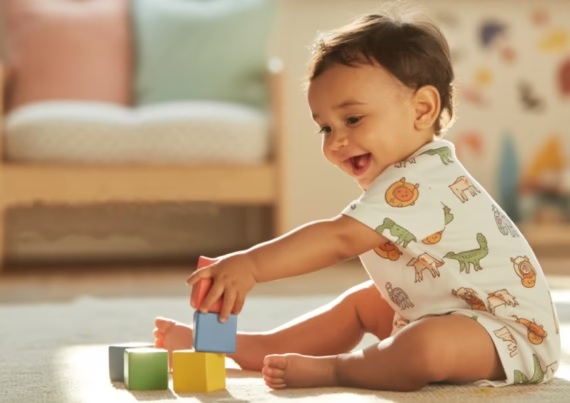
En tant que fabricant ayant 17 ans d'expérience dans fabrication de vêtements pour bébésJ'ai été témoin de la transition du marché d'un système rigide "rose pour les filles, bleu pour les garçons"Les divisions de l'entreprise ont adopté une esthétique plus inclusive et plus libérale. Pour vous, fondateurs de marques, PDG, chefs de produits et designers, le plus grand problème est le suivant : comment ne pas se contenter de suivre la tendance ? Comment ne pas se contenter de suivre la tendance, mais comprendre en profondeur ce mouvement d'inclusion et traduire cette responsabilité sociale dans vos produits et services ? de la marque de vêtements pour bébés l'avantage concurrentiel essentiel ?
Je tiens à vous dire que l'essor des vêtements pour enfants sans distinction de sexe est plus qu'une tendance ; il représente un profond changement dans les valeurs des consommateurs. En concevant des collections "sans étiquette, sans règle", nous pouvons aider votre entreprise à se développer. marque de vêtements pour bébés résoudre le problème de la banalisation des produits et injecter une force morale et émotionnelle puissante dans votre entreprise. marketing des vêtements pour bébés.
Vous n'avez aucune idée de la façon de confectionner des vêtements pour enfants ? Il s'agit de la version définitive, guide tout-en-un l'industrie de l'habillement pour enfants ne que vous voulez avoir.
Le point douloureux : Contraintes traditionnelles et exigences parentales modernes
Le marché traditionnel des vêtements pour enfants est saturé de stéréotypes : couleurs restrictives, motifs fixes (princesses et dinosaures). Cette limitation frustre les parents modernes qui souhaitent offrir à leurs enfants des options plus variées et encourager le libre développement de leur personnalité.
Si votre marque de vêtements pour bébés Si vous continuez à vous appuyer sur les divisions traditionnelles entre les hommes et les femmes, vous manquerez les opportunités de marché suivantes :
-
Réduction des taux de rachat : Les vêtements ne peuvent pas être transmis entre frères et sœurs, ce qui réduit leur valeur et leur durabilité.
-
Public cible limité : Vous excluez le segment croissant des jeunes parents qui privilégient l'inclusion et l'esthétique non sexiste.
-
Manque de profondeur marketing : Votre marketing des vêtements pour bébés ne parvient pas à raconter une histoire socialement responsable sur la liberté et le choix.
Fort de ses 17 ans d'expérience, petelulu propose une gamme complète de
des services de fabrication, de la conception à la livraison.
Partez de zéro, créez votre propre marque.
17+
au service des 10 premières marques américaines
15+
au service des 10 premières marques australiennes
12+
au service des 10 premières marques européennes
Contactez-nous pour obtenir un devis.👇
La solution : Quatre stratégies de base pour une conception non sexiste
La conception non sexiste ne consiste pas à abandonner la couleur, mais à redéfinir l'utilisation de la couleur, de la silhouette et des motifs.
1. Inclusivité des silhouettes : Priorité à la praticité et au confort
Le cœur du design non sexiste réside dans l'universalité de la silhouette. Nous nous concentrons sur la conception de styles simples et décontractés qui privilégient le confort, tels que : surdimensionné t-shirts, joggerset sweatshirts à capuche.
-
Évitez de serrer la taille : Utilisez des coupes droites ou en H pour éliminer les connotations sexistes.
-
Se concentrer sur les détails pratiques : Tous les vêtements doivent être faciles à mettre et à enlever, durables, résistants aux taches et adaptés à la nature active de tous les enfants.
2. Innovation en matière de couleurs : Dépasser le bleu et le rose
Nous vous encourageons à marque de vêtements pour bébés de dépasser les palettes traditionnelles de genre.
-
Fond de teint neutre : Utilisez des tons de terre (comme le caramel, le vert olive, le beige), des couleurs minérales (comme le gris ardoise, le bleu poussière) et des pastels doux (comme le jaune clair, le vert sauge).
-
Couleurs d'accentuation: Utilisez des couleurs vives comme le jaune vif, l'orange ou le vert émeraude en guise d'accents pour conserver un caractère ludique sans préjugés sexistes.
3. Universalité du modèle : Les thèmes au-delà du genre
Dans la conception de motifs, nous privilégions les thèmes universels et éducatifs.
-
Nature et science : Motifs géométriques abstraits, planètes, faune et flore dessinées à la main et dessins au trait simples.
-
Éliminer les stéréotypes : Évitez les imprimés traditionnellement associés à un genre fort et privilégiez plutôt les thèmes de l'imagination et de l'exploration.
4. Amélioration de la fabrication : l'expérience sans étiquette
Pour concrétiser le concept "sans étiquette, sans règle", nous devons mettre à niveau le système de gestion de l'information de l'Union européenne. fabrication de vêtements pour bébés processus.
-
Les étiquettes imprimées remplacent les étiquettes cousues : Éliminer l'irritation des étiquettes du cou sur la peau pour améliorer le confort (un point de douleur fréquent chez les parents).
-
Coutures cachées et tissus souples : Veillez à ce que tous les vêtements, en particulier ceux destinés aux nouveau-nés, soient dotés de coutures plates et du tissu le plus doux possible. coton biologique ou en fibre de bambou pour éviter les frottements.
Fort de ses 17 ans d'expérience, petelulu propose une gamme complète de
des services de fabrication, de la conception à la livraison.
Partez de zéro, créez votre propre marque.
17+
au service des 10 premières marques américaines
15+
au service des 10 premières marques australiennes
12+
au service des 10 premières marques européennes
Contactez-nous pour obtenir un devis.👇
Mise en œuvre de la fabrication : Traduire le concept en produit
Notre fabrication de vêtements pour bébés processus est entièrement équipé pour prendre en charge une conception non sexiste, garantissant ainsi une traduction efficace.
| Principe de conception | L'accent sur l'industrie manufacturière | Avantage marketing des vêtements pour bébés |
|---|---|---|
| Neutralisation des couleurs | Contrôle Pantone précis pour assurer la sophistication et la cohérence des couleurs. | Il s'adresse à des parents jeunes, très dépensiers et soucieux de l'esthétique. |
| Simplification de la silhouette | Le dessin précis du patron permet d'obtenir une coupe ample mais non négligeable. | Souligne le caractère pratique et la valeur élevée (possibilité de transmission). |
| Conception sans étiquette | Utilisation d'encres à base d'eau respectueuses de l'environnement pour les étiquettes imprimées afin d'éliminer les frottements physiques. | Améliore le confort du produit, ce qui se traduit par une solide réputation de la marque. |
Foire aux questions (FAQ)
Q : Les vêtements non sexistes peuvent-ils paraître visuellement ennuyeux ?
A : Absolument pas. Le design neutre met l'accent sur la texture et les détails. En utilisant des tissages complexes, des coutures de haute qualité et des imprimés subtils, nous pouvons créer des collections plus sophistiquées que les vêtements traditionnels pour enfants.
Q : Comment puis-je promouvoir le concept de neutralité des genres dans le cadre de la politique de l'emploi ? marketing des vêtements pour bébés ?
A : Mettez l'accent sur la "liberté de choix", la "durabilité (capacité de transmission)" et le "confort". Utilisez des images montrant des garçons et des filles portant les mêmes vêtements, afin de souligner l'idée d'inclusion et de partage.
Q : La conception neutre du point de vue du genre impose-t-elle des exigences spécifiques en matière de la fabrication de vêtements pour bébés ?
A : Elle exige une plus grande attention à la sécurité des tissus (tous les matériaux doivent être certifiés Oeko-Tex) et des normes plus élevées en matière de techniques de production (par exemple, la technologie des coutures plates) afin de garantir un maximum de confort et de durabilité.
Conclusion
En 2026, les vêtements pour enfants non sexistes ne seront plus une option, mais une nécessité pour le marché. Il ne s'agit pas seulement de résoudre les problèmes de restriction liés aux vêtements traditionnels, mais aussi de positionner votre entreprise sur le marché de l'habillement. marque de vêtements pour bébés à l'avant-garde de la responsabilité sociale et des futures valeurs familiales. Je vous invite à vous associer à nous, en tirant parti de notre expertise. fabrication de vêtements pour bébés afin de co-concevoir une collection véritablement sans étiquette, sans règle et dynamique sur le marché.
A propos de l'auteur

Xhiney, fondatrice de Petelulu, possède plus de 20 ans d'expérience dans la conception, la production et le commerce international de vêtements pour enfants. Elle a contribué à Vêtements pour enfants et Junior Xhiney a passé 17 ans à travailler avec des marques de vêtements pour enfants haut de gamme en Europe et aux États-Unis, apportant son expertise et son soutien.