
Why Needle Detection is Non-Negotiable in Baby Wear Manufacturing
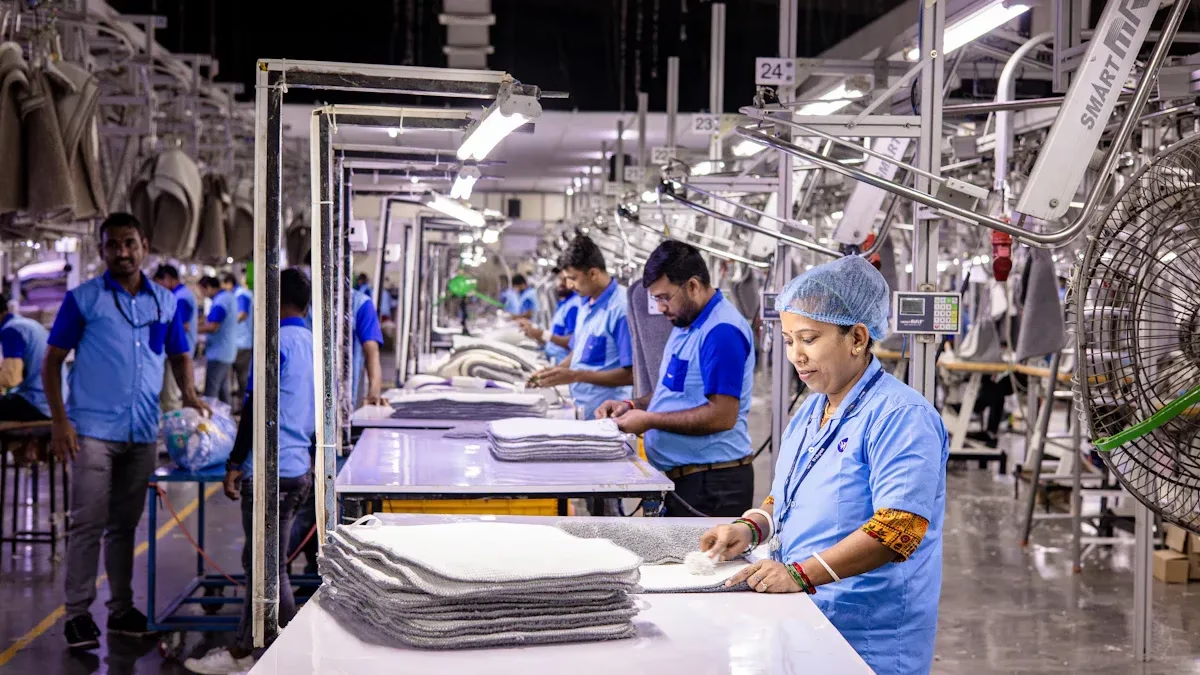
You have an important job in baby wear manufacturing. Needle detection keeps babies safe from getting hurt. It ensures safety is checked at every step. A broken needle can hurt a baby and damage your good name. Good companies like petelulu follow strong rules for checking and quality. People trust you more when you care about safety and maintain high standards.
Principales conclusiones
Contenido
Needle detection keeps babies safe from hidden dangers in clothes. Regular checks stop injuries and help your brand stay trusted.
Following safety rules and getting certifications like BSCI and OEKO-TEX builds trust. Parents like brands that care about safety and quality.
Using good needle control, like quick action plans and careful checks, helps avoid legal trouble and expensive recalls.
Buying advanced needle detection systems finds broken needles with high accuracy. This keeps customers safe and makes your brand look better.
Training staff on needle control is very important. Well-trained workers help keep products safe and high quality.
Safety Risks in Baby Wear Manufacturing
Working in baby wear manufacturing brings special safety risks. Babies have soft skin and cannot protect themselves from hidden dangers. If a broken needle is left in clothing, it can hurt a baby badly. Needle detection is not just another step. It is needed to keep customers safe and protect your brand.
Petelulu knows about these risks. They show this by getting global certifications like BSCI, OEKO, and GOTS. These certifications prove Petelulu cares about safety, quality, and following rules. You can trust that every product meets tough standards for kids.
Injuries from Broken Needles
Broken needles are a real danger in baby wear manufacturing. If a needle breaks during sewing and is not found, it can stay in the finished clothing. This can hurt a baby and cause pain or infection. Using needle detection systems and strict needle control helps stop these problems.
Missing even one needle can be very serious. Over 17,000 baby clothes were recalled after a needle was found in a onesie. In another case, 12,000 children’s clothes were recalled after parents found a sewing needle in a garment.
You keep customers safe by testing for needles at every step. Checking often helps you find broken needles before products reach customers. This keeps your products safe and your company’s reputation strong.
Legal and Brand Consequences
Not dealing with broken needles can cause legal trouble and hurt your brand. If a customer finds a needle in baby clothing, you could face lawsuits, fines, and recalls. These problems cost money and trust.
In 2015, a big retailer recalled over 12,000 children’s clothes because of broken needles. This caused injuries and hurt the brand’s reputation.
Factories that do not follow safety rules can have shipments rejected, get fined, or lose business deals. These issues make customers and buyers lose trust.
You need needle detection and needle control to avoid these problems. Petelulu’s strong safety rules help you follow the law and protect your business from mistakes.
Consumer Trust and Market Access
Needle detection is important for keeping customers safe and happy. Parents want safe, high-quality products. If you fail, you lose their trust and may not be able to sell in some markets.
Pruebas | Explicación |
|---|---|
Many countries and brands want suppliers to follow strict safety rules. | Using needle detection makes sure products are safe for kids and helps you sell in other countries. |
Export markets like the US and Europe need tough quality checks. | Needle detection helps factories meet these rules so they can sell worldwide. |
Factories working with big stores must use needle detection. | Not meeting quality rules can mean losing contracts and business with global partners. |
You build trust by using good detection systems and checking carefully. Petelulu’s needle control and quality checks help you sell in global markets. You show customers you care about their safety and give them products they can trust.
Needle Contamination in Manufacturing
Common Contamination Points
There are many places where needle contamination can happen. Needles can break during sewing and leave small pieces in the fabric. These pieces may hide in seams, cuffs, or linings. Cutting and finishing areas also have risks. Small fragments can get stuck in folds or layers. If you do not check carefully at each step, you might miss a broken needle. Petelulu uses many checks to find problems early. Their team looks at raw materials, watches sewing, and checks finished clothes before shipping. This keeps products safe and quality high.
Causes of Needle Breakage
Many things can make a needle break while making clothes. Here are some common reasons:
Thick fabric can put extra stress on the needle.
If you install the needle wrong, it can wobble and snap.
Machines that are not timed right can cause needles to break.
Using the wrong needle for the fabric can make it break.
Too much thread tension can strain the needle.
You need to pick the right needle and take care of your machines. Checking and changing needles often helps stop accidents and keeps quality good.
Detection Challenges
Needle detection is very important for safety, but it is not always easy. The table below shows some problems and what they can cause:
Challenge Description | Impact on Manufacturing |
|---|---|
Detectors need regular care and checks | Missed pieces can be dangerous |
Hidden needles can hurt people | Not finding needles can cause bad injuries, especially for babies |
You must follow global safety rules | Not following rules can mean recalls and hurt your brand |
Needles can stay in clothes and not be found | Bad quality checks can harm customers |
Factories need needle control steps | Not having steps can cause legal trouble and rejected shipments |
New detection systems, like those with AI, can find tiny metal pieces as small as 0.8 mm. This careful checking helps stop injuries and saves money by avoiding recalls. Petelulu’s strong safety steps and needle control help meet safety and quality rules every time.
Needle Detection Systems and Compliance
How Detection Works
You use special machines to keep baby clothes safe. Needle detection uses metal detectors that find tiny broken needles, even as small as 0.8mm. These detectors check every piece of clothing during inspection. Conveyor belts move the clothes through different checking zones. If a needle is found, the machine stops right away. Some machines have a flap or pusher to remove bad items. The controls are easy to use and let you change how sensitive the machine is. You can also use self-learning modes. The machines are made of stainless steel and have smooth belts. This keeps everything clean and strong. The table below lists the main features of today’s needle detection systems:
Technology Type | Descripción |
|---|---|
High Sensitivity Metal Detectors | Finds small metal pieces like broken needles and wires, even if they are only 0.8mm. |
Conveyor System Design | Uses a moving belt to check finished clothes all the time. |
Multi-Zone Detection | Shows where the metal is and stops the machine with alarms. |
User-Friendly Interface | Easy to use, lets you change settings and use self-learning. |
Hygienic & Durable Structure | Made from stainless steel and has a smooth belt for cleanliness. |
Automatic Rejection (Optional) | Uses a flap or pusher to take out bad clothes. |
Compliance Ready | Follows ISO, CE, HACCP, and Japanese safety rules for exports. |
Accuracy and Limitations
You need very accurate machines to keep customers safe. Modern systems are very good, but you must check and adjust them often. Sometimes, broken needles hide in thick seams or linings. That is why you should also look at clothes by hand. Testing for needles at different steps helps you find problems early. This way, you lower the chance of missing a broken needle. When you use strict checks, buyers trust your products more.
Tip: Always write down every time you check for needles. This helps you keep track of quality and makes audits easier.
Regulatory Standards
You must follow strict rules to sell baby clothes in other countries. Rules like ASTM, CPSIA, EN-71, and OEKO-TEX say you must check and control for safety. You send your clothes to outside labs to meet CPSIA rules. This makes sure your clothes are safe for kids everywhere. Following these rules helps you get your products through customs and builds a good name for your brand. By following the rules, you show you care about quality and safety. Petelulu’s needle checks and quality steps help you pass every test and inspection.
The CPSIA says children’s clothes and shoes must follow safety rules.
You must test your products in a lab that the CPSC accepts to make sure they are safe to export.
Meeting these rules makes your brand stronger and helps you ship products to other countries.
When you focus on following rules and making quality products, you feel sure about your clothes and can sell them in more places.
Needle Control Best Practices at Petelulu
Immediate Response Protocols
If you find a broken needle, you must act fast. Petelulu has a clear needle control sop for every step. When a needle breaks, you stop the machine right away. You pick up all the pieces and count them. If you cannot find every piece, you mark the spot. You take out the garment and throw it away safely. This keeps customers safe and stops injuries. You write down what happened in the needle control log. The log helps you see problems and fix your process. Acting quickly shows you care about safety and makes buyers trust you.
Inspection and Documentation
Necesitas strong checks to keep quality high. Petelulu looks at every garment by hand and with machines. You follow a needle control sop that lists each check. You look for hidden needle pieces during inspection. After each check, you write down the results. You keep these records for audits and future checks. If you find a needle, you throw it away safely. You update your records to show what you did. Good records help you follow rules and show you care about quality.
Tip: Keep your inspection records neat and easy to find. Good records help you pass audits and prove your quality work.
Staff Training and Accountability
You must teach your team about needle control steps. Petelulu trains all staff often. You show everyone how to follow the needle control sop and use the tools. You teach how to handle broken needles and throw them away safely. You make sure each worker knows their job in the process. You set up checks so staff are responsible for their work. Training helps your team keep products safe and high quality. When you follow these steps, people trust your products and your brand.
You have an important job in making baby clothes safe. Needle detection helps keep customers safe and follows strict rules. You earn trust by checking quality at every step. Petelulu uses advanced systems for needle control and quality. You make sure products are good and protect customers. Always pay attention, use best steps, and set high safety standards for every item.
PREGUNTAS FRECUENTES
What is needle detection in baby wear manufacturing?
Needle detection uses metal detectors to find broken needles. This process helps make sure clothes are safe for babies. You check every garment before it gets shipped.
Why do you need needle detection for baby clothes?
Needle detection protects babies from hidden metal pieces. This step helps you follow normas de seguridad. It also keeps your brand trusted by parents and buyers.
How often should you check for broken needles?
You should check for broken needles at every step. This means after sewing, before packing, and during the last inspection. Regular checks help you find problems early.
What certifications show you follow needle safety?
Certificación | What It Proves |
|---|---|
OEKO-TEX | Safe, chemical-free fabric |
GOTS | Ecológico, respetuoso con el medio ambiente |
BSCI | Fabricación ética |
Getting these certifications shows buyers you care about safety.